


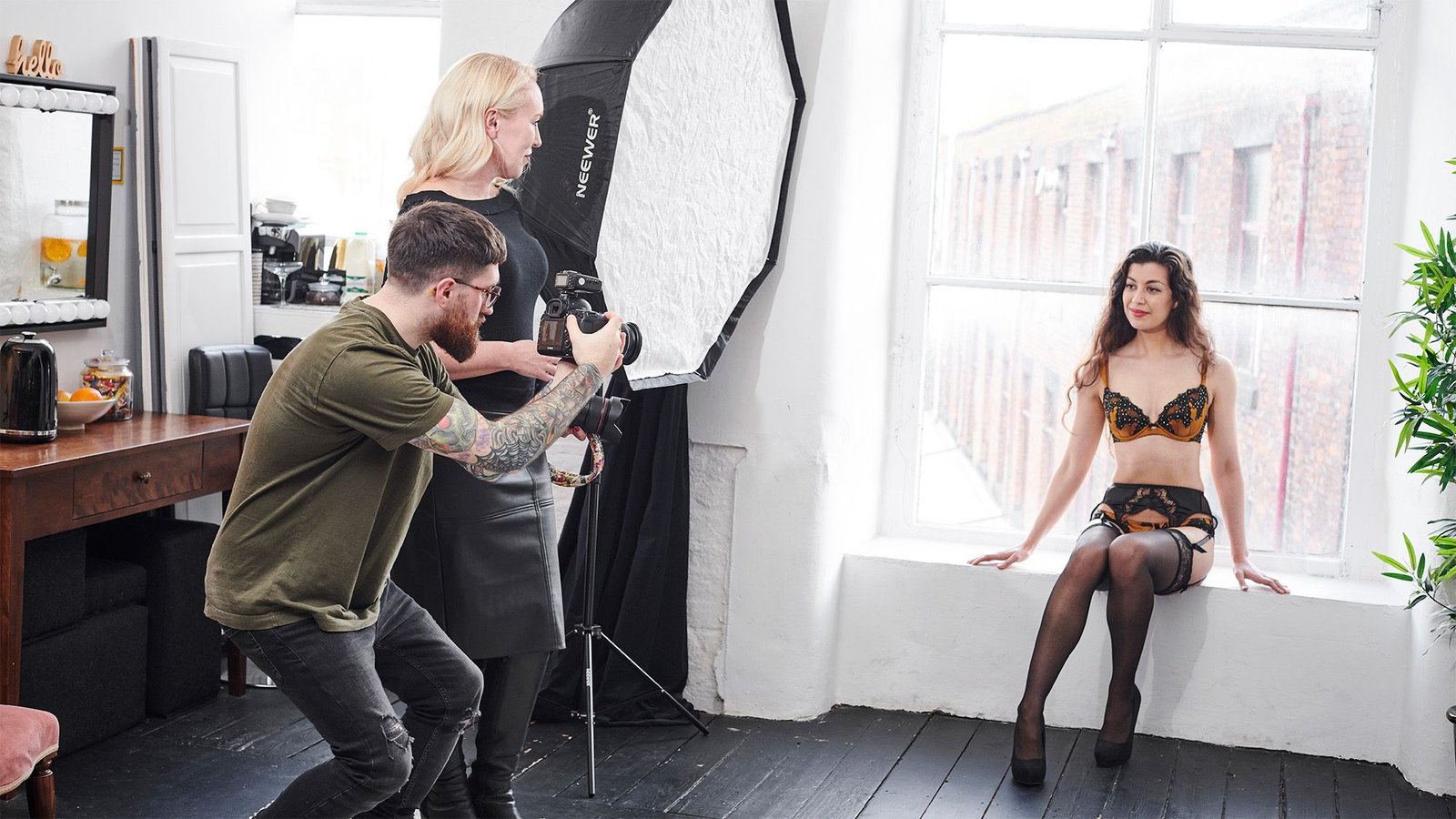
Boudoir photography is an intimate form of portraiture that tends to be themed around private bedroom or dressing room locations, featuring subjects wearing nightwear or lingerie.
True boudoir photography centers around empowerment, not provocation, conveying the elegance of form and shape, always prioritizing a tasteful and artistic mood.
Even so, boudoir photography can feel intimidating to newcomers. But these tips from professional photographer, Emma Finch, help to dispel any trepidations and are proof that the foundations of portraiture will stand you in good stead to capture elegant and artistic boudoir images.
Latest Videos From
The following is an excerpt from PhotoPlus: The Canon Magazine’s Apprentice feature (issue 165), where award-winning professional photographer Emma Finch took reader Tom Becker under her wing during a day-long boudoir photography shoot. To see more of Emma’s incredible work, visit her website.
Primes are great for portraiture, but a 24-70mm will provide you with a little more versatility (Image credit: Future)
1) Full-frame camera and lens
While Emma has she’s since upgraded to a Canon EOS R5 Mark II, she has also used a Canon EOS 5D Mark IV for portraiture. For most of her work she pairs it with the Canon EF 24-70mm f/2.8L II USM, which is razor-sharp, fast to focus in low light and has a great zoom from wide angle at 24mm to short telephoto at 70mm.
2) Be ready to shoot
Make sure that your Canon camera and exposure settings are all good, and your lights and location are set up before you ask your model to get in position.
You may like
3) Brightest part of the shot
Although boudoir photography can often feature lingerie, it’s still portraiture – and the subject’s face is the most important part. Make sure the face is nicely lit and you’ve focused on the eye closest to you.
4) Make a pinboard
Emma loves to browse Pinterest for vintage ideas and inspiration. She creates pinboards that she can share with models, giving them an idea of the sort of theme and style she wants to achieve in her photoshoots.
Image 1 of 2
A perfect crop… (Image credit: Tom Becker)A not-so perfect crop… (Image credit: Tom Becker)
5) Good crop, bad crop
You can accentuate an hourglass figure by changing composition. Make sure the shot doesn’t crop off the bust or hips, as you want to keep these areas – crop at the waist or thighs. Never crop on a joint like a knee or elbow; choose to crop either side of the joint. Above, Cherie’s hand and tip of her shoe have been cut, which makes this shot look messy. It’d be better to have a wider or tighter composition instead.
6) Experiment with lighting
Change up your lighting between flash and natural light to achieve different looks. Remember, you can always add a small amount of flash ‘fill’ to naturally light shots if need be.
7) Turn the beep on!
Emma loves to shoot with the classic Canon AF beep noise on, as it reassures her that the camera has acquired focus before firing the shutter.
What to read next
8) Use a model release form
Model release forms are readily available online and are a good way of outlining your agreement with the subject and what you’re allowed to do with the images, as well as documenting the shoot details.
9) Be aware of insecurities
If your subject has an insecurity such as their short stature, you can shoot from a low angle or with a wide-angle lens to make the legs seem much longer. Also be aware of how you’re lighting your subject, so that any areas they’re self-conscious about are dark and in shadow, not having attention drawn to them.
Sharp eyes are essential; zoom into the playback screen to check critical sharpness (Image credit: Future)
10) Check the shot
The rear screens on Canons are great for enabling you to zoom in on shots and double-check that they’re sharp. With portraits you may be shooting with a shallow depth of field (using apertures like f/1.8 or even f/1.4), so it’s crucial that you get the focus spot-on. It only takes a few seconds to do.
11) Show your subject your shots
Communication is a key part of getting your subject to feel relaxed. Be sure to share some of your best shots with them throughout the shoot, so they can see what’s being achieved – they may also have suggestions that you hadn’t thought of.
12) Lead-in limbs
The arms and legs can be positioned to use them as curves or leading lines that draw the viewer in and lead their eye through the image, just like with landscapes.
13) Have fun!
Boudoir photography can be quite moody and serious, but it doesn’t have to be! Moments where your model is smiling or laughing can work brilliantly well, too.
(Image credit: Tom Becker)
You might also like…
If you’re into portrait photography then you’ll probably be interested in the best lenses for portraits and the best camera for portraits. If you’re thinking of jumping into the world of artificial lighting, here are the best photography lighting kits.
