


With more people reading manga and webtoons (aka vertical scroll comics) than ever before, Beat’s Bizarre Adventure gives three writers an opportunity each week to recommend some of their favorite books and series from Japan, Korea, and elsewhere. This week we have dark elves, the occult, and, of course, card games.
The Journey of a Dark Elf with Fading Powers
Writer/Artist: Daisuke Itabashi
Platform: KManga
Ouughh!! I LOVE ELVES!!! I blame The Elder Scrolls for starting my infatuation with them. Lately they’ve become more common in fantasy stories; from Ubel Blatt with its half-elf protagonist, Koinzell, to Freiren: Beyond Journey’s End’s titular and loveable heroine. But having immersed myself in the lore and culture of the Dunmer of Morrowind and the Drow from the Dungeons & Dragons universe, it always felt to me like dark elves got the short end of the stick.
Until now. The Journey of A Dark Elf with Fading Powers is a new fantasy manga by Daisuke Itabashi. Its protagonist, Amira, was once a great and powerful sorcerer known across the world. Until one day, she disappeared from society. The reason being she has lost her great magical powers and is now just an ordinary dark elf. But that does not deter Amira from her goals. Losing her magical abilities has led her to hone her skills in martial arts, hunting, cooking, and basic mastery of tools for the next hundred or so years. She knows she can still create something beautiful even without magic, even if she has to start again from zero.
Amira is almost designed as an Anti-Frieren, someone who was once all powerful but is now powerless, yet still determined. The natural world teaches her to appreciate life even more, without taking anything for granted. It’s a distinct perspective for an elf and I love it!
Itabashi’s stunning art is what first drew my attention to this series. The character designs are so simple in their proportions, but the artist portrays them via dynamic compositions and angles. That’s not even mentioning the backgrounds or creature designs. It makes me feel like my own art is lacking, but I know Itabashi’s work would not be possible without the time and care taken for each and every illustration. This kind of praise is rare for me, as I am very picky when it comes to what manga I devote my attention to.
If you love fantasy manga, elves, and beautiful art, go check out The Journey of a Dark Elf with Fading Powers. I cannot wait for the first printed volume! — Justin Guerrero
Eko Eko Azarak Reborn
Original Story: Shinichi Koga
Writer/Artist: JTA Yamada
Backgrounds: Unidon
Screentones: Kii
Translation: Andria McKnight
Lettering: Skylar Rutan
Designer: Matt Bookman
Editor: Louis Yamani
Publisher: Titan Comics
“Eko, Eko, Azarak! Eko, Eko, Zomelak!”
Originally published in 1975, the original Eko Eko Azarak (a phrase sourced from a Wiccan incantation) spawned a series of films and TV shows. The manga was reborn in 2020, and this new version is now being published in the United States.
The story follows a witch named Misa Kuroi who has been drawn to supernatural happenings around a certain school. The first volume spans two time periods, twenty years apart, as she finds herself either saving others from the clutches of demons, or punishing them for their follies. I imagine the original manga was similar; while I haven’t seen the adaptations yet, I’m more familiar with them by reputation, which is what led me to check this series out.
The concept isn’t exactly fresh, but it doesn’t need to be when the stories themselves are entertaining. The first chapter is so strong out of the gate that it sets an incredible precedent for this book. There was only one chapter in here where I didn’t quite think the logic put forth in the story was satisfactory. Even in that, though, there was still plenty to enjoy. While dark, the series remains appropriate for teenagers.
JTA Yamada‘s art flows well, and brings the creepy factor flawlessly when it’s time for demons and dark magic. There were only a few moments where I found myself confused by what was going on, but studying the page I realized that was on me.
Eko Eko Azarak Reborn doesn’t push the envelope or do anything outlandish for its story outside its first chapter. But it does set up a running mystery involving demonic art collectors that I very much want to see more of. It’s certainly pushed me to seek out and take in other offerings from this franchise. Also, it’s not everyday I get to credit the assistants for this manga, so thank you JTA for shouting them out at the end of the book. — Derrick Crow
Yu-Gi-Oh!
Writer/Artist: Kazuki Takahashi
Translation & English Adaptation: Anita Sengupta
Touch-up Art and Lettering: Kelle Han
Initial Cover Design: Izumi Evers
Final Cover & Graphic Design: Sean Lee
Senior Editor: Jason Thompson
Publisher: VIZ
It’s hard to believe that it has been 30 years since the iconic card game made its debut in Weekly Shonen Jump, but the King of Games is now 30 years old.
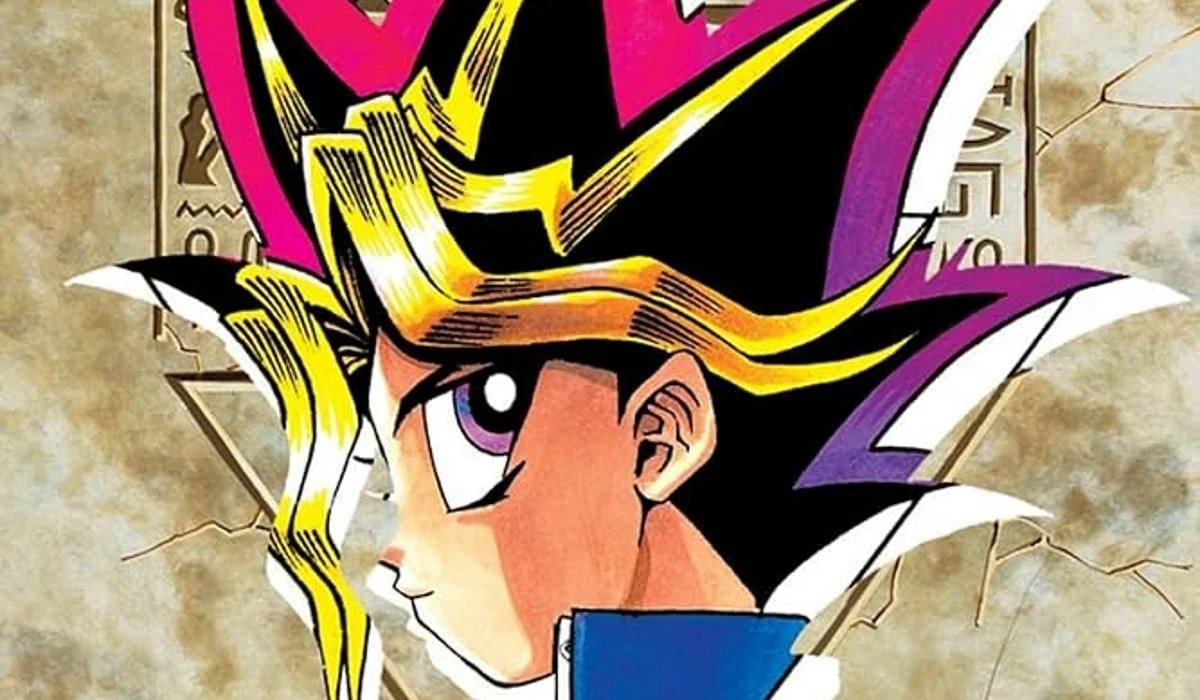
I don’t think I would be remiss to say that probably a good percentage of the world knows what Yu-Gi-Oh! is about. Even if they haven’t read the manga or watched the show, they’ve likely seen the internet memes about it. [Editor’s Note: “In America!”] But for the uninitiated, Yu-Gi-Oh! follows a young boy named Yugi Muto who becomes the vessel of an ancient Egyptian pharaoh after he solves an ancient artifact called the Millennium Puzzle. Yugi, along with the pharaoh who does not remember his name, fights those who seek to seize the Puzzle and its powers.
I first came across Yu-Gi-Oh! when the anime was coming out. In retrospect, as an adult, it seems silly that life and death could be decided by the outcome of a trading card game (Hello 4Kids English dub Shadow Realm). But the animation, voice acting, and soundtrack made the stakes of the game seem so real. When I later read the source material, I was shocked by how different the manga was at first.
Before Yu-Gi-Oh! became a trading card game, it was about a kid whose alter ego would punish bad guys. The story was dark; Dark Yugi did not hold back when he doled out his penalty games. Although the artwork is not my favorite in the first few arcs, Kazuki Takahashi found his stride once the story focused on Duel Monsters. The way he drew the monsters that emerged out of the cards and the duels themselves felt larger than life. I also appreciated how Takahashi always drew the card along with the monster/trap/spell itself. It was a way to explain the function of the card, but also to tie the duel to the game, grounding the action in something real. Anyone who ever watched the show should definitely read the manga, because it’ll give them a whole new way to appreciate the franchise.
Rest in peace, Kazuki Takahashi. — Hilary Leung
Follow Beat’s Bizarre Adventure to get weekly manga and webtoon recommendations!
