


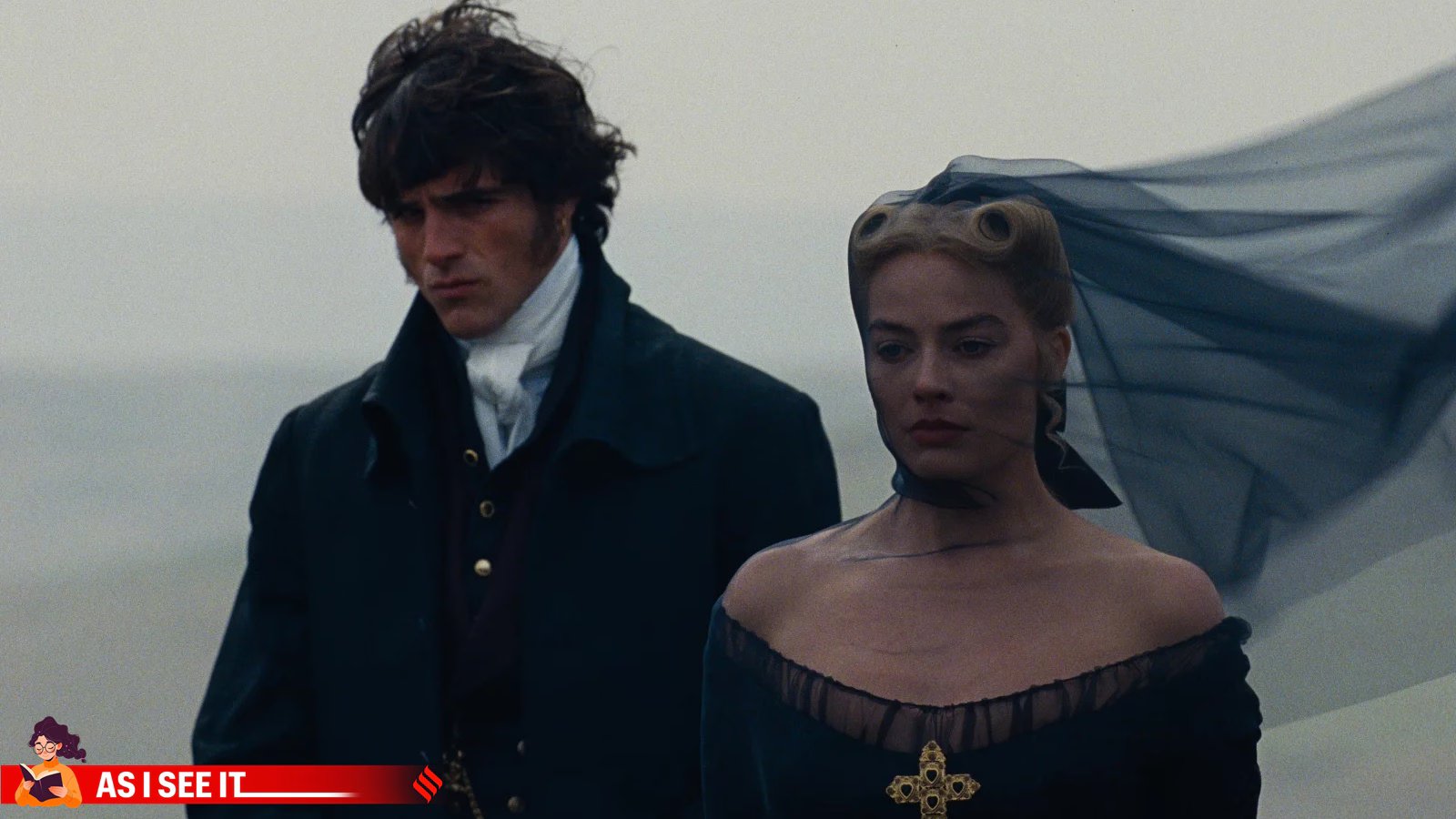
No less than 60 literary adaptations are headed to our screens in 2026. Sixty!
How do I know this? Literary Hub managing editor Emily Temple actually listed them, which is rather fortuitous, because I had taken it upon myself to track them all – Dolly Alderton’s Pride and Prejudice, and Maggie Gyllenhaal’s The Bride!, Christopher Nolan’s The Odyssey, Emerald Fennell’s Wuthering Heights, Chloé Zhao’s Hamnet, Zeynep Günay and Orhan Pamuk’s The Museum of Innocence and Brett Haley’s People We Meet on Vacation, and – deep breath – the BBC’s Lord of the Flies! The list keeps going.
A veritable cornucopia for someone who loves both reading and watching. However, it has brought with it a difficult choice, what to experience first – the book or the literary adaptation.
The case for reading first
Growing up, I thought the book was where the story lives in its purest form, unmediated by directors, studio notes, and the commercial calculations of streaming platforms.
The thought first came to me when I was eight years old. Harry Potter and The Sorcerer’s Stone had just released, and I was enthralled by the wizard with the lightning-bolt scar. However, I kept comparing each scene with the book, which I had memorised at that point, displeased with every small deviation. My parents tell me, I kept muttering “that’s not how it happened” under my breath.
The thrill of encountering a story on my own terms is what differentiated me from the non-readers. I could build fantastical tales in my imagination rather than relying on someone else’s vision. And, I did for some time become rather puritan and insufferable about it.
It had an added disadvantage. Upon reading a novel before watching its adaptation, I would enter the film or series with something akin to ownership. I knew what the characters look like in my head, the real actors, gorgeous as they were could not match. I also knew the dialogues, which spoke to me in the book, and the scenes that mattered most to me. I was prepared, armed, ready to compare, which I realised, which sullied the experience.
Story continues below this ad
Worse, this attitude ensured that I always leave screenings vaguely disappointed, even when I enjoyed them. For instance, my appreciation of Emerald Fennell’s Wuthering Heights was dulled because I kept cataloguing the differences between the novel and the adaptation. And, considering those who had not read the classic greatly enjoyed the adaptation, I realised that I had allowed anxiety over whether the adaptation will betray the novel I love ruin how I experienced the film as a product distinct from the novel.
Reading the novel first certainly gives me perspective, but as a side effect, it also gives me a running internal commentary that makes enjoying it an impossiblity.
The case for watching first
In Dolly Alderton’s film adaptation, Emma Corrin plays Elizabeth Bennet. (Photo Credit: Netflix)
The alternative, which I have only recently started to consider, is watching first and reading after. This also serves me well in cases where it has been a few years since I read the novel.
Some bibliophiles might call it heresy, and a few years ago I would have joined the chorus. It certainly violates the hierarchy I had internalised somewhere in childhood, one that places originals above interpretations, and by the same logic books above their adaptations.
Story continues below this ad
But, it has its advantages. When you watch first, you meet the story on its own terms. You are not comparing or waiting for your favorite scene to arrive. You are simply watching, as you would any other film or series, letting it work or fail on its own merits. If it moves you or whets your curiosity, you can always find the book afterward and discover what was different. You can have both experiences, just in the opposite order.
I have also realised that purity of experience is a myth. By the time I get to a “buzzy” novel these days, I have already encountered it in catalogues, in reviews, in the anxious chatter of colleagues, and in the cultural static that surrounds anything with enough momentum to become an adaptation.
Reading first does not save me from that. It just means I do my comparing on the page instead of on the screen, but given the involvement that reading anything involves I inevitably find myself engrossed in the book.
The mathematics of impossibility
This year, bibliophiles will have their pick from 60 adaptations. If a particularly driven person decided to watch all of them, they would have only 52 weeks to reach this impossible goal. Let us do the math. Assume the average book takes eight hours to read. Sixty novels times eight hours equals 480 hours of reading, or roughly nine hours per week. Add however many hours the adaptations themselves require, and some of these are multi-episode series, and you are looking at a substantial part of every week devoted to a single project.
Story continues below this ad
This is a huge commitment on top of your job, life and other assorted commitments. One would also have to contend with the ambient exhaustion of trying to keep pace with culture in an era when everything is content. Thus, the impossibility is partly existential.
Personally, I do not actually want to read all 60 of these books. Some of them, yes. The ones that have been sitting on my nightstand accumulating guilt. And, the ones by authors I love, and the ones that speak to some private curiosity. But all sixty? The idea is impossible and joyless.
What I am finally learning
I have spent years treating adaptations as tests I was failing. Every film I watched without having read the book felt like a small confession of inadequacy. Every conversation I entered armed only with the screen version felt like showing up to a test unprepared. I am trying to let go of that.
Reading first is wonderful when it happens organically and when you have loved a book for years and get to see it translated, for better or worse. But reading first as an obligation, as a homework assignment, as a way of proving you are a real reader, is a recipe for resentment and burnout.
Story continues below this ad
So here is what I am proposing, mostly to myself. Read the ones you actually want to read and watch the rest without apology. Watch them as themselves, as films and series that happen to have originated somewhere else. Let them be their own thing. Let yourself enjoy them, or not, without the running internal scorecard.
And if one of them moves you, really moves you, then find the book. Read it afterward. Discover what was kept and what was lost, what the director saw and what the author intended. Have both experiences, just not in the order you were told was correct.
Of the sixty adaptations, I will read some, watch others and let the rest pass by, and try not to feel guilty about them. The question was never whether to read or to watch.
The question was whether I could stop treating the choice as a moral one and I am happy to say that I am finally ready to try.
