


With more people reading manga and webtoons (aka vertical scroll comics) than ever before, Beat’s Bizarre Adventure gives three writers an opportunity each week to recommend some of their favorite books and series from Japan, Korea, and elsewhere. This week we have witch influencers, middle school angst, and, of course, more Satoshi Kon!
Wicked Spot
Writer/Artist: Sal Jiang
Translation: Mei Amaki
Lettering: Madeleine Jose
Editing: Alexandra McCullough-Garcia
Production: Pei Ann Yeop, Yanfen Wu
Proofreading: Kevin Luo
Publisher: Kodansha
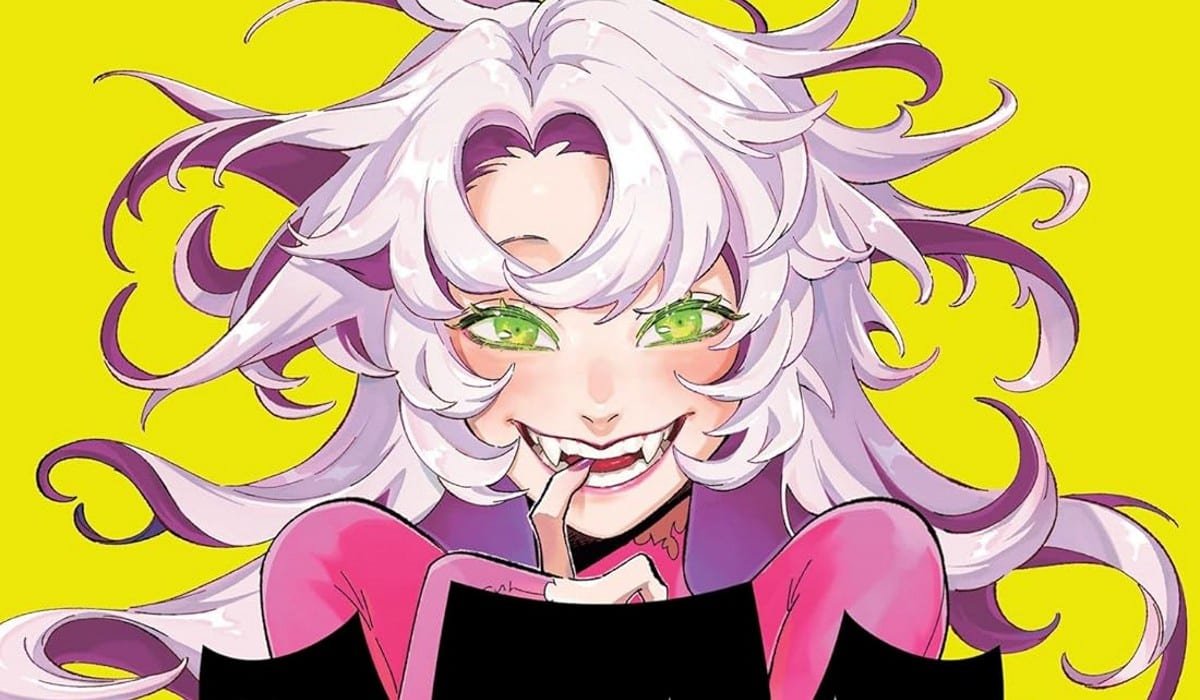
Day in and day out, Sada is taught that she must never leave her house in the woods and reveal to anyone that she is a witch. Humans and witches share a complicated and violent history; while witches still exist in the modern world, they’re written off as fictitious beings. Sada only ever comes into contact with humans who venture into the forest for dare videos. But when one of them drops their phone one day, Sada discovers the meaning of life: fashion and social media.
Why can’t Sada wear frilly dresses, paint her nails, do her hair, and attract the attention she deserves? Why must she uphold a rule that means nothing to her now? As Sada gradually but surely conquers social media with her irresistible charm, admirers as well as hateful trolls flock to her account. One troll in particular catches her attention. This stranger may switch from one burner account to another, but she can’t escape Sada’s radar!
Sal Jiang is an established yuri artist whose works I find to be energetic and fun to read. Their characters brim with vitality, and their dynamic bodies and highly expressive faces convey an upbeat tone. I also appreciate that Sal Jiang gives their pretty characters “ugly expressions,“ as it is a detail that artists sometimes refrain from. Jiang draws a wide range of facial expressions from embarrassment to anger to amusement. They also draw characters with a variety of body shapes, builds, and facial structures as well. I certainly welcome this inclusivity, though it was disheartening to see Jiang render the black character Timber’s hands with a single, dark tone, rather than use a lighter tone for the palms.
Wicked Spot’s first volume brings two unlikely women together: one is proud of who she is, while the other loathes the hateful nickname she was given as she has never been in the wrong. The first volume establishes the setting while leaving hooks to make the reader curious for the rest. As for the series itself, it ended with chapter 16, which is unfortunate since Sal Jiang said they “still had a lot of things they wanted to do” on X (formerly Twitter). Thankfully we still have the second volume to look forward to.
If you’re a supporter of women’s rights as well as their wrongs, like me, this series is tailored for you. — Merve Giray
The Flowers of Evil
Writer/Artist: Shuzo Oshimi
Translation: Paul Starr
Production: Hiroko Mizuno, Tomoe Tsutsumi, Nicole Dochych
Publisher: Kodansha
Takao Kasuga lives in a dead-end town surrounded by mountains. His classmates don’t understand the poetry he reads. Maybe that’s why one day after school, he steals his crush Nanako Saeki’s gym uniform. Unfortunately, Sawa Nakamura, the most dangerous girl in his class, sees him do it. She blackmails Kasuga and decides to have some fun with him. Before Kasuga knows it, he, Nakamura and Saeki are entangled in a conspiracy that will destroy their lives.
That’s the part of The Flowers of Evil everyone knows. It’s also the part that was adapted into the controversial and incomplete (but excellent) 2013 anime series. But it isn’t the whole of it, either. Sure, Kasuga and Nakamura descend into total depravity. But after they hit rock bottom, their story just keeps going. What happens when you set fire to the funeral pyre of your adolescence, only to realize that life doesn’t actually end after middle school? That the wall constraining you is not the surrounding mountains, but yourself?
Shame warps Kasuga and makes him hurt people he cares about. The heart of the series is how he grows past that and learns to empathize with other people while still living authentically. The sadomasochistic setup is really just a springboard for personal growth. It’s sincere, maybe even a little corny, but artist Shuzo Oshimi sells it because Kasuga’s growth isn’t rooted in platitudes. He and his friends don’t become “normal.” They find a way to live that works for them, and a way to communicate with each other that keeps them sane, in an otherwise cruel and repressive world.
Flowers of Evil isn’t Oshimi’s best comic, and it isn’t my favorite either. What it is, is the foundation of his later work. You can see Oshimi improve as an artist volume by volume, from the squat manga caricatures of the first few chapters to the finale’s decompressed pacing and surreal, subjective dream sequences. If you want to see how and where Oshimi “came of age,” perfecting the transition from salacious taboo to harrowing, heartfelt psychological drama, you should read Flowers of Evil. Then check out Inside Mari and Blood on the Tracks, because those books may be even better. — Adam Wescott
Version 1.0.0
Opus
Writer/Artist: Satoshi Kon
Translation: Zack Davisson
Lettering: IHL
Editor: Carl Gustav Horn
Publisher: Dark Horse
Another week, another chance to talk about my favorite artist of all time, Satoshi Kon. Opus is the last manga of his to get an official English release that I haven’t read—until now. It’s a meta-textual story that fits snugly within Kon’s oeuvre, blending reality and fiction as it explores the relationship between an artist and their creations. Kon’s lens this time is Chikara Nagai, a manga artist about to wrap up the final chapter of his series Resonance when one of his characters comes to life and attempts to alter their fate.
Nagai is swept into this story where his various characters must grapple with the foundations of their own creation, deal with a lackadaisical God (Nagai), kill the megalomaniac villain he created—the Masque—and stop their fictional world from crumbling around them. Everyone bounces back and forth between the real and fictional worlds, encountering facsimiles of their world that exist on the boundaries of the background art, and traveling through the history of Resonance to change its scripted past.
Nagai himself at first assumes this is all a dream. But as he comes to accept his role as a God, he decides that he must figure out a way to change the ending he originally planned. This becomes harder as his characters Lin and the Masque take over the narrative. Another major character is Satoko, the main character of Resonance who finds out that her whole life and trauma was made up by some man she’s unimpressed by. Kon gives her and Nagai some incredible scenes, including discussions on the nature of creation and what it means to be real.
Opus was infamously cut short and ended on a cliffhanger; even the lost, unfinished chapter that was found after his death and reprinted in the collected edition still doesn’t complete the story. Still, I see Opus as a masterpiece, his opus so to speak. So much of what Kon is known for, and would go onto to explore in more succinct ways in later projects, are woven through here in masterful detail. From his cinematic lens and abrupt “camera cuts,” to his impeccable staging, to to the personal understanding of the arts to which Kon dedicated his life.
The final lost chapter that had not been previously published brings the fantasy into the real, as Kon himself vents about his works. We get a Seraphim name drop, as well as his frustrations with his publisher. All while he mirrors himself with Nagai, his own creation.
Opus has some problematic elements that don’t hold up today. Nevertheless, the work is so good that I can’t help but give it a glowing review. It’s the kind of manga that makes me want to become a better writer myself. — Derrick Crow
Follow Beat’s Bizarre Adventure to get weekly manga and webtoon recommendations!
