


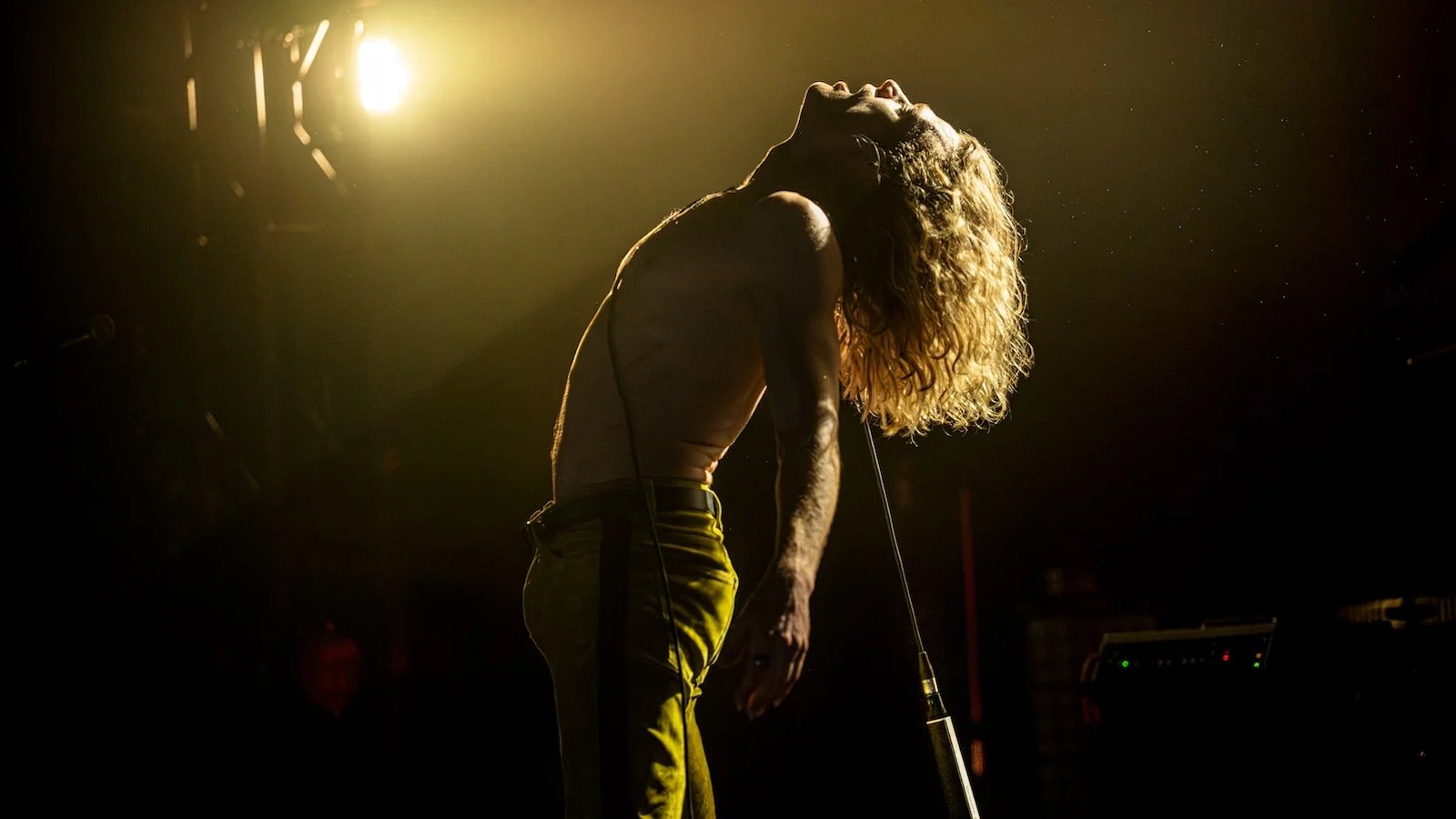
Anne Rice’s Immortal Universe struts onto the stage in distressed denim and glitter paint on Sunday with the premiere of The Vampire Lestat Season 1, AKA Interview with the Vampire Season 3, and it catapults the series to new heights as Sam Reid’s Lestat de Lioncourt takes control of the narrative.
Following his band (FKA Satan’s Night Out) on a multi-city tour in 2025, The Vampire Lestat is narrated by the titular character as he attempts to correct the public record of his life as reported by his fledgling and former paramour Louis de Pointe du Lac (Jacob Anderson) and written by the newborn vampire, journalist Daniel Molloy (Eric Bogosian), through a documentary by Molloy himself. Along the way, he’s haunted by his former “muses,” and his influence grows as wildly as his stardom while the Great Conversion (a new surge in vampiric global power) takes shape.
In addition to current interviews with Lestat and tons of band footage—all of which features a genuinely great soundtrack—the season also reveals scenes from Lestat’s past, including his Oedipal relationship with his mother, Gabriella (Jennifer Ehle), and his violent undeath at the hands of the ancient vampire Magnus.
The tonal shift indicated by promotional material—including a one-night-only concert headlined by Reid at the famous Beacon Theatre in New York City—may seem jarring, but it’s perfectly explained through the world-building. The Vampire Lestat is horror and an epic love story and a paranormal reckoning and, above all, a genre-bending romp that balances on a fang’s edge—rooted firmly in Reid’s jaw-dropping, complex portrayal of one of the most infamous antiheroes in vampire fiction.
The Vampire Lestat leans into camp without losing its way
(Sophie Giraud/AMC)
The Vampire Lestat is gayer, campier, raunchier, darker, and intentionally funnier than the first two seasons of Interview with the Vampire. This is Lestat’s story now. Buckle up.
Based on the book of the same name by Rice, which is second in The Vampire Chronicles series, The Vampire Lestat peels back the layers of its titular character’s nearly three-centuries-long existence—good, bad, ugly, all with his bitchy flair for the dramatic. As Lestat puts it in Episode 1, he hopes his band’s music will “counter Mr. du Lac’s portrayal of me as a mayonnaise villain with sociopathic tendencies.” And whatever Louis says, Lestat insists immortal life is “not all pain and toxicity.”
The Vampire Lestat doesn’t shy away from those parts, but it doesn’t sulk in them either. It simultaneously carries through the drama and raw emotion that’s shaped the series so far and challenges the audience’s understanding of the truth while looking toward major events in Rice’s extensive universe. The campiness offers an absurd, escapist quality that lends a classic VH1 flavor to many of the season’s most high-velocity sequences, and to counterbalance the music, sex, and pettiness, the writers and performers plumb the dark depths of Lestat’s past, which he attempts to exorcise through his music… for better or worse.
For the first time, we see Lestat through his own eyes, and Reid shifts his performance accordingly. He’s intoxicating to watch, whether he’s sexing it up as a rockstar or having a nervous breakdown over a particularly painful episode from his past. He anchors The Vampire Lestat so well it seems effortless, which is a feat in itself.
The cast of The Vampire Lestat delivers
(Sophie Giraud/AMC)
Reid’s central configuration in The Vampire Lestat is by design a major shift from Anderson’s in Interview with the Vampire. Louis, as seen by Lestat, isn’t dissimilar from the character we meet in the first two seasons of the series, but Anderson subtlety shifts his depiction of the character in truly delightful ways. He portrays a different kind of vulnerability this season, and does so with incredible grace.
It is, to be frank, enchanting to see Reid and Anderson reunite, this time on more equal footing. However, it’s perhaps even better to see Reid play opposite performers he never crosses paths with in IWTV Seasons 1 and 2—particularly Bogosian as Daniel Molloy. Their scenes crackle with angry tension and dark humor, but beneath their individual fronts, there’s a dark, deep well of something else (not quite sadness, though that’s part of it) they share through more than just mutual acquaintances. Reid and Bogosian push each other to new heights, creating some of the best and most memorable moments in The Vampire Lestat Season 1.
Then there are the new additions to the cast, particularly Jennifer Ehle as Gabriella de Lioncourt, whose presence significantly complicates Lestat’s attempts to set the record straight. Ehle is a flexible, confident performer whose delivery is sharp and whose understanding of her character is clear; she introduces a new, haunting energy to The Vampire Lestat that’s as unsettling as it is provocative. Together, Ehle and Reid weave a disturbing web punctuated by quiet moments with far-reaching implications.
In a similar vein, Assad Zaman returns as Armand, offering a different interpretation of the character as seen through Lestat’s eyes—but without losing any of the terrifying power he possesses in IWTV. Without spoiling his arc in the show’s first two seasons, it’s safe to say that Armand occupies less screen time in The Vampire Lestat, though when he is present, he frequently steals his scenes.
The Vampire Lestat takeaways (so far)
After watching six of seven episodes of The Vampire Lestat Season 1, I can say with confidence that the show’s new flavor is tantalizing but familiar. It maintains important thrulines from the first two seasons but also reinterprets important beats without dryly rehashing events to the point of redundancy. The cast rises to a new level of the stratosphere, led by the inimitable Sam Reid, whose Lestat will go down as one of the all-time greatest performances of his generation.
The Vampire Lestat premieres Sunday, June 7 on AMC and AMC+.
