


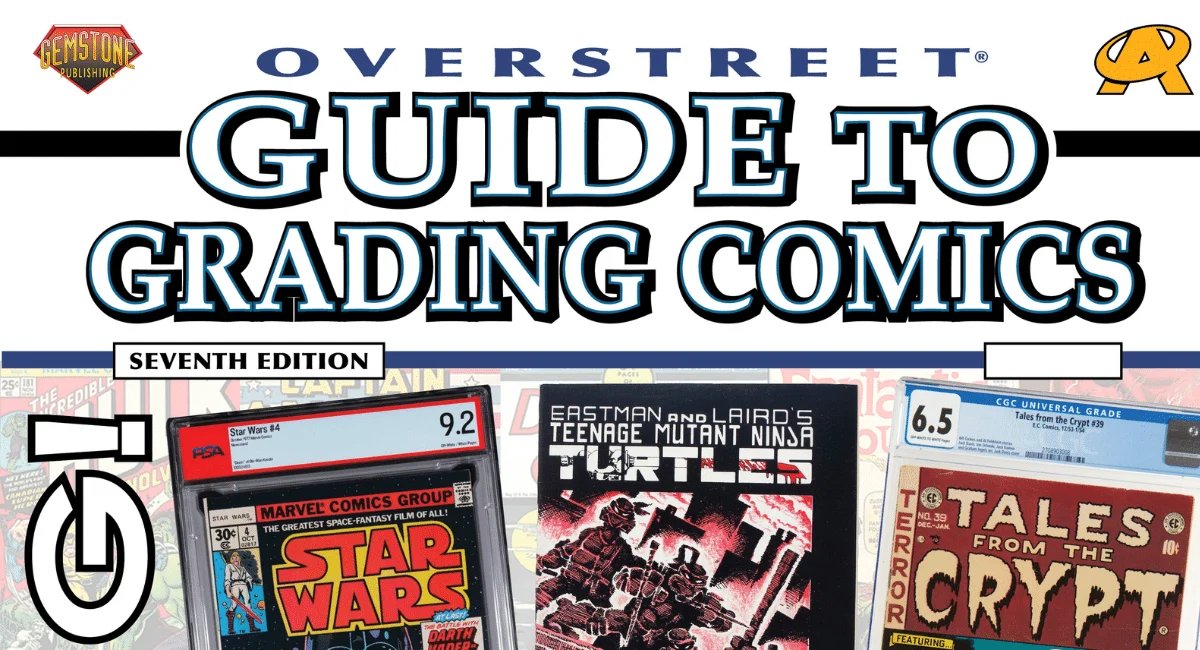
The Overstreet Guide to Grading Comics has long been one of the most important resources for collectors looking to understand comic book condition, preservation, and value. After the previous edition became a highly sought-after collector’s item on the secondary market, Gemstone Publishing is returning with the seventh edition of The Overstreet Guide to Grading Comics, offering updated information, expanded examples, and a deeper look at how grading continues to evolve alongside the modern comic market.
The Beat spoke with Gemstone Publishing President Jeff “JC” Vaughn about what inspired the return of the guide, how third-party grading has changed the hobby, why understanding condition remains essential for collectors, and what readers can expect from this new edition.
DIEGO HIGUERA: The previous edition became such a sought-after collector’s item that copies regularly sold for more than $100 on the secondary market. What convinced you that now was the right time to revisit and expand The Overstreet Guide to Grading Comics?
JEFF “JC” VAUGHN: We’ve wanted to do it for a while now, but we’ve had our hands full adjusting to the new multiple distributor environment. The real kicker, though, was when we regularly seeing copies of that one selling in the $90 – $130 range on eBay.
HIGUERA: With the large rise in comic popularity over the past 2 years, it’s a great time to have an Overstreet price guide again in consumers’ hands. What are you hoping enthusiasts take away from that?
VAUGHN: The delay in the price guide’s arrival (again, the distributor situation) this year meant that there was some pent-up demand for Overstreet in general, but it really was something we’ve wanted to do since the last edition of the Grading Guide sold out. It’s never been our flashiest seller, but it’s always been a very consistent seller since the editions we produced since the 1990s.
HIGUERA: Comic grading has evolved dramatically over the past decade, with third-party grading becoming more mainstream than ever. How has that shift influenced the way you approached this seventh edition?
VAUGHN: That’s a great question! The climate has certainly made having an accurate understanding of grading more of an issue for those people submitting their comics to third party services. It’s easier by far to have reasonable expectations of what grades you’re going to get back if you understand grading yourself. Underneath it, though, what hasn’t changed is our desire to do the best possible job in explaining the commonly held understanding of grading and the hot button issues around.
HIGUERA: One of the biggest challenges for collectors is understanding the difference between grades that seem very close together, like a 9.4 versus a 9.6. How did you design the book’s updated descriptions and full-color examples to make those distinctions clearer?
VAUGHN: The differences between a 9.4 and a 9.6 have remained an area of contention for many for quite some time. This edition alone will not solve those conflicts, but when it’s combined with experience — the thing we recommend for everyone — it will go a long way. In that regard, it’s a stress reducer as well as a great book.
HIGUERA: This edition doesn’t just focus on grading, but also covers storage, preservation, restoration, and the history of the hobby. Why was it important to present grading as part of a comic’s entire lifecycle rather than an isolated process?
VAUGHN: At their most basic, grades are determined by condition, and condition is determined by how we as collectors or dealers have cared for our comics. Each of those niches is a major factor in what goes into a grade. We’ve ever seen true scarcity — with examples such as Action Comics #1 or Detective Comics #27, for instance — outweigh the presence of restoration work, which previously was practically the kiss of death.
HIGUERA: With more than 200 full-color examples, this is one of the most visually comprehensive editions yet. Were there any particular comics or grading examples that sparked especially interesting discussions while putting the book together?
VAUGHN: Areas of contention generally come up before we start working on the book rather than while we’re working on it, and we always remain open to critical suggestions based on strong logic. If you go back to Overstreet #1 in 1970s, for instance, the top grade was actually called “Mint.” As the art and science of grading evolved, the industry came to a consensus about how hard it was to truly find a Mint copy of anything. Over time, Near Mint became more of a standard. Those kinds of changes, and more modest ones, are ones we’re always happy to discuss.
HIGUERA: The guide profiles third-party grading companies while also teaching readers how to evaluate comics themselves. What do you hope readers take away about balancing their own expertise with the opinions of professional grading services?
VAUGHN: It’s always been the case that the third-party grading services have interpreted grades, and there’s only problems if they’re not consistent. As I mentioned before, understanding the basics of grading helps anyone submitting their comics to have a much more realistic, informed expectation of what grades they’ll get back.
HIGUERA: For someone who has just inherited a comic collection or is buying their very first back issue, what is the biggest misconception about grading that you hope this new edition finally puts to rest?
VAUGHN: For a person actively buying back issues, loving a comic does not increase or decrease its value. Loving a comic means that it was probably a good one for you to purchase. As long as circumstances permit, learn the basics of grading. It will help you set and manage the expectations of yourself and others. Not every comic is a 10.0, and not every comic is a 0.1. The overwhelming majority are between those grades. For those who have just inherited a collection, take the time to learn the basics; it will be significantly harder for others to take advantage of you if you’re armed with knowledge.
HIGUERA: Any words for readers?
VAUGHN:It seems like every press release starts off with the company saying they’re “excited to present….” but in the case, we’re actually really excited to be publishing this new edition.
As the comic industry continues to grow, the importance of understanding the history, care, and craftsmanship behind the medium remains just as important as ever. With the seventh edition of The Overstreet Guide to Grading Comics, Jeff “JC” Vaughn and the team behind the guide are not only providing collectors with an updated resource but also preserving the knowledge that has shaped the hobby for generations.
If you’re interested, make sure to check out the campaign here and keep up to date with ZOOP’s releases!
