


The Festival of Britain in 1951 was a crucial moment for post-war Britain, variously called “a tonic for the nation” and “a beacon for change” intended to bring inspiration to a country still licking its wounds. A celebration of culture and future-thinking, it was a series of events across the country, but in London found its expression on the South Bank, where a UFO-style sculpture called the Skylon was erected, alongside a new venue: The Royal Festival Hall.
Since then, the RFH has expanded into the Southbank Centre — which includes the Hayward Gallery and the Queen Elizabeth Hall — and the entire site is celebrating the 75th anniversary with a year of special programming which has its lightning rod moment this coming weekend with You Are Here. Overseen by Danny Boyle, it should be an event as legendary as his 2012 Olympic Games opening ceremony.
You Are Here is a celebration of British post-war youth culture in the form of a secret experience encompassing music, dance and theatre. There will be little prior info for guests ahead of the timed entries, with no phones allowed — as the title suggests this is about experiencing culture in the raw, together with others. Boyle said at the launch it will be a retort to screen culture, what he termed, “The aquarium of indifference… all these extraordinary things come into focus and then float by because they are replaced by another extraordinary thing. And you go, ‘Well is it nourishing or is it like Deliveroo’d food?’ This is our answer. The whole world should be heading to the Southbank.”
Southbank Centre Queen Elizabeth Hall (India Roper-Evans)
Southbank Artistic Director Mark Ball told the Standard, “In 1951 they were trying to convene the nation and look with a sense of optimism about what the future could be. It was the moment when the country went from black and white into Technicolor. I think we’re in a moment now where we need arts and culture to paint an optimistic vision of the future. The decision we made was to celebrate young people because they’re the ones to imagine the future.”
With this in mind, the Standard has gathered a crop of the creatives from the Southbank’s entire 75th anniversary programme to ask them: what is the future of culture in London? And how can we make sure young people have the power to achieve it?
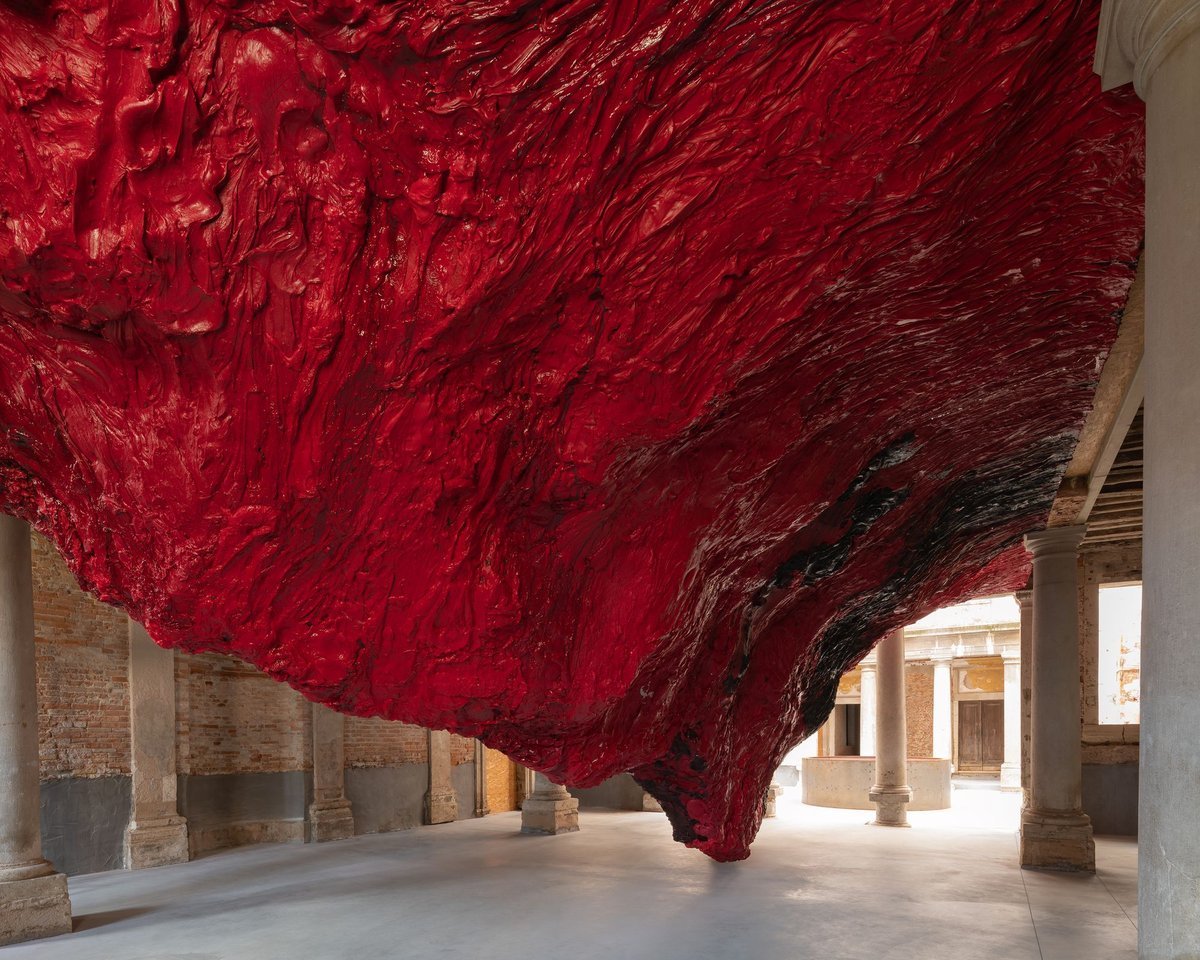
Anish Kapoor
Artist
“For many years now, the creative industries have been right at the top of Britain’s economy. The time has come for government to take action to recognise this and to give it a meaningful future.
British contemporary artist Anish Kapoor poses for a photograph during a tour of his studio in London on March 3, 2022 (Justin Tallis/AFP via Getty Images)
“London needs to show the way. I know that the Mayor’s office has the creative industries in focus but it does not have the funds necessary to take this forward. We need to have the courage to fund our creative industries properly. It is just as important that we continue to keep museums free for our public. Any pressure to do otherwise is shortsighted and foolish.”
Anish Kapoor returns to the Hayward Gallery, June 16 to October 28
Carson McColl
Designer and co-creator of You Are Here
“There’s an aspect to our show at the Southbank, You Are Here, which is unapologetically a celebration of London and the gift of multiculturalism. Full-throated. No couching.
There’s a particular moment in the show which talks about finding your people. That sometimes involves travel. And London saved my life. So the story is rooted in the Southbank site and rooted in the city. How do you start a creative project? You start by starting. You Are Here is a great meeting of minds and being able to find people very inquisitive about new ideas, and young people who are making things. But you need people like Danny Boyle who are in positions of power, but who use that power and privilege — which he’s earned over many, many years — and give people opportunities.
We put together a story basically populated with all these references from the past 75 years. The easiest way to explain it is like if you think about through-lanes across decades — like punk and grime happened decades apart, but they come from the same sort of instinctive posture. You start to notice these recurring patterns within culture. And that’s also the idea of how things are really shit right now. Everyone is feeling so pessimistic and stuck.
I use the analogy of the defibrillator in the sense that what we’re trying to create with this show is just a moment that people come in and we charge them up. We can restart something, so when people leave they can carry it with them.
We talked a lot about 1951 in the Festival of Britain and the improbable outcomes of that festival. That moment in time was an opening and the things that came from it, like Ziggy Stardust or the Sex Pistols or acid house. It would have been very hard to imagine then, but the stimulus is what it’s about, there’s that commonality where Danny’s bringing you in and saying: Could you possibly do this or imagine it?”
You Are Here is at the Southbank Centre on May 3; southbankcentre.co.uk
Gareth Pugh
Designer and You Are Here co-creator
“With You Are Here, we’ve leaned into the idea of fomo. Our audience will be entering the space at different times. If you turn up at 2.30 or at 3.30, those two audience groups will see something very different throughout the whole show, which we’re happy with. We like the idea that everyone can take something different from it and hopefully arrive at a similar point as well. There’s a certain combustible aspect to those loops interacting with each other in different ways. Danny Boyle said culture is chaos.
There’s an amazing David Bowie quote where he says, ‘When you get deep enough in the water that your feet aren’t touching the bottom, that’s when you’re ready to do something really special.’ We’re holding faith with that idea with this show. Everyone involved knows that when you bring an audience in, it’s going to be a completely different experience than anything we could have ever imagined. But the audience are part of it, that’s the nature of the show, that’s why it’s called You Are Here — so they can see themselves in it, but can also see themselves in each other.
(You Are Here Southbank)
There are very few gathering places today where you have people from radically different backgrounds come together in real life. There’s a social contract aspect to it where when you come to the show, you come to it with a sense of it being egalitarian. It’s a safe space. We can’t say too much but obviously when people are used to coming to the Southbank, they’ll come with a ticket and they’ll sit down in a dark room and watch a show. We’re not using the Southbank in that way. We’re trying to flip things upside down. This is about defying expectations of what you can do.
Our code of silence around the content of the show is going to remain so that when people go in they have no idea what to expect — but it’s an intense, sensory experience. We come from a world that’s DIY, and I think that sensibility has informed a lot of the show. The design, but also the mindset. There’s been a lot of planning, but we want to hold space for that last burst of energy when you bring all these people together from different backgrounds into one space and see it come to life.
The key thing is, it doesn’t belong to us. We’ve created this framework, and we’re bringing in the next generation. They’re bringing in their communities, so there’s this generational tiering where eventually you get to really radical grassroots thinking. This is what you have to do to bring in young people.”
Sir Sadiq Khan
Mayor of London
“Culture is in the DNA of our city, with our incredible cultural heritage and visitor attractions contributing billions to the UK economy and forming a vital part of what makes London so special. Crucially, London continues to attract some of the best and brightest creatives from across the globe, drawn by our energy, diversity and unparalleled opportunities.
From our world-renowned institutions to grassroots venues, we are constantly evolving and innovating to remain the creative capital of the world. The Southbank Centre is at the heart of this success story. For 75 years, it has entertained and inspired millions, showcasing extraordinary creative talent with a mission to remain open to all.
Sadiq Khan (PA)
That’s why, despite the challenges we face, the capital’s creative future is so bright. New ways of thinking and fresh additions to our cultural landscape continue to strengthen our global appeal. By continuing to invest in culture, and enabling our creatives to do what they do best, we will continue to blaze a trail for others to follow and inspire generations to come.”
Nish Kumar
Comedian
“If you look at the speed at which live gigs are selling out and the appetite for watching live comedy and live music and plays, it is clearly something that people really need. It’s undervalued how much people enjoy the communal experience of watching something together. And part of that is having places to go — so you need events, you need ambitious cultural programming and you need state funding for the arts.
People are scrabbling around for funding. But there’s also more boring issues, like if the cost of your accommodation keeps skyrocketing then it is going to be hard for the next generation of artists, because you have to be able to afford to live in cities.
People get really angry at posh kids taking over music, and not with the systemic factors. The systemic conditions mean that the only people who can afford to do unpaid apprenticeships — which is the nature of all art and culture — are people who are independently wealthy. I’m amazed at how often we fall into the same trap of individuals being angry with each other and not critiquing systemic factors underpinning a lot of these crises.
Nish Kumar
Stand-up has no start-up costs, so in theory, it’s still an equitable art form. But if Edinburgh Fringe gets more prohibitively expensive, then you are going to box out working-class and lower-middle-class people from doing that as a profession. And you are starting to see that happen, just because the cost of everything’s going up.
We need to view arts and culture from the perspective of the value it brings to the experience of being alive. But if we’re only going to make arguments based on pounds and pence, then the Government needs to look at the arts sector and understand that we don’t make anything in this country anymore, but we do make art and culture — and it’s an astonishing rate of return. We need to be taking it a lot more seriously.
But also we’ve got to stop economically punishing people for being young. It feels like a lot of the attitude among Boomers and Gen X at the moment is, ‘Well, we did it without any help.’ You had so much f***ing help. You had free university, cheap housing, you had huge unbelievable systemic help conferred on you by the post-war consensus.
I want to see more state funding for the arts, but I also want to see more interventionist policies that are designed to close the wage gap. There will be knock-on effects that help create and rear the next generation of artists.
The thing that makes me optimistic is that people are going to still keep making shit
Nish Kumar
The thing that makes me optimistic is that people are going to still keep making shit. For whatever reason, human beings need to make songs and tell stories to each other. And there will always be prodigies that emerge who transcend their circumstances. We’ve just got to create the conditions for those prodigies to thrive.
Four working-class kids from Liverpool have done something that’s put an unimaginable amount of money into the British economy, and continues to put money into the British economy — half the film industry in Britain is being employed by Sam Mendes making these four Beatles movies. But The Beatles happened because those kids could go to art school. And they were able to travel to Europe frictionlessly to do this unimaginably intensive apprenticeship in Hamburg clubs.
I’m not worried about the four working-class kids that are capable of musical genius being out there. They’re out there. We just have to create the conditions that allow them to reach the apex of culture.”
Nish Kumar will be hosting It Sounds Like Courage: Music and Solidarity at the Royal Festival Hall on June 26
Linton Stephens
Bassoonist and Deputy Artistic Director of the Southbank Centre’s resident orchestra, Chineke! Orchestra
“London runs on creativity! Especially in music. You feel it the moment you step out in the evening: a string quartet in a car park, a jazz trio above a pub, an orchestra turning a 150-year-old piece into something that feels brand new. It’s not rare here. It’s just what happens.
That kind of scene doesn’t just happen by accident. It begins much earlier, often in a classroom, when someone picks up an instrument for the first time and realises they’ve got something to say. That moment, when it clicks, is everything. And right now, too many people don’t get close to it. Music education has been quietly eroded, and we’re starting to feel the impact, particularly in classical music.
Linton Stephens (Neil Sherwood)
Access plays a huge part. If lessons are out of reach, or if you never see yourself reflected on stage, it becomes much harder to imagine a place for yourself in that world. And when that happens, we don’t just lose individuals, we lose the sound of what the city could and should become. It’s not only technical skill, it’s about confidence, connection and a sense of belonging for everyone. And that, really, is part of what London (and the UK more widely) is.
What makes London’s cultural scene special is the range of voices within it. People from different backgrounds, traditions and experiences all shaping something in real time. You hear and see it everywhere, and once you notice it, it’s hard to imagine the city without it. And that is precisely what makes this city so rich. The range. You can see an indie band in a sweaty basement or catch an Indian classical performance of profound beauty in a temple. Watch a rock star command Wembley Stadium and then witness Ayanna Witter- Johnson captivate the audience at the Southbank.
That creative instinct doesn’t stop at music — it feeds into how people think, collaborate and solve problems from the boardroom to the football pitch. It’s part of the fabric of the place.”
Chineke! Orchestra perform the London premiere of The Ayoub Sisters’ Arabic Symphony, October 11, Queen Elizabeth Hall
Lemn Sissay
Poet, playwright and broadcaster
“The creative future of London is its people. Not just the artists, writers, and makers — they will carry on regardless. Creating is what we do. I mean everyone: teachers and taxi drivers, mothers, doctors, lawyers and care leavers; city workers and night cleaners, door staff and directors, diplomats and road sweepers; CEOs and job seekers, the boat people, the Romany people. All of us. What needs to change? Serve the people’s needs: decent pay, decent living conditions, mutual respect — until we reach each tier of Maslow’s ladder.
(Hamish Brown)
We are all of us creative. Every time a book is read to a child, a poem is read at a wedding, a walk in the park, a play, a film, a joke; a visit to the zoo or the Southbank Centre, street art, a photograph uploaded, dancing on a Saturday night — these are acts of creativity. Who said they were not, and why? Creativity is not the monopoly of artists. Everything had to be imagined before it was made physical. Allowing the imagination to soar is an indication of freedom. Creativity is life force.”
Lemn Sissay hosts Benjamin Zephaniah: A Celebration, July 10, Royal Festival Hall
Shabaka
Jazz musician
“How to support a new generation of young people coming through in the arts is multifaceted. Having access to music in schools is foundational. But I’ve been seeing Ezra Collective really championing youth clubs and music programmes like Tomorrow’s Warriors, and I think that’s a massive part of it. These programmes give young people access to instruments and professionals, to either show them what to do specifically or just be around so they can see the vibe of what it is to be a musician.
Whether they’re going to be musicians professionally or not, it’s just helpful in encouraging an artistic attitude, which actually spirals off into all other areas of life. Because life is about creativity.
Creativity is about finding ways of dealing with impasses. You’ve got a situation in front of you and you’ve got to find a way to deal with the situation, in a format that hasn’t been thought about before. That can only be done with creativity, whether that’s politically or musically or socially. So the fostering of creativity helps every aspect of society because we all need creative solutions to problems that we think are insurmountable. Music at that young level is one of the things that fosters the creative muscle.
Shabaka (PR Handout)
Outside of that, there needs to be spaces to perform once people do decide to be musicians. When I first moved to London to study in 2004, there were many, many places to play. Lots of bars on Friday nights would have a jazz quartet in the corner playing. There were many jam sessions. Then came this legislation that meant pubs had to get a licence to play live music and in a few years that slowly started to dissipate the amount of live music. Many places would get a DJ instead of a jazz group that they then had to buy a licence for. The Musicians’ Union then valiantly campaigned against it, and it was rescinded, but the culture takes a while to then get back to the same space. It’s about being vigilant about things we can do to create spaces for people to play.
I recently met this young musician who was this punk guitarist who was interested in free improvisation. He came to see a gig that I played in Cafe OTO, he was 18 and showed me some videos of him playing and he was on the floor with his guitar like Jimi Hendrix playing some like real crazy stuff. I was so happy, I was like, ‘This is what it’s about.’ Young musicians who are taking risks and making music that is just what they want to hear. It’s experimental and particular to them. He was playing in a venue I didn’t even know existed.
‘This is what it’s about.’ Young musicians who are taking risks and making music that is just what they want to hear
Shabaka
It’s not like there’s an infrastructure that can necessarily create these things in a systemic way, but you’ve got to have systemic ways that don’t inhibit the formation of these spaces. I think that’s the important thing.
When people come to my show at Meltdown, I hope people will come out feeling this sense of hope and possibility. Feeling that things are possible, that the future is untold. Music can reinforce a tradition, and can tell you the past needs to be maintained. That’s great, but then there’s other music that can actually reinforce the idea that the future is great and things that are in development are valid and potent. I’d like my gig to be something that tells people there’s things that can arise that are unheard, there are sounds that we still haven’t imagined yet, and ways of being and operating with each other that have yet to be uncovered.”
Shabaka & Friends play Queen Elizabeth Hall on June 12 as part of Harry Styles’ Meltdown
Lakwena Maciver and Abimaro Gunnell
Artist & musician
“London has this rare combination of incredible history and tradition, but also really fresh and innovative creativity. We’d love to see London continue to be a city famous for great culture.
But there are real challenges. As the cost of living in the city continues to rise, creatives are being pushed further and further out. More skills-based creative pathways could be one practical way of helping to equip the next generation of creatives with tools to support themselves, while continuing to contribute meaningfully to culture.
Lakwena Maciver (Dave Benett)
As opportunities and spaces are becoming less accessible for those who don’t come from wealthy backgrounds, creative institutions risk being shaped by a narrow perspective, disconnected from everyday reality.
We need to make a conscious effort to step beyond our echo chambers, listen and respond to each another. There needs to be more willingness to hear voices we’re not used to hearing, to build a creative future that is exciting and genuinely representative of the people who live in this city.”
Lakwena Maciver, left, and Abimaro Gunnell have created TONIC FLOW: A Communal Chorus in Colour and Sound, an installation on the Southbank’s Mandela Walkway, May 7 to September 20
Max Porter
Author
“The creative future of London will be, one hopes, an organic continuation of its creative past. Shaped by immigrants, rebellious, impossible to fully map, fluid, global, shapeshifting and world-storm resistant. The arts flow through this city, defining and reshaping it, and have done for as long as it has been a city. We need our great institutions to be supported (preferably by a healthy and sustainable arts funding system rather than arms companies or fossil fuel giants), and we need them to be accessible. London only works if it’s for everyone. The counter culture feeds the mainstream, so future London needs its Corsica Studios and its Cafe OTO as urgently as it needs its National Gallery or Southbank Centre.
Max Porter (Francesca Jones)
I hope there is a less corporate future, and that governments begin to value arts as they have valued finance, and invest accordingly. I hope the creative future of London is one for makers. I hope creativity continues to roar along underneath everything in London like the subterranean rivers, in workshops and studios and youth clubs and converted warehouses, and doesn’t slither like AI slop from a glass high-rise. The creative future of London should arise from kids phones and online identities as much as from their schools. There is new folklore being made every second, new provocations, new disillusionment being turned into new ideas.
My hope is that London keeps itself open. It thrives on everyone being here. If it protects its gatekeepers, or those that take the ladder up after themselves to preserve their piece of the pie, then creativity dies. It needs open rooms, open access, mentorship schemes, community collaborations and endless interlinked outreach programmes. It needs its grand institutions and its tiny hubs. It needs to grow things, rather than just buy them in. It needs to own itself rather than be sold off to investors. But ultimately, its creativity cannot be predicted, controlled or owned. There will be high tides, low tides, insane amounts of junk and pollutants pumped in, but the river will always flow.”
Max Porter is Associate Artist at the Southbank Centre and part of An Evening with Rough Trade Books, July 17, Queen Elizabeth Hall
Ash Sarkar
Journalist and academic
“London has no creative future without affordable housing. How are you supposed to crank out a play, or make an album, if rent hikes are forcing you to move every 12 months? How are you supposed to work without studio space?
Ash Sarkar (Jonathan Ring)
We live under a system that sees the value of a home or a shop-front purely in terms of how much profit can be extracted from it. But their true worth comes from what people do within those four walls — whether that’s writing a book, or reading one to their kids. Artists aren’t a breed apart from carers, teachers or cleaners: when working class people are priced out of the city, its soul dies.”
Sarkar is the inaugural speaker for the Southbank Centre Lecture, The Future of Relationships, September 20, Queen Elizabeth Hall
Orlando Weeks
Musician
“My hopeful answer is that London will always be a centre for people that want to make stuff. London certainly likes to think that about itself anyway. The geographic focus of its creativity will shift and spread around the city and find the forgotten corners, back rooms of pubs, unused spaces. Part of the romance of the artist is the artist’s commitment to their practice and preparedness to work and live and manufacture their potential in unconventional areas. I think that this committedness is innate, ongoing and survives the growth of cities. Even cities as demanding and unaccommodating as London.
Orlando Weeks (Orlando Weeks)
I think the best way to serve the capital’s creativity is to increase art funding, but perhaps more pertinently reduce the general costs of living. I also think that the powers that be should grant artists of all stripes cheap, or better still free, access to the numerous unused spaces, office buildings and industrial complexes in the city. Removing the cost of studio rental would be a gesture to a creative community that has given London the reputation it now trades off.”
Orlando Weeks plays as part of Harry Styles’ Meltdown, June 19, Queen Elizabeth Hall
Joelle Taylor
Poet
“As more of us attempt to make sense of the senseless, the urgency of the arts will be felt in our bones. The online world will fade into a useful tool, reels less real than before. We will be drawn toward deeper, longer thought, and we will search for the voices that provide that. Books are dangerous — which is why some are currently being removed from libraries under certain councils in the UK — and we will remember that. It will be the era of the small press, the avant garde theatre company, the lone poet at a microphone. But to survive the last breaths of a capitalist strip mining consumerism, artists of all kinds will need to flock together.
Joelle Taylor, poet (Joelle Taylor, poet)
Collectivity will be the antidote to cultural fascism, to mono art. The arts will be at the vanguard of positive change, a change led by thought and communality. The works will be hybrid, multilingual and draw from global cultures. I dream of a UK arts world that is truly funded and supported, so that artists can come together to open new cultural centres, and that all artists are given a basic income to help them develop. Whatever happens over the next 75 years, you can guarantee that we will still be there: writing, acting, singing, dancing until the ground gives way.”
Joelle Taylor is part of Future Sounds: RAP Party x Out-Spoken, September 18, Queen Elizabeth Hall
Paulette Randall
Theatre director
“The challenges are always there in the arts. I don’t think there’s ever been a time when it’s been all fabulous and cool and groovy. It was always a bit of a fight, a bit of a struggle and you had to have real clarity or vision about what you wanted for you and your fellow artists in order to make a change or just to make a statement. So it’s whether or not we see it as a challenge or just as an opportunity to embrace what’s around us and how we can be a part of that.
When they first approached me about working on You Are Here, I said, ‘You can’t be celebrating youth culture and be talking to me — I’m old!’ But it’s about having that open dialogue between the age ranges, between differences in class, race, all of that. It’s called You Are Here because you have a right to be here. That’s the joyous thing for me and that’s the thing that’s really important, that inclusivity.
I’m a Brixtonian at heart — I live in Clapham now but I’m still a Lambeth woman. I went to St Jude’s School in Herne Hill and at that time one of our teachers, Mr Beech, was into amateur dramatics. He said he was into theatre and he took us to see him in a play at the old fire station in West Norwood. I must have been about 10 and it was one of the first times I was amazed by the arts. Because he had a job and then he was pretending to be somebody else. It was so different and it looked fun.
Rambert dance company, which features in the Southbank Centre’s 75th anniversary celebrations (You Are Here)
The second thing that was important to me: my parents are Jamaican and on a Sunday afternoon we’d go visit relatives or they’d visit us — and they were the funniest times. They’d tell stories that would have you on the floor, they were so brilliant at storytelling.
Getting people together in this way is the only way forward really. I’m a bit of a Luddite so I resist most modern technological things, but this is about the human spirit which makes us all so unique.
I grew up in the era when you had youth clubs and they did make a difference. You were hanging out with each other, you had a space where you could play and create things. We need arenas that are going to allow the younger generation to engage with each other and find their voices. That’s really what it’s about and that excites me. Young people do TikTok and all these amazing things but the one thing I think is missing is personal tactile things, not the screen. That’s where there’s so much value and so much power.”
Paulette Randall is part of the creative team behind You Are Here, May 3, Southbank Centre
