


Photo-Illustration: Vulture
The keepers of Vulture’s monthly survey of must-read new releases are tracking the highlights of this year in books, both fiction and nonfiction. Check back each month for the latest additions. Titles are organized chronologically by U.S. publication date with the most recent at the top.
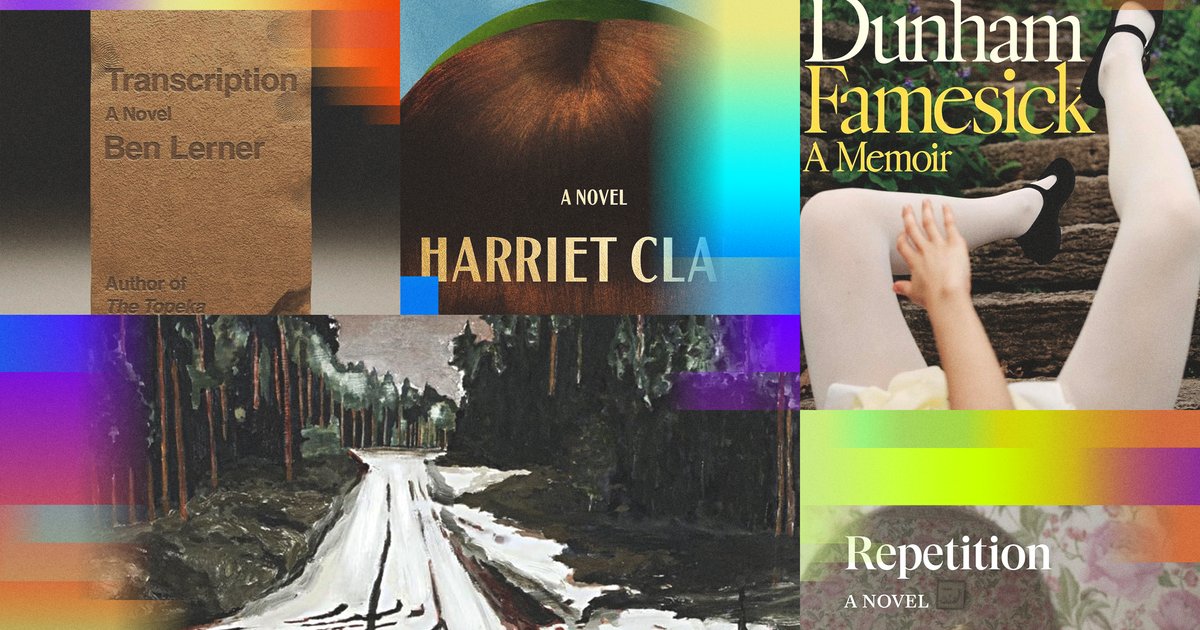
Harriet Clark’s wholly intriguing first novel, almost two decades in the making and inspired in part by her own life as the child of a Weather Underground member, centers on the main character’s weekly journey to a hilltop prison to see her mother. Suzanna, 8 years old when the book starts, lives in New York with her acerbic grandmother, who is too angry to accompany her on these visits. The three characters’ overlapping resentments and sympathies, and the institution that shapes their lives over decades, are stunningly well drawn. —Emma Alpern
Girls creator Lena Dunham became the receptacle for so many of our collective anxieties in the 2010s. It’s painful to be young, and sudden celebrity can explode all parts of the experience: the thrills, the self-loathing, the chaos. Dunham’s memoir is deep on its own terms and generous with its gossip, sparing very few details about her tangles with people like Adam Driver and Girls showrunner Jenni Konner. It has all the sincerity and brazenness of the series that made her an object of fascination. —E.A.
In 2019, the body of a young man named Zac Brettler washed up on a bank of the Thames; surveillance footage later showed him jumping from a high-rise balcony to his death. His family, devastated, slowly came to realize that, driven by an obsession with wealth and glamour, he had entered a criminal underworld they knew nothing about, even passing himself off as the son of a Russian oligarch. Investigative journalist Patrick Radden Keefe, author of Say Nothing and Empire of Pain, uses this knotty family story to explain the dramatic influx of cash in 21st-century London — “a twenty-four hour laundromat for dirty money,” as he puts it. It’s riveting, and Keefe leads us through it with characteristic sensitivity. —E.A.
After 2019’s The Topeka School, Ben Lerner’s slim fourth autofictional novel — in many ways about how technology mediates our relationship with the tangible world — appears almost lacunary. A writer matching the author’s own description is conducting the last interview with his academic mentor, but after breaking his phone, he proceeds with the interview, inexplicably pretending to record his mentor’s oration only to falsify the transcript later. The novel has been called a “seance,” and there’s something to that — it evokes mirrors and duplication without connecting the dots, it “documents” speech while testifying to its own falsehood as a document, and it reveals memory’s failures without naming them. In that, it’s a remarkable work, one that trusts the reader to piece together its contiguous threads. —Jasmine Vojdani
The latest from the beloved Norwegian author is as devastating as it is short. It opens with a writer ruminating on her 16-year-old self, in the middle of a transformational period during which all her gestures toward teenage autonomy are preemptively smothered by her mother. As the young girl the narrator once was covertly wades into dating and partying, she comes to realize that her mother’s fear of those things stems from a painful family secret she is trying to conceal. This is a carefully paced masterpiece of stunning psychological clarity. —J.V.
Professor and writer Namwali Serpell’s look at one of the 20th century’s most celebrated and, she believes, most difficult American authors is an impressively sustained feat of curiosity. Serious literary analysis doesn’t always go down that easily, but as Serpell goes through Morrison’s work novel by novel, you can sense how rapt she is. (“Morrison’s imperiousness never failed to electrify me.”) The feeling is contagious. The author’s “merry gargoyles,” her ghosts and spirits, her sense of “black irony”: All of it was part of her lifelong quest to make something demanding yet accessible. —E.A.
As a narrator, Kristian Hadeland is, at first, almost unbearable. When we meet him, the 20-year-old Norwegian student has just landed in London to pursue photography. While cobbling together a modest portfolio, Kristian cuts off all contact with his family after overhearing his father call him a narcissist, frequently forgets to wash, boils a dead cat, and sees everyone but himself as the problem. When he falls in with Hans, a strange older Dutchman, he starts to carve out a place for himself — until a violent altercation with an unhoused man upends his life and, probably, sanity. Being in this narrator’s head is exhausting; thankfully, at various points over the book’s 500 pages, it becomes occasionally hilarious. The Faustian fourth installment of Knausgaard’s Morning Star series probing the price of success is worth the perseverance. —J. V.
Sign up for the Vulture Daily
An entertainment newsletter for the pop-culture obsessed.
Vox Media, LLC Terms and Privacy Notice
