


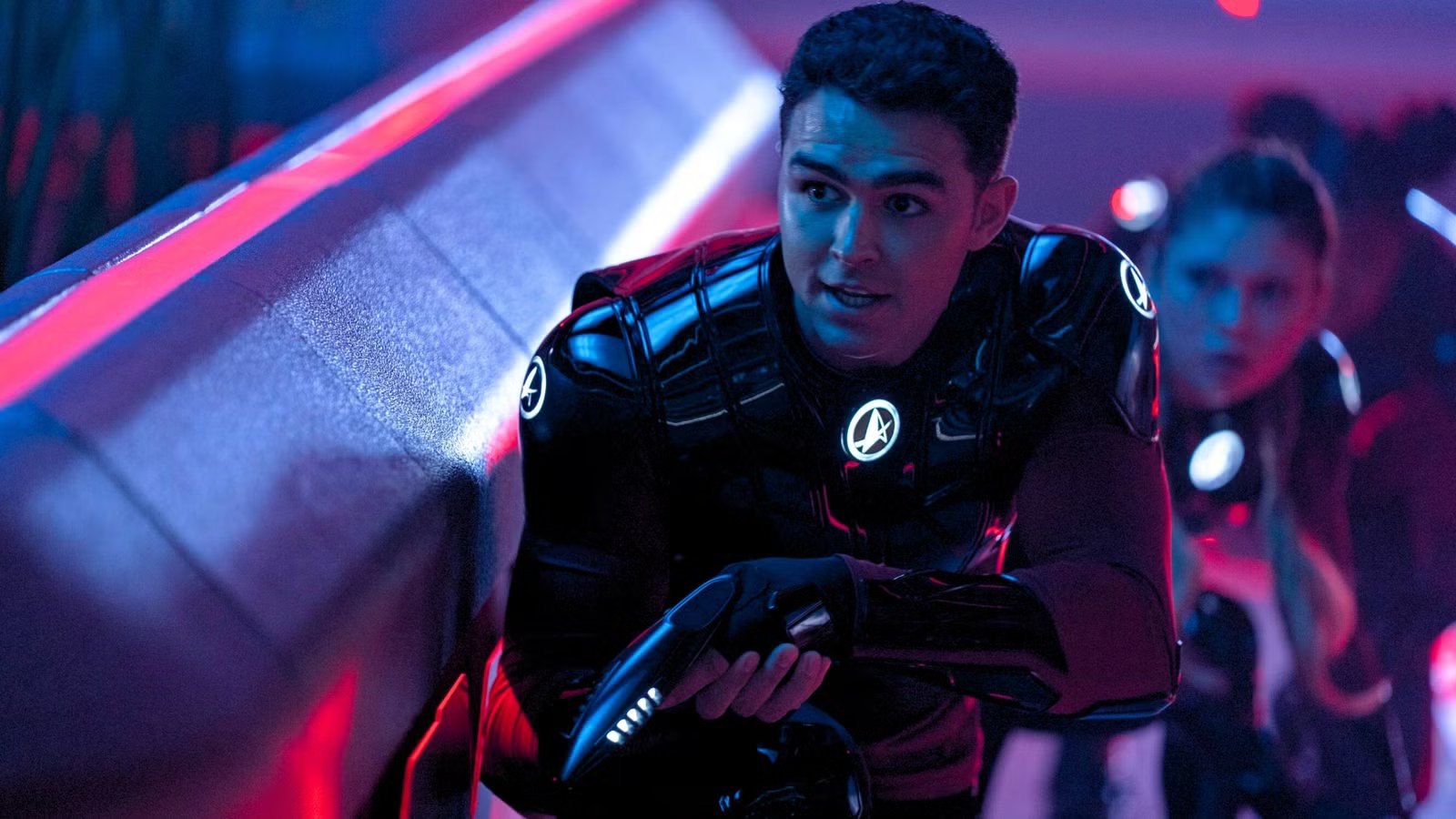
Paramount+’s newest Star Trek series, Starfleet Academy, takes place after the Burn, when the Starfleet Academy reopens to train the next generation of officers to explore the universe and uphold the Prime Directive. The show features a standout cast with Holly Hunter, Paul Giamatti, and Star Trek veteran Robert Picardo.
Since its debut a few weeks ago, Starfleet Academy has been divisive among Star Trek fans, with many coming out to review-bomb the series. The gist of the complaints centers around it not “feeling like Star Trek.” Setting aside the anti-woke bigotry, one of the major factors contributing to the different tone is that many of its main characters are young adults. In an interview with Collider, Robert Picardo addressed this controversial change.
Starfleet Academy Is a Divisive Entry into the Star Trek Franchise
The Burn was a devastating event that decimated Starfleet and destabilized the universe. It became every species for itself. Years later, the Federation is focused on rebuilding, and part of that means reopening the previously shuttered Starfleet Academy. It’s time to mold the next explorers to boldly go where no one has gone before.
Holly Hunter’s Admiral Ake is appointed as Chancellor of the academy for her forward-thinking mindset and the fact that she’s one of the only remaining captains who remember the Federation’s glory days. The new class of Starfleet officers includes two new species, a different kind of photonic and Klingon than viewers have seen before.
The kids are informal, selfish, and use contemporary slang, calling each other “a–hole” and “douchebag.” They do things like play secret grudge matches of Calica when Starfleet Academy and the War College get into a prank war. “Vitus Reflux” may not have been the best example of writing, with fairly obvious and predictable plot points, but it makes one thing clear. Starfleet Academy is a class full of Kirks.
James T. Kirk wasn’t a great captain because he respected the rules or his fellow officers. It was his creative, out-of-the-box thinking and his dedication to those who served under him. Kirk frequently ignored the Prime Directive. The very first time the Prime Directive was introduced, Kirk violated it. In one of the more divisive instances, he manufactured guns for a primitive people so they could fight a war.
While Kirk’s actions were not necessarily the wrong thing to do, it seems that some Star Trek fans forget that he was a cowboy. It’s not that different from how Chancellor Ake or the students at Starfleet Academy behave. The comparison is even more obvious when compared to the new Star Trek films. Seeing Kirk in the academy, behaving recklessly, and cheating on his final exam. It didn’t stop him from becoming a great Starfleet Captain.
Robert Picardo Addressed the Most Controversial Change
Stills from Star Trek: Starfleet Academy Season 1Image via Paramount
By far the most jarring element of Starfleet Academy is the way the kids speak. The third episode was the best example of it. While contemporary language and syntax have been in the other episodes, “Vitus Reflux” was so heavily focused on the kids and their prank war that it could frequently pull the viewer out of the moment.
In the latest episode of Starfleet Academy, The Doctor is teaching the students how to debate. When speaking with Collider, Robert Picardo said, “The cadets talk like kids in the present-day world and in their own vernaculars, but it is important to note that it’s almost like old Star Trek meets new Star Trek.” It’s a valid point, but with shows like Firefly, Farscape, and Battlestar Galactica, the writers should’ve known to create their own slang instead of using 21st-century jargon.
“We used to speak in a different way in the old series,” Picardo noted, “that mid-galactic speech, so I think it’s important that when you’re marshaling an argument in a diplomatic situation, that you can speak in well-thought-out and well-planned paragraphs, and not just, ‘Um, well, you know, kind of’ and that kind of thing. So, I do think that The Doctor was pretty demanding.”
At the beginning of “Vox in Excelso,” The Doctor makes a point to use some slang, and then explains, “I have earned the right to speak as I see fit. One day, you too, may earn that same privilege. But, alas, that day is not today.” Much of the episode is about what has become of the Klingons since the Burn and Jay-Den’s personal history with his family, but The Doctor’s point about language stuck with the students, as they left out the curse words when in class.
The implication is that over time, these cadets will start to sound more like the full-fledged Starfleet Officers audiences know and love. It’s important to remember that these cadets are still learning to become the next Picards, Siskos, and Janeways of the future. Now, if the writers can pull off the evolution of their language, it would be an incredibly clever benchmark for the cadets growing and evolving from the lessons they learn at Starfleet Academy.
