


Max Carter, Tobias Meyer, and Alex Rotter
Photographer OK McCausland
The whole collection is like this, Meyer explained, never the easy works, always the tough ones, the ones Si could get passionate about before anyone. Bill Acquavella struggled for years to sell a late Lucian Freud, a nude self-portrait, a tough one. When Si saw it, he pounced, and it’s still in the collection, one of the many knockouts yet to come to market.
What’s remarkable is that Si did sell so much of the collection while he was alive—he basically cleaned house in the ’90s when he moved apartments (David Geffen scooped up the big ones), simply because they couldn’t fit on the walls of the new place. He consigned to auction and to dealers, letting Larry Gagosian put stuff discreetly on the market, floating things out there.
“That’s the interesting part that we haven’t talked about, Si’s editing—the ability of the pen to cross out a paragraph,” Meyer said. “He was absolutely unsentimental about selling things. I once stood in front of a Rauschenberg with him in a Rauschenberg exhibition at The Met, and he said, ‘Oh, that’s a good painting.’ I said, ‘Well, you used to own that.’ He said, ‘I did?’ Completely uninterested in the past.”
Next to the Pollock was a Picasso that once hung in the Paris salon run by Gertrude Stein, who held onto it until her death.
“He owned, as I said, Jasper Johns’s Out the Window and then False Start,” Meyer said. “He owned the Pollock that I sold for David Geffen. He owned the Orange Marilyn. He owned the bunny. He owns this—he owns Gertrude Stein’s Picasso from 1913 that she bought from him. This is not any Picasso, this is her Picasso.”
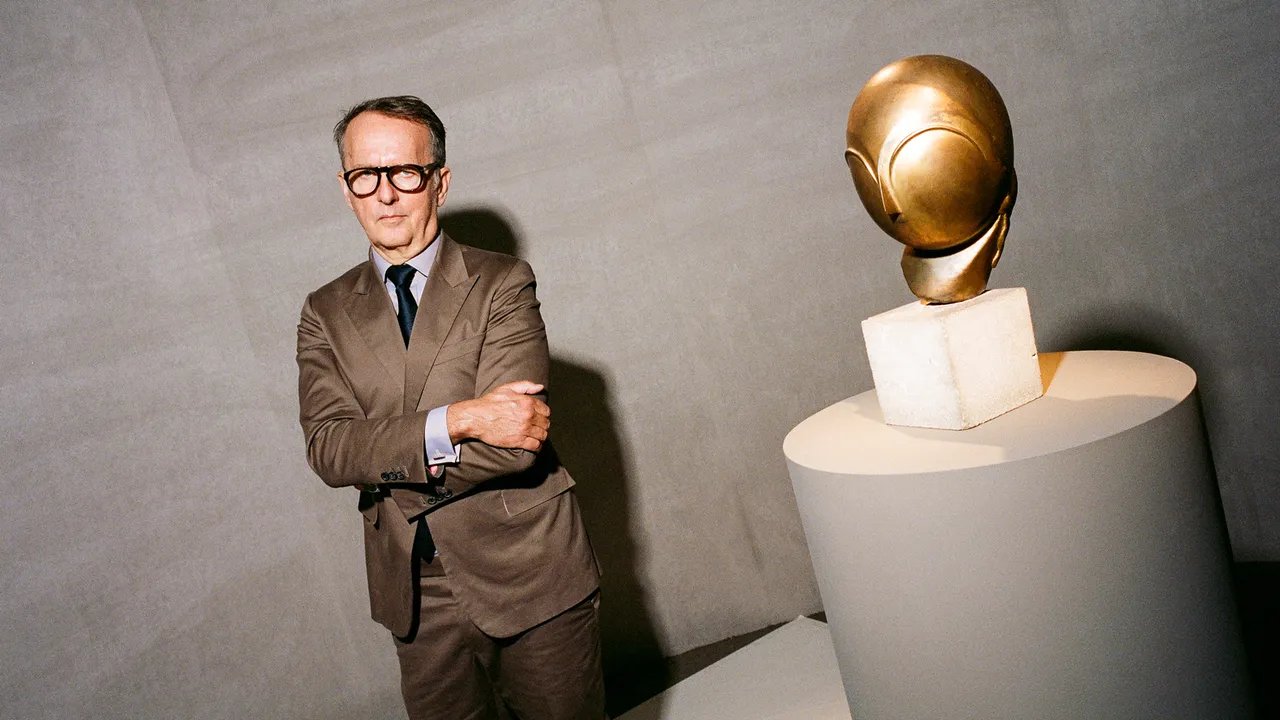
Constantin Brâncuși’s Danaïde, part of the Si Newhouse collection
Photographer OK McCausland
