


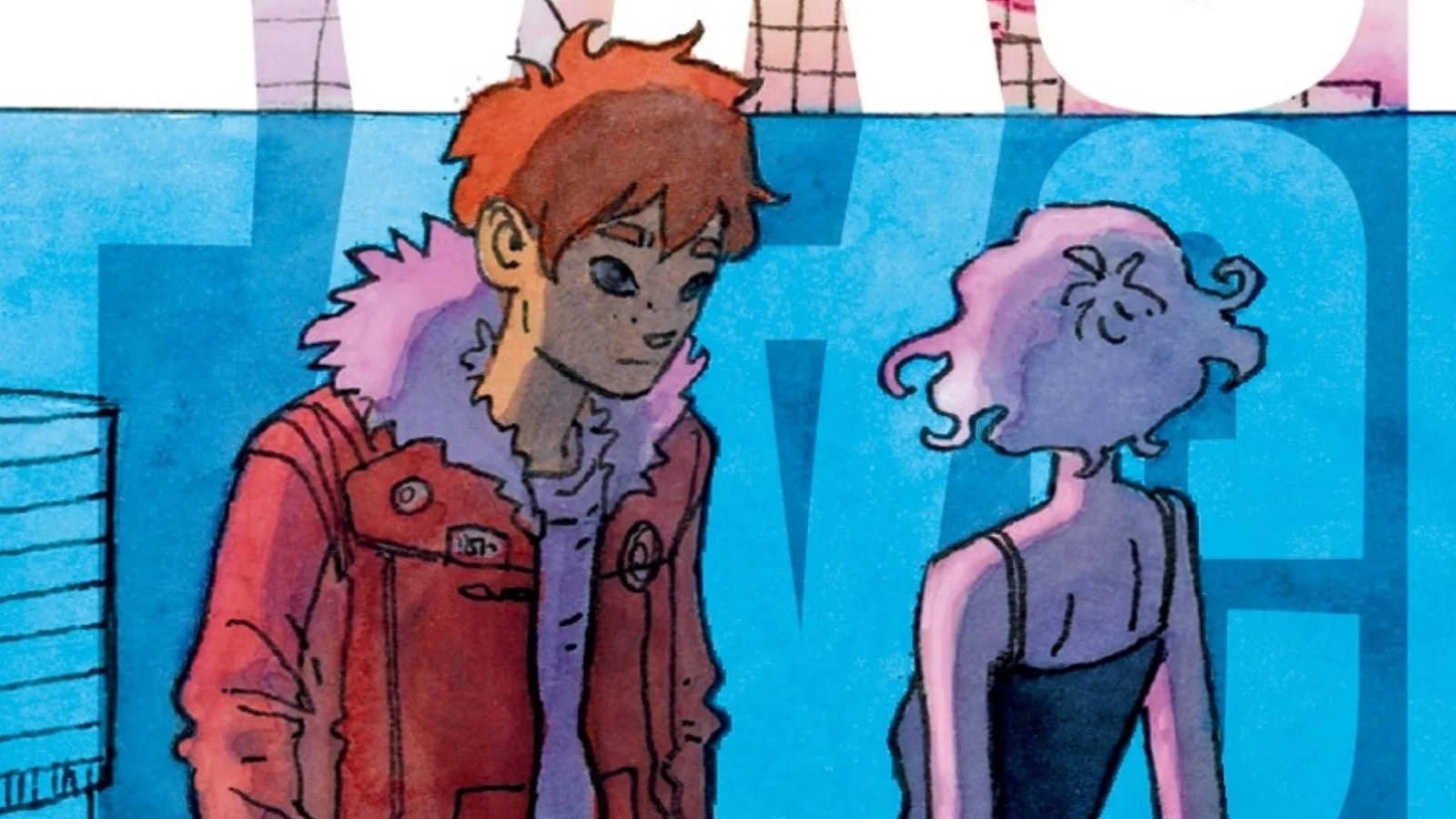
Salvage
Writer/Artist: Renée Nault
Publisher: Ten Speed Press
Publication Date: July 21, 2026
In a future world where the climate crisis has caused the oceans to rise and swallow cities whole, forcing coastal dwellers inland and then upward to taller and taller cities, a young artist named Paolo lives with his parents in the floating community known as the Flats. They are among the many climate refugees from all over the world who survive by scavenging items from the drowned cities below, cleaning them up, and selling them as “vintage” to the wealthy, trend-driven Uplanders from the city on Market Day.
When Paolo finds a waterproof suitcase full of nice clothes, he doesn’t tell his parents even though he knows they would fetch a high price. Instead, he dons the clothes and sneaks into the Uplands, where he meets Jules—a talented ceramicist and nepo baby whose actress mother has no time for her—and her friends, all of whom are massively popular on the social media app Moji.
If an Uplander wants something, all they have to do is ask. They can access success so much easier than those who live in the Flats, where people work their entire lives and may never even move to a home that’s barely above the water line. Paolo’s shocked by this difference, more than anything.
Afraid he’ll be rejected if he tells the truth about who he is and where he comes from, Paolo lies and says he’s an Uplander himself. But the truth has a way of rising to the surface, no matter how hard someone tries to fake their way into the life they think they want.
In her first original graphic novel, Salvage, artist and writer Renée Nault has crafted not just a beautiful, hand-inked and watercolor-painted story about two young artists who make a deep connection despite the social factors that should keep them apart, but also an urgent commentary on the devastating impact of overconsumption. Even in a world that has literally drowned in its own desire for more, more, more, Uplanders can’t stop chasing the next trend.
There’s a lot to unpack here, though Nault does a great job balancing the light and dark themes in Salvage‘s relatively short page count. Her architectural work is particularly impressive. The Flats is a stark depiction of how rough life is for those who live there, but also a love letter to humanity’s resilience and our ability to form strong, lasting bonds with each other even during incredible hardship. The Flats sprawls, but the community is close-knit. People look out for each other. People care.
And the Uplands is… Time Square on New Year’s Eve meets Tokyo: Overstimulating and absurd, yet oddly intriguing, with too many people crowding its narrow streets. Ads are everywhere, the algorithm so normalized it uses a retinal scan to recommend products, experiences, and businesses. Influencers are even more famous than they are in the real world. Trends move so fast it’s almost impossible to keep up.
Paolo can’t help but be enchanted by the Uplands, especially when he begins to see the art its residents create. He’s a talented painter with several filled sketchbooks whose use of color blows Jules away, but he’s fascinated by every kind of art he encounters. He’s perhaps the most intentional, slow-living-est person in the Uplands, which should tip everyone off that he’s a fish out of water, but Jules is the only one who suspects Paolo is hiding anything, and she likes him enough not to demand the truth (at least, at first).
Some of Paolo’s friends are also obsessed with “vintage” things and visit the market in the Flats every week, hunting for vinyl records and other treasures. The cultural divide seems impassable, but it isn’t. Once the characters connect and begin to spend time together, their similarities come to light, revealing how greed and obsession with status perpetuate oppression.
Jules, whose loneliness is her most constant companion, likes Paolo from the jump. He likes her from the moment he sees her photo on social media, before they ever meet in person. As their relationship develops, they each learn more about themselves and who they want to be, with a desire for integrity and truthfulness taking center stage.
Nault’s art is truly breathtaking here, making Salvage stand out for its sharply contrasting colors, expressive line work, and vivid facial expressions. Her writing gives each character a super distinctive voice, slowly intertwining the Flats and the Uplands through extensive (but never boring) dialogue and plot points that feel somewhat inevitable, but also fresh in the context of a dystopian love story.
Salvage is a well-paced story with a strong point of view, memorable characters, and a super sweet love story. Nault has produced something truly poignant that will surely leave a mark on the young adult and dystopian genres.
Final Verdict: Buy/Borrow
