


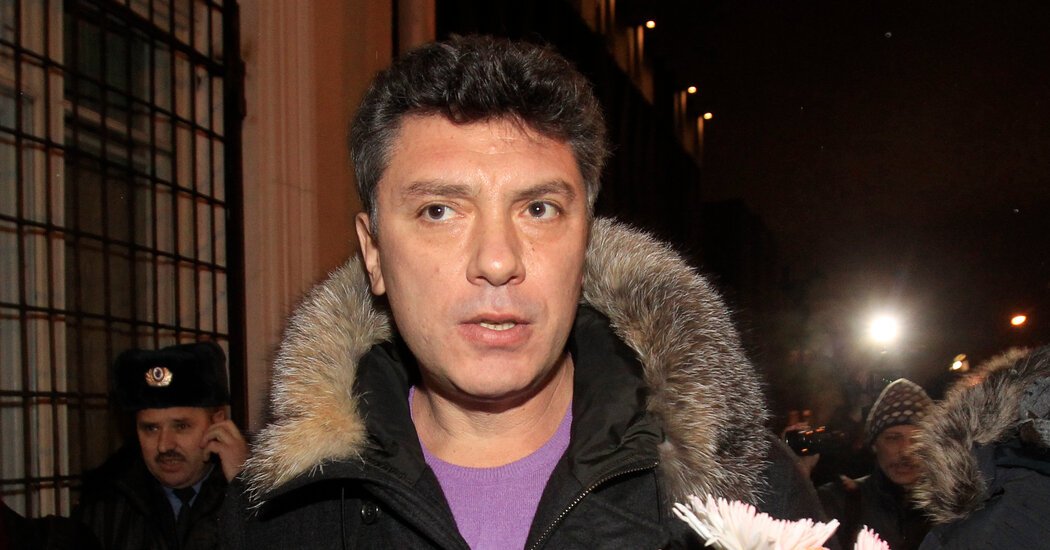
When Yeltsin appointed Putin prime minister, scarcely one in four Russians had heard of him. “It was easy to project any and all hopes and interests onto him,” Fishman writes. Some, including Nemtsov, initially believed that he would stay the course, toward Europe and the West.
Many more viewed Putin through the prism of national redemption, the iron hand that would restore the country to greatness. “The majority of Russians would be happy with an aggressive leader, not a caring one,” a sociologist told a respected weekly magazine in 1999. “People prefer force and brutality, expecting these qualities will help establish order.”
Nemtsov never again found his footing in national politics, except as a thorn in Putin’s side. He started a reformist electoral bloc that never quite took off, organized rallies, documented the Kremlin’s crimes, filed complaints with the European Court of Human Rights and lobbied Western governments to sanction Russian propagandists.
When, in 2013, he ran for a seat in a provincial legislature, his friend and occasional collaborator Alexei Navalny mocked him. “You and your privatization and your white trousers, your Moscow face,” he said. “You’ll never get anywhere.” Nemtsov won the seat, a modest perch for a former deputy prime minister, kindling the dying embers of liberalism in Russia. Against all odds, he still harbored hopes of seeing a member of the opposition, like Navalny, win the presidency in 2018.
For his impudence, state media insinuated that Nemtsov was an agent of the U.S. State Department and a “schizo-dem,” a pejorative meaning “a democratic activist who had lost touch with reality and had gone mad fighting the regime.” Pro-Kremlin youth activists pelted his car with dildos, stink-bombed his public appearances and threw Coke mixed with ammonia in his face. The authorities detained him repeatedly, and Putin’s allies subjected him to spurious lawsuits.
