


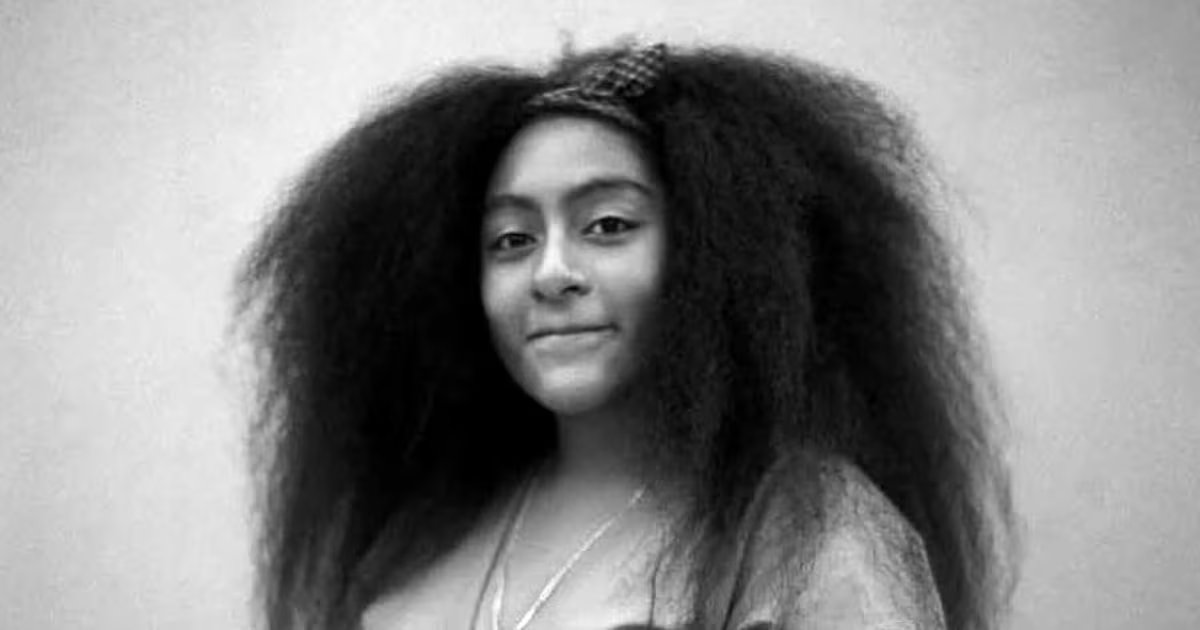
“In Light and Shadow: A Photographic History from Indigenous America”
By Brian Adams and Sarah Stacke; Black Dog and Leventhal Publishers, 2025; 294 pages; $40.
This gorgeous, beautifully constructed book introduces readers to a range of largely unknown Indigenous photographers from the beginning of photography to today, in chronological order. Eighty photographers and more than 250 photographs are included. The text compiles short essays by a variety of experts about each photographer and the cultural context surrounding their lives. The photographers, identified by cultural group and home place, are largely drawn from North America, although Central and South America and Hawaii are also represented.
Co-author Brian Adams is a well-known Inupiaq photographer based in Anchorage. His work documenting Alaska Native villages, some of it from his 2017 book “I Am Inuit,” has been showcased nationally and internationally. He and Sarah Stacke, a Euro-American photographer, researcher and author based in Brooklyn, New York, first collaborated to assemble a digital library of Indigenous photographers. “In Light and Shadow” expands on that project.
The project’s goal, as stated by the authors in their introduction, is to contribute to the understanding that Indigenous photographers “have been making photographs for their own purposes since at least the 1860s … The work here centers Indigenous communities and stories and rewrites history. It is influenced by ancestral memory, transformation, healing, astute observation, imagination, kinship, and continuity.”
Indeed, a pass through the pages demonstrates how the photographers viewed people and cultures familiarly, with an intimacy and attention to details. Faces are open and “alive” in ways that non-Indigenous photographers seldom captured, and domestic settings are commonplace. The famous photographer Edward Curtis, who staged his photographic subjects in traditional clothing and settings, is contrasted for his false, romantic view. The lives of ordinary people, especially those of women and children, are well documented here.
An early example is from Metlakatla. Benjamin Alfred Haldane, according to Stacke’s research and narrative, came north from British Columbia in 1887 with the more than 800 Tsimshian people led by missionary William Duncan, whose mission was to turn “his” people into Christianized citizens. For four decades the self-taught photographer resisted assimilation policies and documented Tsimshian identities and practices that showed their continuance. In 2003, 163 of Haldane’s glass plate negatives were rescued from Metlakatla’s waste facility. Efforts continue to uncover and share his work from scattered archives and to reunite photographs with Metlakatlan families.
Tlingit Louis Shotridge will be more familiar to readers. From Klukwan, Shotridge worked from 1912-1932 for the Penn Museum in Philadelphia as a curator, collector and exhibit preparer, mostly doing field work among his own people. He became, and remains, very controversial for collecting sacred materials for the museum. Still, the 500 photographs that he took during his fieldwork and deposited at the museum with descriptive titles create a visual journal of material culture, local events and daily activities. His photos in “In Light and Shadow” include ceremonial objects, portraits, and one of himself mushing a dog team.
Martha McGlashan Monsen, from the Aleutian Islands and Bristol Bay, is represented by photographs that span almost a century, from the 1880s to the 1970s, documenting a large family tied intimately to the land and sea of the Aleutians and Bristol Bay. Hundreds of photographs, both made and collected by Monson, were donated to archives at the University of Alaska Anchorage by her son in 2018. The selected photos show a wedding party, cannery boats in Bristol Bay, other cannery scenes and three of Monson’s sons wrestling barrels of heating fuel in the 1940s.
William Lackey Paul Jr., the son of William Lewis Paul, the first Native attorney in Alaska, also became a lawyer but was more committed to using photography to build awareness and to document issues of land and fishing rights, civil rights and environmental concerns. Paul built a collection of 5,000 negatives and prints. Two of the photos in “In Light and Shadow” document a 1944 fire that devastated Hoonah; these were intended at the time to build support for recovery needs.
Henry Samuel Kaiser Jr., Athabascan from Nenana, primarily documented fellow patients and staff at the Seward Sanatorium between 1950 and 1953. Nearly 250 of these, inside and outside the buildings, are preserved at the University of Alaska Anchorage. Told that he should prepare to die, he instead hitchhiked to the Mayo Clinic in Minnesota, where he convinced doctors to operate on his heart. He lived to be 79, as a teacher, journalist, photographer and writer who championed Native people and their lives.
Near the book’s end, Brian Adams himself receives recognition as a contemporary photographer, primarily for his portraits of Alaska Natives. His book, “I Am Inuit,” published in 2017, took him to 20 villages, where he documented lives with both photographs and interviews. One of the two photos included in “In Light and Shadow” is of Marie Rexford in Kaktovik surrounded by hunks of muktuk she laid outdoors to keep them from sticking together as they froze. The other is of men viewed through the open door of a steam house. Adams’s knowledge of and respect for Native lives is apparent in the photographic choices he makes and his acceptance by those he portrays.
While the photographs in “In Light and Shadow” are fascinating and instructive, the stories of the remarkable lives that go with them are equally significant. And, as Adams and Stacke point out, materials still undiscovered have a lot to teach us about ways of seeing and understanding our world through Indigenous lenses.
Anyone interested in photography, Indigenous cultures or the times and influences that shaped the lives of Indigenous photographers and their communities will find this book a treasure. Its example might also encourage families of all heritages to search their own attics and photo albums to locate photographs and inscriptions with distinct cultural viewpoints.
[Book review: Collection looks at Inuit myths through modern eyes]
[Book review: A terrifying slice of horror inhabits two volumes of the Inuit anthology ‘Taaqtumi’]
[Book review: Take a strange trip into history, myth and allegory]
