


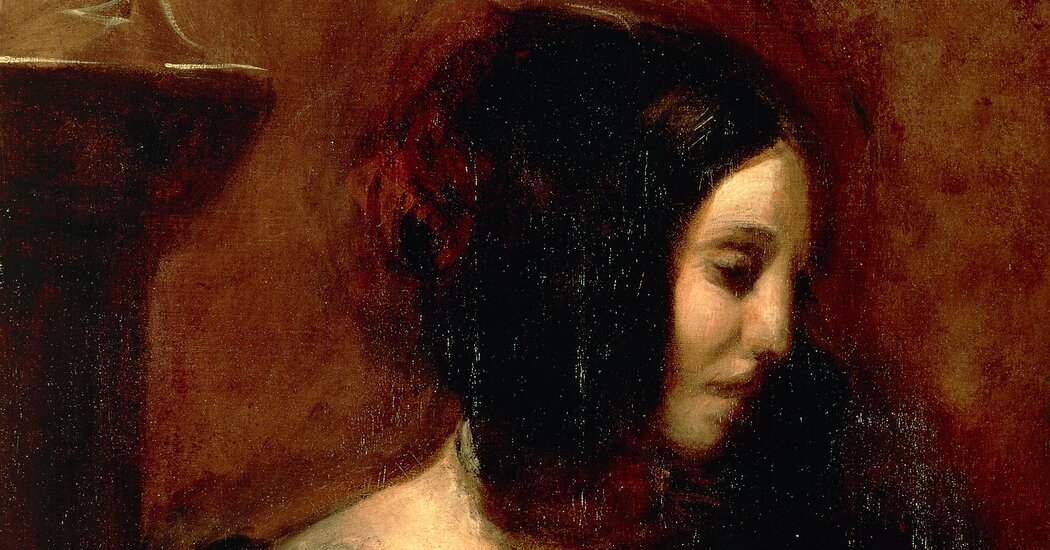
She transitioned to “G. Sand” with her first solo novel, “Indiana,” in 1832. This tale of a woman trapped by marriage and liberated by an equitable free love received rapturous reviews, with most critics initially unaware of the work’s female authorship. But as her success turned her into an overnight celebrity, her true identity soon became widely known.
A second novel, “Valentine,” reinforced her status as a formidable talent. But “Lélia,” which dared to frame marriage as essentially a sexual trade, provoked outrage. The Catholic Church placed her works on its banned list. It did little to stifle her popularity.
During the turbulence surrounding the 1848 revolution that deposed King Louis Philippe, Sand threw her energy into crafting socialist pamphlets, founding two opposition newspapers and creating populist works, including a trio of pastoral novels sympathetic to agrarian life. To her utter disappointment, a socialist republic ultimately failed to emerge.
In the next decade, she published her memoir, “Histoire de Ma Vie” (1854-55), considered her magnum opus. Over 1,000 pages long, the sprawling reflection on childhood, memory and French society precedes “In Search of Lost Time” by more than five decades, Sampson reminds us. (Marcel Proust, deeply influenced by Sand, pays tribute to one of her pastoral novels in his own tome.) In the 1860s, Sand and Gustave Flaubert began a close friendship, captured for posterity in their numerous letters to each other until her death in 1876. In a tribute, he called her “that genius” whose “name will live in unique glory as one of the great figures of France.”
To grasp the essence of Sand’s staggering lifework, Sampson proposes reconsidering her 70-book corpus as the “Female Comedy” to Balzac’s 90-volume “Human Comedy.” It is an illuminating comparison. And Sampson weaves these more didactic turns into the fabric of a winsome tale of reinvention, well constructed and argued (even when the book suffers, at times, from heavy-handed prose and some digressions).
