


If a picture is worth a thousand words, what’s a gallery worth? Few people are better poised to answer that question than Karin Rehn-Kaufmann, the Art Director & Chief Representative for Leica Galleries.
For photography wonks, creatives, and gadget lovers Leica’s name is synonymous with premiere cameras and lenses and in an increasingly digital world, it’s hard to overstate the significance of Leica’s staying power–no doubt a testament to the quality of their products but also to their innovative approach to reaching new audiences. This year, the brand marks the 50th anniversary of their gallery initiative; in 1976 the first Leica exhibition was opened in what was then, the foyer of the Leica administration building in Wetzlar, Germany.
This initiative both helps to preserve this art form, and introduce it to new audiences; in ideating a network of galleries where people can experience Leica photography firsthand, the brand is both ahead of its time and right on time as younger consumers, in particular, are hungry for the old school touch of film photography.
Take A (Film) Picture, It Will Last Longer
“Let’s welcome back, film photography,” writes Ellie Cleverley for BBC. For a piece in March, she spoke with young people using film photography to capture everything from the everyday to concerts and more, preferring this analog medium to the cameras on their phones. One photography expert she spoke with said more and more people are being drawn to film photography for the romance and the nostalgia of it and it’s easy to understand why; the smart phone boom aside, digital editing tools like AI are creating an ever expanding chasm between the very human need for authenticity and the product put in front of us.
But it’s not just amateur’s trying their hand at loading a film camera and taking the shot. Nolis Anderson is one of the photographers featured through Leica’s galleries; he says working with film makes him a better photographer. “I love that film can be my best and worst critique,” he says. “Film will always be there to humble me and remind me that even now there is always something to learn.” Melissa Ann Pinney who also exhibits her photography at the Leica galleries says that there is a tactile element to film photography that cannot be replaced. “I still find something magical about working directly with light and chemistry rather than pixels and sensors. Film requires foundational understanding of the relationship and possibilities of shutter speed, aperture and ISO,” she says. “When using a digital camera, I miss the mistakes, random shots and even light leaks that may become interesting beyond one’s initial intent.”
Closeup of movie director David Lynch, looking through Panavision Panaflex movie camera as he directs filming of Wild at Heart on street location. (Photo by Acey Harper/Getty Images)
Getty Images
This renewed enthusiasm from hobbyists is hardly a flash in the pan; as far back as 2022, industry experts were noticing a trend: people wanted photography to prove an escape from the toils of technology. The one draw back they cited, though, was cost; while the cost of a digital camera from the local drug store is nominal, it might not be widely feasible to purchase a separate digital camera when the one on our phones still gets the job done.
Photography For All
For brands like Leica, the cost of a camera is reflected in its craftsmanship; still the brand understands that it’s imperative to do their part in educating everyone from the casual hobbyist to the seasoned career photographer.
“[When Leica opened it’s first gallery] 50 years ago, galleries focused only on photography didn’t really exist,” Rehn-Kaufmann explains to me. “These galleries are open to everyone [free of charge] and it’s a meeting point for photo enthusiasts and also people who are not interested in photography so much, but who are perhaps interested also in learning something about photography and also for their own way of even shooting with a mobile phone to be better on that.”
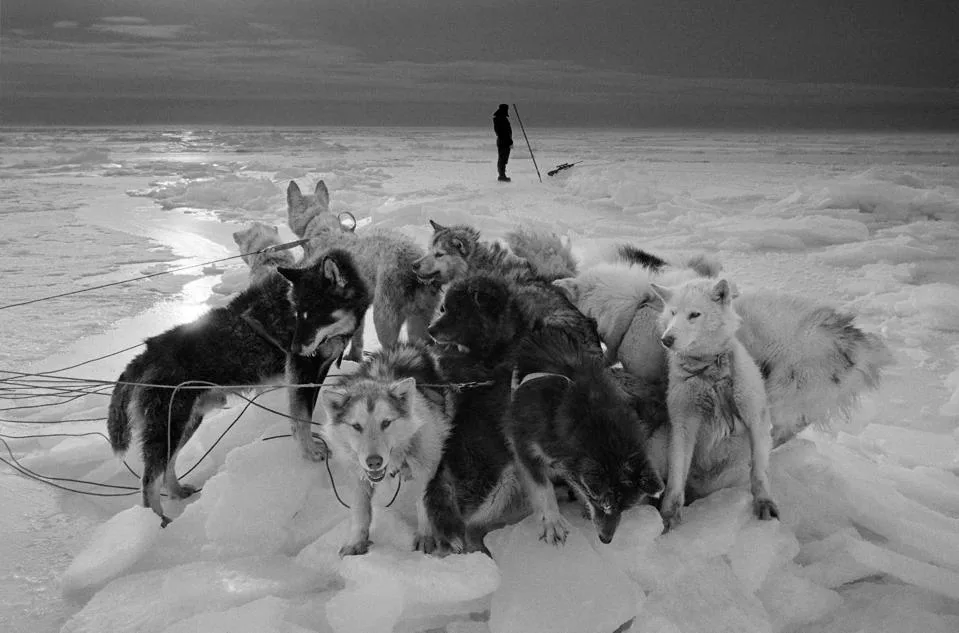
From the exhibition „Personal Perspectives. 50 Photographs for 50 Years of Leica Galleries”, Leica Gallery Wetzlar 2026
Rania Matar Barbie Girl, Haret Hreik, Beirut, Lebanon 200
Craig Semetko, who shoots with Leica cameras and who has his photography on exhibition with Leica says the galleries provide inspiration. “Seeing a fine art print on a gallery wall can be tremendously inspiring and cause people to grab their camera and go out and create,” he says. “What better way to keep a legacy alive than by inspiring people to create?”
Rehn-Kaufmann also goes on to highlight not only the ways in which these gallery spaces enrich the photography landscape, but to discuss the interpersonal support Leica provides for up and coming photographers. Being featured in a Leica gallery provides invaluable visibility and the brand also offers workshops and other interactive programs to further education.
The Human Touch, 50 Years Later
When I spoke with Rehn-Kaufmann, Leica was preparing to open the brand’s Chicago location which would include, in addition to a showroom for the brands cameras and lenses, a new gallery.
She spoke to me about the values that lead her when she’s curating these spaces. “At Leica, we really try to follow the human way,” she tells me explaining that for her the goal is never to advance a certain point or message but to simply celebrate a love for photography. It’s also important that these spaces represent the communities they become a part of, she says, noting that the Chicago space would feature artwork from photographers local to the area.
Leica, Chicago
© Jack Devanna
Also underway at Leica is a celebration of 50 years of galleries, which the brand is commemorating with, “Personal Perspectives. 50 Photographs for 50 Years of Leica Galleries” presented by the The Leica Gallery Wetzlar. This presentation will include renowned photographers including Werner Bischof, Elliott Erwitt, Gianni Berengo Gardin, Thomas Hoepker, Bruce Gilden, Barbara Klemm, Ralph Gibson and Joel Meyerowitz and will feature everything from photojournalism to portraiture.
This article was originally published on Forbes.com
