


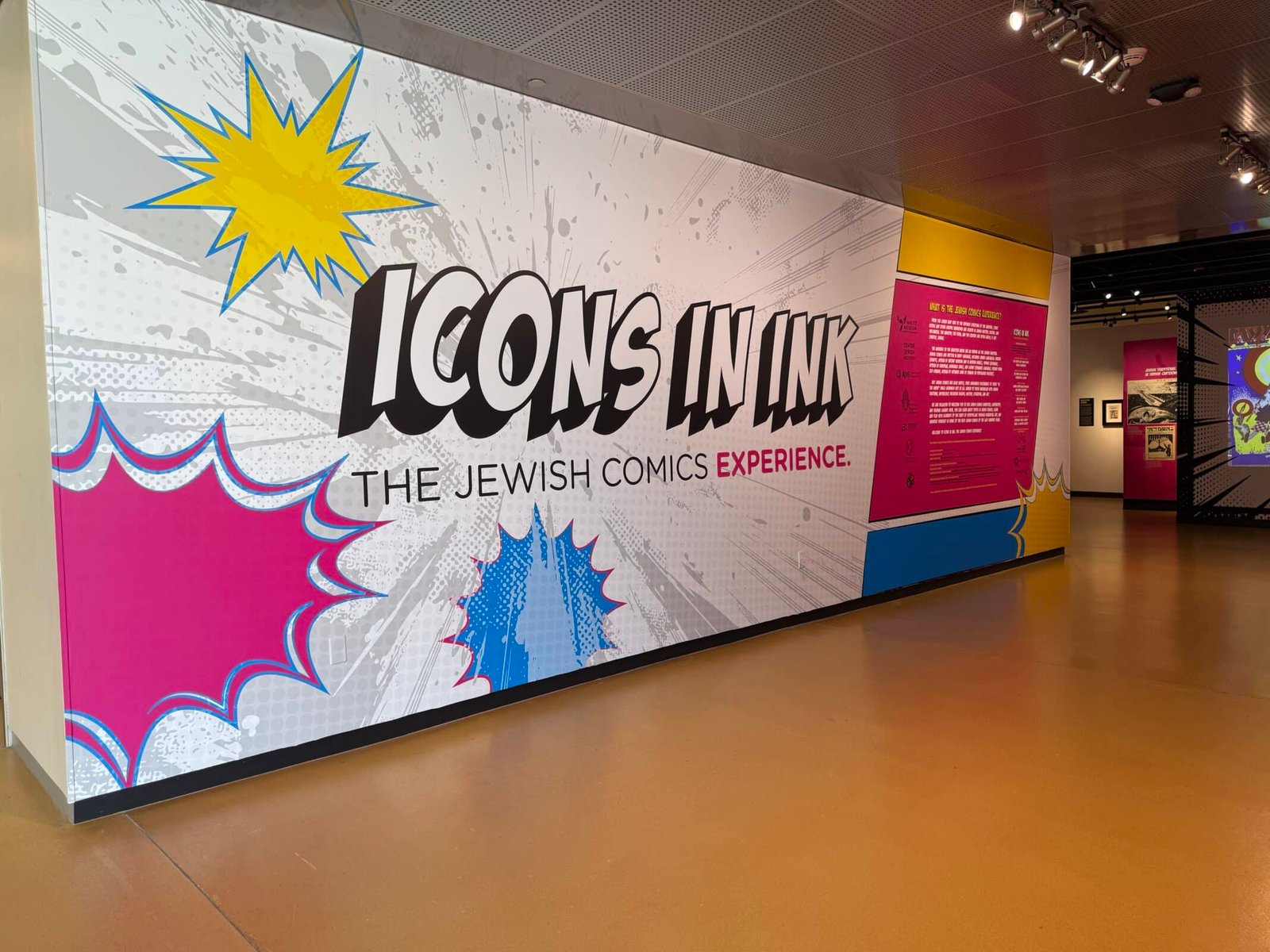
The city that gave birth to Superman, arguably the most influential superhero in modern history, is now honoring not only his creators but also the broader legacy of Jewish comic writers and artists who helped shape the medium of comic books into what it is today. This comes on the heels of Jack Kirby recently having the street where he grew up in New York’s Lower East Side being renamed in his honor. Now his legacy joins those of Jerry Siegel, Joe Shuster, and other legends and unsung creators in a brand new exhibit at the Cleveland’s Maltz Museum celebrating Jewish history and its lasting impact on comics. The exhibit was co-curated by Roy Schwartz, who was also behind the Kirby Way street naming, along with Dr. Samantha Baskind.
As you walk into the showcase at the museum in Cleveland, Ohio, you’re greeted by a stainless steel statue meant to pay homage to the Man of Steel, designed by artist David Deming, notable for his work creating bronze statues of notable historical figures from the city. This statue was created on behalf of the Siegel and Shuster Society, a nonprofit organization whose mission is to celebrate the creators of Superman and preserve their legacy. Rather than model the statue after a particular actor who has portrayed the character in film or television, Deming said he aimed for a “timeless quality” for the design
You then turn the corner into what is essentially the first chapter of a showcase of history. Starting from the immigration of many Jewish families to the United States in the late nineteenth and early twentieth centuries. Individuals from those families in turn became a part of the creation of pulp magazines that were seen as cheap entertainment, which then saw the rise of comic strips from newspapers being collected in them, becoming the first comic books. This would lead to different types of stories being showcased, from science fiction to Cowboys and Native Americans, until we finally saw the creation of Superman in the pages of Action Comics #1.
As the exhibit continues, towering seven-foot foldout displays line the wall, designed almost like oversized comic book pages guiding visitors through each era and section of the experience. On the right, one display offers a glimpse into Jewish heritage through Yiddish cartoon strips, showing how history, traditions, and values found their way into early comics. On the left, another section highlights comics created by Sephardic Jewish creators, including works such as The Rabbi’s Cat and The Wolf of Baghdad.
Then as you turn the corner to continue, on the back wall you see comic book history showcased. Features are early Superman strips by Jerry Siegel and Joe Shuster originally published in The Plain Dealer, alongside moments showing Jewish themes and folklore woven into superhero storytelling. Pages from Moon Knight #38 explores the mythology of the golem through the reanimated body of Moon Knight’s father, while an issue of Detective Comics presents a story where an elderly Jewish man creates a golem to seek vengeance against a group of white supremacists which forces Batman to intervene.
Entering the second hall, another foldout display showcases the beginning of the comics’ fight against tyranny. Jack Kirby and Joe Simon’s Captain America debuts, busting onto the page with a right cross to Hitler became an iconic moment that would inspire generations of readers and creators alike. Just a few steps away sits the writing desk of Jerry Siegel, the very desk where Superman was first brought into this world.
The exhibit then turns its focus back toward Superman and the character’s continued legacy. Multimedia displays trace his history from landmark moments like The Death of Superman in 1992 to later eras, including Cleveland native Brian Michael Bendis taking over the title following his celebrated run at Marvel Comics.
The experience extends beyond the exhibit itself as well. Throughout its run at the Maltz Museum from May 7th through August 23rd, several events will accompany the showcase. On May 27th, author Brad Ricca will host an interactive lecture based on his book, Super Boys: The Amazing Adventures of Jerry Siegel and Joe Shuster. Then on June 24th, Cleveland State University professor Dr. Samantha Baskind will be leading a guided tour through the Icons in Ink exhibit. Plus, on July 15 and August 19th, the museum will be hosting screenings of Superman and Captain America: The Winter Soldier respectively for anyone to come and enjoy.
More than a celebration of comic books, the exhibit serves as a reminder that many of the medium’s most enduring heroes, stories, and ideas were shaped by Jewish men and women whose influence can still be felt across comics today.
