


With more people reading manga and webtoons (aka vertical scroll comics) than ever before, Beat’s Bizarre Adventure gives three writers an opportunity each week to recommend some of their favorite books and series from Japan, Korea, and elsewhere. This week we have adults finding themselves, gamer romance, and, of course, heroes.
Even Though We’re Adults
Writer/Artist: Takako Shimura
Translation: Jocelyne Allen
Adaptation: Casey Lucas
Editing: Shannon Fay
Touch-Up Art and Lettering: Rina Mapa
Publisher: Seven Seas
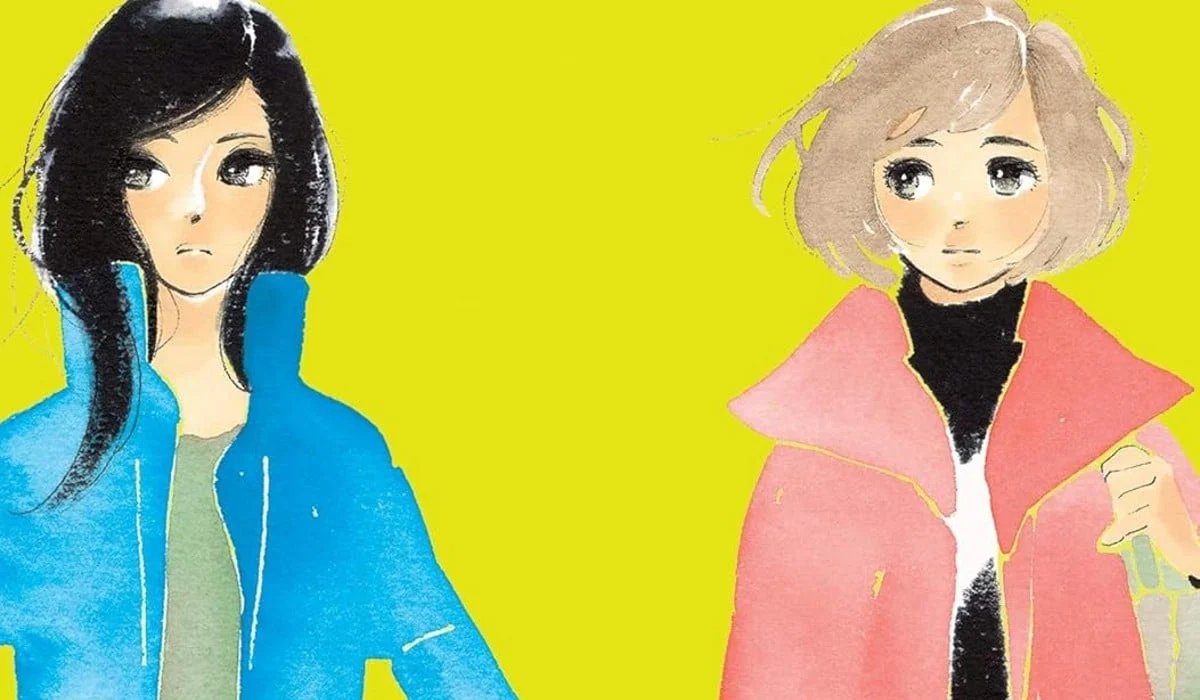
Ayano is an elementary school teacher in her thirties with a devoted husband and loving family. Akari is a woman working at a bar after quitting her job as a hairdresser. When Ayano blows up her life by kissing Akari and telling her husband about it, Akari has no idea what to think. Is Ayano just another married woman using her to cheat on her partner? Or is their connection as real and electric as it feels?
While I’ve heard plenty of praise for manga artist Takako Shimura, I’ve never read any of her work. But since an excellent anime adaptation of her series Scenes From Awajima is airing right now, I thought I should finally check out her comics. Translator Jocelyne Allen recommended this series on her blog Brain vs Book as being “a complicated and beautiful story of growing into what you are.” So I decided to give it a shot. Lo and behold, it’s good!
When it comes to series about relationships, artists often make the side cast subordinate to the leads and their connection. That doesn’t happen here. Shimura keeps folding in additional characters, from Akari’s hairdresser ex to Ayano’s mother-in-law and her family. It’s a whole world of interconnected friends and neighbors that often threatens to upstage Ayano and Akari.
A useful comparison for me to this series is another that I love, Battan’s Run Away With Me, Girl. At the core of that comic is the heroine’s struggle to save her long-time crush from a toxic, heteronormative relationship. The boyfriend in that story is absolutely in the wrong. Ayano’s boyfriend in Even Though We’re Adults, though, is surprisingly sympathetic. He’s upset that Ayano cheated on her, but he still wants her to be happy, and Shimura takes that seriously. Similarly, while his mother is dismissive of Ayano’s feelings, she isn’t a cut-and-dry villain either.
Meanwhile, Ayano and Akari’s connection remains strangely amorphous. Are these feelings (as the series implies) rooted in past longing that she’s repressed for decades? Or is it a heat-of-the-moment thing? Is it good for either of them? In this respect Even Though We’re Adults bends the rules of traditional yuri–or heck, even cheating manga. You’re never sure reading the book whether it’ll give you the expected, satisfying beats or take you in a different direction entirely. Even so, I’m definitely curious to follow Shimura on her winding way, and learn where Ayano and Akari might land at the end of their story. — Adam Wescott
Turns Out My Online Friend is My Real-Life Boss!
Writer/Artist: nmura
Translator (Print Edition): Jacqueline Fung
Lettering (Print Edition): Michael Martin
Editor (Print Edition): Tiff Joshua TJ Ferrentini
Publisher: Kodansha
Hashimoto is one of us: he seeks refuge in online anonymity and finds no meaning in work “aside from making money for gacha games.” Can you blame a corporate slave working under a demon of a boss who’s never smiled once in his life? Hashimoto plays Lia Fail with another gamer named Uma. Together they trash-talk their colleagues like there’s no tomorrow. Then one day, they meet offline for the first time, and lo and behold—Uma is no other than Hashimoto’s demonic boss, Shirase.
nmura‘s Turns Out My Online Friend is My Real-Life Boss! was a series I used to infrequently follow during its Twitter/Pixiv release. So I was ecstatic to see it being compiled into a print volume, and eventually licensed in English! Kodansha frames the series as “perfect for fans of Cherry Magic! and Wotakoi: Love is Hard for Otaku,” and rightfully so. It’s an excellent mix of office life, gaming culture, and romance.
One of the highlights of the series is the cast’s in-game avatars. They are adorable, with limited facial expressions and simplistic designs that add to their charm and comedic effect. Backgrounds are either simplistic or consist of screentones, but the meme-y facial expressions and comic timing do the heavy lifting, which is crucial for a series like this.
Hashimoto and Shirase, while not total opposites, are different in demeanor. Hashimoto is the hot mess of the two, while Shirase is the cool, collected “prince” of the office. They make a fun and balanced pair. The romance aspect gradually, naturally develops between them; as someone who enjoys established relationships in their romance manga, I appreciate nmura for exploring what comes next for Hashimoto and Shirase after they become a couple.
Three volumes of Turns Out My Online Friend is My Real-Life Boss! are currently available in English. Kodansha’s print edition comes in paperback and large trim, with a color page at the beginning. If you’re looking for a funny, enjoyable and sweet Boys’ Love series that incorporates online gaming culture and is longer than one volume, you can’t miss this one! — Merve Giray
Moving
Writer/Artist: Kang Full
Platform: Tapas
Kang Full’s lack of availability in English continues to be one of the great mysteries of modern webtoons. He’s one of South Korea’s first successful webtoon artists, who draws thrilling, accessible stories about ordinary people doing extraordinary things (when he isn’t drawing love stories.) His art is admittedly not great, but he’s at least good at coming up with cinematic imagery: for example, a zoom-in towards a teenager’s sneakers, as we the reader realize the teenager is not standing in a mud puddle–he is floating above it.
One of his few available comics in English, Moving, at least represents Kang Full at the height of his powers. It’s an initially slow-paced drama about a teenage boy named Kim Bongseok with the power to float. His mother makes him wear weights and a heavy backpack to keep him grounded. But when he meets a girl he likes at school, he’s so overcome by fluttery feelings that he flies into the air. It’s a cute metaphor for teenage crushes that Kang Full keeps finding funny variations on.
Bongseok isn’t the only one with powers, though. As the series continues, Kang Full jumps backwards and forwards in time, filling in details you likely missed the first time around. Whatever happened to Bongseok’s dad? Why doesn’t his crush know how to apply a bandaid? If you’re a fan of Naoki Urasawa thriller comics, or the infamous 2004 TV drama Lost, there are twists in Moving that will make you yell at your screen.
Moving was adapted into a very successful TV drama in 2023. Kang Full himself wrote the script, and added in additional scenes to help flesh out the characters and setting. I’ll admit, the actors in the television series do a lot to humanize the characters. Live action Kim Bongseok’s goofiness works much better for me than comic Bongseok’s stolid expression. That said, the comic’s tight structure is just more efficient than the sprawling TV series. Both are worth a shot if you ever asked yourself, “What if Heroes was good?” (Kang Full’s earlier series Timing beat Heroes to the punch by a year, by the way.) — Adam Wescott
Follow Beat’s Bizarre Adventure to get weekly manga and webtoon recommendations!
Like this:
Loading…
