


Faces and Phases, the groundbreaking portrait series to address the discrimination and systematic violence facing Black LGBTQIA+ individuals in South Africa, is marking its 20th anniversary this year. The photographic and narrative project was created by South African photographer Zanele Muholi to address the (under)representation of members of the communities in mainstream visual culture and to help change negative narratives about queer people on the continent. The body of work features hundreds of powerful black-and-white portraits.
‘I want people to know that we are here, we were here before and we will always be here without fear of exclusion or being excluded, without fear of being side lined, without fear of being undermined because any person who says I am and comes forth means that they are doing that on behalf of many others who are silenced by immediate spaces from their churches to schools to workplaces,’ says Muholi to Wallpaper* about the beginnings of producing what is now ‘the most important Black visual archive’ focusing on Black lesbian, trans and queer communities, having seen how they are depicted in mainstream media.
Portrait of Zanele Muholi
(Image credit: Ikram Abdulkadir)
The individuals featured in Faces and Phases are ‘participants who are partaking in the most important study of our lifetime,’ as the self-described visual activist puts it. They are all 18 or older and are openly themselves. It is a deliberate decision by the artist to ensure that ‘I present my people in the most positive, healthiest, and dignified manner to educate many others within the continent and the African continent to say that hear us, respect us, and recognise us because our existence saves lives.’
That’s the kind of practice that Muholi is renowned for both locally and internationally: bringing visibility to Black lesbian, trans, and queers communities, and addressing prejudice, discrimination, stereotypes and violence aimed at members of these communities. The artist has been teaching photography for over 20 years, extending that to include uplifting initiatives that provide photography lessons to young people and Black women in townships and rural areas in South Africa, as a way ‘for them to write their own stories.’
Bona, Charlottesville, 2015 – 9781
(Image credit: © Zanele Muholi. Courtesy Yancey Richardson, New York and Southern Guild, Cape Town)
The Muholi Art Institute partners with visual art teachers in South Africa and sponsors students on trips to art fairs, museums, and galleries to experience what they are taught in class and to interact with practising artists and other professionals in the field. The institute also hosts an independent artists’ residency. For about a decade and a half, Muholi has funded close to 200 people to study photography at the Market Photo Workshop, a renowned Johannesburg photography school which counts the artist as an alumnus. ‘In that way, I’m not alone and people get to share their visibility as well and at the same time get some qualifications to produce work in their communities and surrounding areas,’ shares the artist, adding the idea is ‘not to enjoy your own resources but to share with different communities in the most kind manner.’
In early March, Muholi was named the 2026 laureate of the prestigious Hasselblad Award, the world’s largest photography prize which acknowledges the artist’s ‘powerful and sustained contribution to contemporary art,’ and pointing out ‘activism and community work is an integral part of their practice, which combines political urgency and formal mastery, making Muholi a central figure in global queer visual culture.’ Previous winners of the Hasselblad award include Henri Cartier-Bresson, Richard Avedon, Nan Goldin, David Goldblatt, Malick Sidibé and Carrie Mae Weems. ‘It means a whole lot. It’s for all of us,’ says Muholi, referring to Black Lesbian, queer and trans communities. ‘It’s not for me. And it means that the world is listening.’
Ntozakhe II, Parktown, 2016 -0415
(Image credit: © Zanele Muholi. Courtesy Yancey Richardson, New York and Southern Guild, Cape Town)
Muholi studied Advanced Photography at the Market Photo Workshop in Johannesburg in the early 2000s, and later earned an MFA in Documentary Media at Toronto’s Ryerson University in 2009. In 2013, the artist was named an Honorary Professor of video and photography at the University of the Arts/Hochschule für Künste in Bremen, Germany (2013), and received an Honorary Doctorate from the University of Liège in Belgium in 2023.
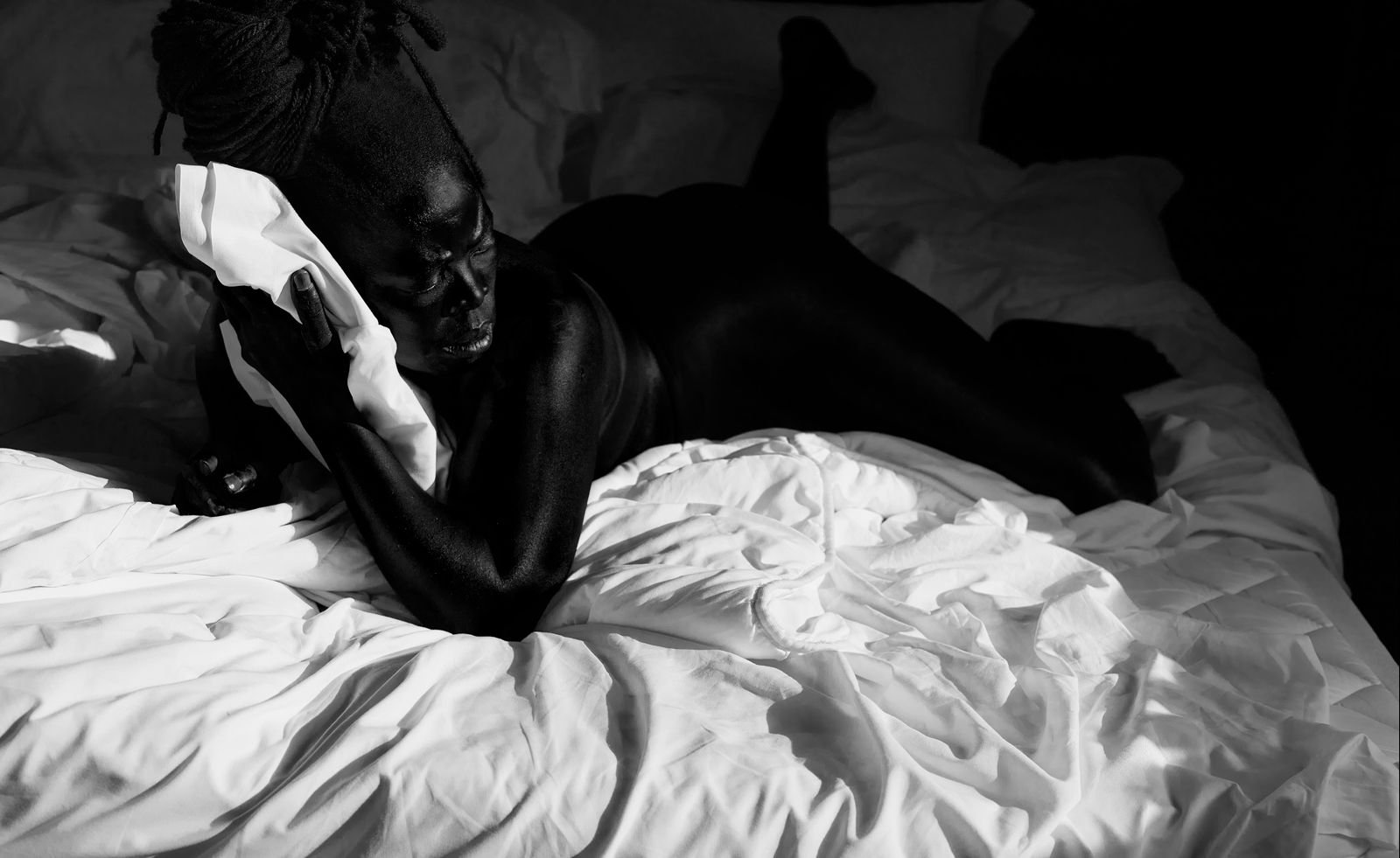
For over twenty years, Muholi has been at the forefront of celebrating and documenting the lives of Black lesbian, gay, bisexual, transgender, queer, and intersex communities through photography, helping to shift narratives and expand conversations about activism, representation, race, identity, and human rights. These themes are reflected in a growing number of projects, including Only half the Picture (2003-4) on lesbian lives and hate crime survivors, Brave Beauties (2014-ongoing), which celebrates transwomen and Somnyama Ngonyama (Hail the Dark Lioness) (2014-ongoing, a self-portrait series which challenges stereotypes and representation of Black people in visual culture.
Lungile Cleo Dladla KwaThema Community Hall Springs Johannesburg 2011
(Image credit: © Zanele Muholi. Courtesy Yancey Richardson, New York and Southern Guild, Cape Town)
‘Before I am a photographer, I am a visual activist living in the art world trying to make a difference to ensure that there is visibility of Black bodies in mainstream photography,’ explains Muholi. ‘And it basically means that for the next generations, they have a sense of who we are as individuals, as communities, as gender non-conforming people and also human beings who are making a difference in this lifetime,’ adds Muholi.
Some of these works by the photographer are held in collections including the Pinault Collection (France), Tate Modern (United Kingdom), Museum of Modern Art (United States), Foundation Louis Vuitton (France), and Wits Art Museum (South Africa) The work has also been show in solo and group shows around the world including at Tate Modern, the San Francisco Museum of Modern Art, Museo de Arte Moderno de Buenos Aires, Fotografiska Stockholm, Stedelijk Museum in Amsterdam and the South African Pavilion at the 55th Venice Biennale.
On 10 October through 24 April 2027, Muholi’s work will be on view in a major solo exhibition at the Hasselblad Centre in Gothenburg, Sweden, as part of their Hasselblad Award prize, which includes SEK 2,000,000 (about £163,000), a gold medal and a Hasselblad camera. The solo show’s opening will be preceded by a week of public events and the award ceremony on 9 October.
‘I am here because of the community that helped me,’ says Muholi, adding, ‘we owe it to ourselves to make sure that there is a visual archive that speaks to the moment, and speaks to the future as well.’
Qiniso, The Sails, Durban, 2019
(Image credit: © Zanele Muholi. Courtesy Yancey Richardson, New York and Southern Guild, Cape Town)
