


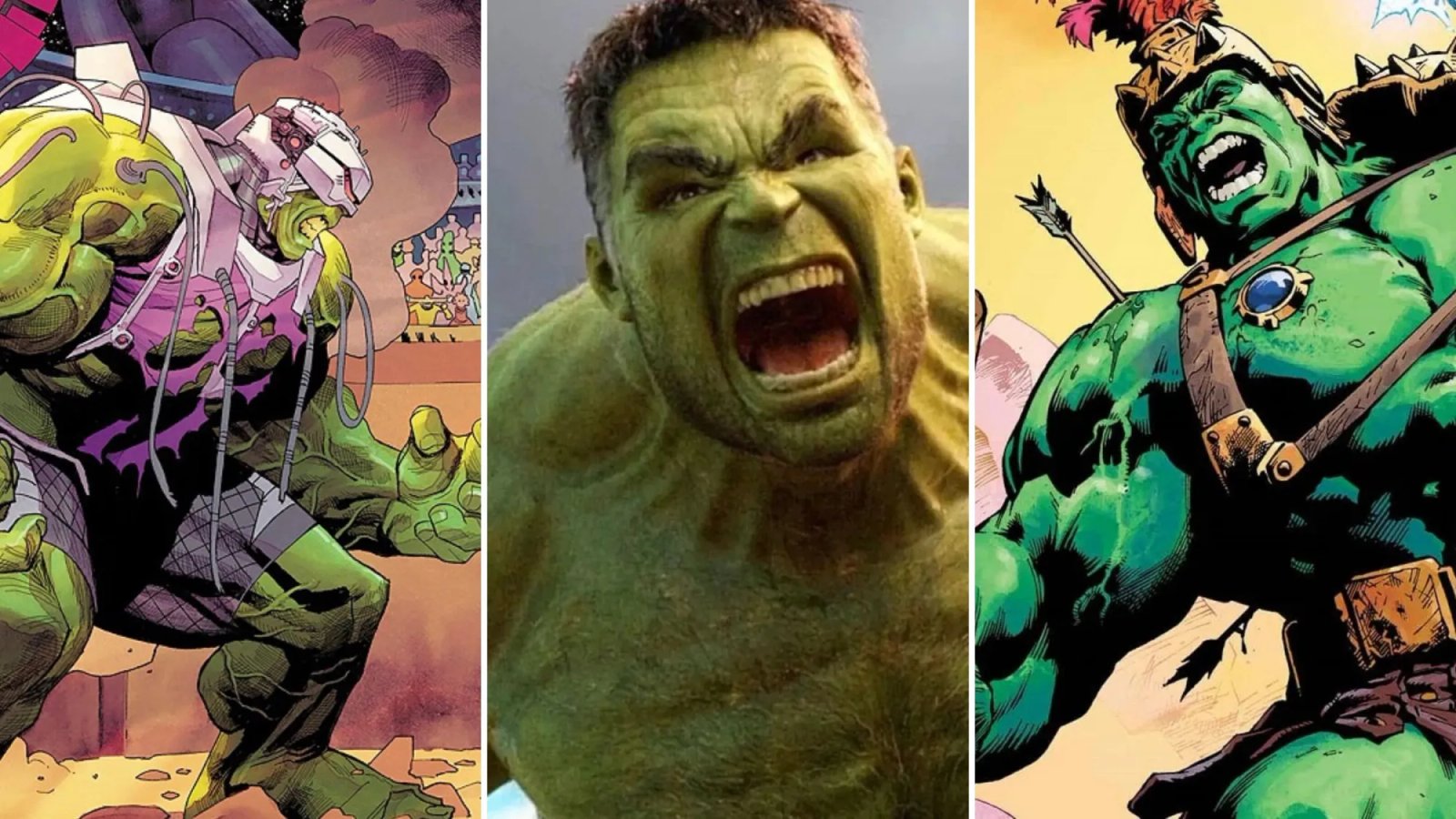
Spider-Man: Brand New Day is scheduled to be released in theaters on July 31, 2026.Mark Ruffalo’s Bruce Banner has spent the better part of a decade as one of the most conspicuously underutilized assets of the Marvel Cinematic Universe. The founding Avenger has often been reduced to comic relief while his character arc unfolded off-screen, with Avengers: Endgame merging Banner and Savage Hulk into a new persona that erased any dramatic tension. That trajectory appeared to have reached its endpoint with She-Hulk: Attorney at Law, where Banner functioned primarily as a mentor figure to pass the baton to a new generation of heroes. Fortunately, Spider-Man: Brand New Day will seemingly reverse that path, with merchandise explicitly described as inspired by scenes from the film featuring the Savage Hulk.
Spider-Man: Brand New Day is, by all available evidence, a film preoccupied with bodies changing against their owners’ will. Peter Parker (Tom Holland) appears to be losing control of his own physiology, with multiple signs pointing toward the development of organic web-shooters as an involuntary mutation. Placing a newly savage Bruce Banner inside that same narrative creates a structural parallel that suggests the regression carries genuine dramatic weight rather than functioning as fan service. That means, for the first time since 2012, the MCU has a Hulk capable of sustaining the character’s most demanding source material that Marvel Studios still needs to adapt.
5) Planet Hulk
Image courtesy of Marvel Comics
Thor: Ragnarok drew significant inspiration from Greg Pak and Carlo Pagulayan’s 2006-2007 run Planet Hulk, but the MCU borrowed selectively enough that the source material’s most essential elements never made it to the screen. Pak’s original arc follows the Hulk after the Illuminati trick him into a spacecraft and launch him into space, where he crash-lands on the savage planet Sakaar, is enslaved, and rises from gladiator to king through a combination of raw power and unexpected alliances. The arc includes the Hulk’s relationship with Caiera and a full-scale revolution against the planet’s authoritarian ruler, the Red King, with dramatic consequences that Ragnarok stripped entirely to accommodate Thor’s narrative. A proper Planet Hulk adaptation would let the character carry a story of exile, identity, and survival as the unambiguous protagonist, on the scale the source material was always designed for.
4) Hulk vs. Thor: Banner of War
Image courtesy of Marvel Comics
Released in April 2022, Donny Cates’ five-part crossover Hulk vs. Thor: Banner of War was structured around a premise the MCU is uniquely positioned to exploit: a Bruce Banner who can pilot the Hulk’s body with tactical precision, making the Green Goliath a more dangerous opponent than Thor has ever faced in their history of clashes. Illustrated by Martin Coccolo, the storyline unfolds as both characters are undergoing transformational arcs, with Thor Odinson struggling under the weight of Asgard’s crown while Banner’s control converts the Hulk from a weapon of pure rage into a strategic instrument capable of matching a god blow-for-blow. The MCU has established Thor as one of the most powerful figures in the franchise, and a Savage Hulk whose regression is tied to a genuine loss of control creates the dramatic tension that makes a full-length confrontation between these two characters something beyond a cameo brawl.
3) Future Imperfect
Image courtesy of Marvel Comics
Peter David and George Pérez’s 1992-1993 two-issue limited series Future Imperfect introduced the Maestro, one of the most compelling villains in the Hulk’s history. The Maestro is a far-future version of Bruce Banner who has absorbed the radiation of a nuclear apocalypse that killed nearly every other superhero on Earth, becoming both stronger and more corrupt than any iteration of the character that preceded him. The Maestro rules a city called Dystopia with total authority, and the story’s conflict begins when a ragtag group of survivors uses Doctor Doom’s time machine to bring the present-day Hulk forward to fight his own worst possible future. The dramatic engine is unnervingly psychological, because the Maestro is articulate, calculating, and genuinely convinced his brutality is a rational adaptation to an unlivable world. With the MCU’s Multiverse Saga already built around alternate timelines and divergent versions of known characters, a Maestro arrival in a post-Secret Wars MCU would give Bruce Banner the most confrontational mirror the character has ever faced.
2) Immortal Hulk
Image Courtesy of Marvel Comics
Al Ewing and Joe Bennett’s 50-issue run of Immortal Hulk, which launched in June 2018 and concluded in October 2021, earned three Eisner Award nominations for Best Continuing Series and stands as the definitive modern reinvention of the character. The central premise is that gamma-irradiated beings cannot permanently die. Every time Bruce Banner is killed, he resurrects as the Hulk at nightfall, making him an unkillable figure simultaneously pursued by the government, Alpha Flight, and the Avengers. Ewing structured the run around a horror framework drawn from body horror and psychological dissociation, with Bennett producing some of the most disturbing transformation sequences in Marvel’s publishing history. The series also deepens the Hulk’s internal system of personalities, treating the fractured relationship between Banner, the Savage Hulk, the Devil Hulk, and Joe Fixit as a study in dissociative identity disorder rather than a simple alter ego dynamic. The MCU has experimented with tone across its 28-film run, but it has never attempted outright horror for one of its most recognizable characters, and Immortal Hulk‘s premise alone is the strongest solo foundation available to Marvel Studios right now.
1) World War Hulk
Image Courtesy of Marvel Comics
No Hulk story carries more unfinished business in the MCU than Greg Pak and John Romita Jr.’s 2007 crossover event World War Hulk. The five-issue limited series follows the Hulk’s return to Earth after the death of his wife Caiera on Sakaar, a tragedy he blames on the Illuminati: Iron Man, Reed Richards, Doctor Strange, and Black Bolt. The Green Scar, as the Hulk is designated during this arc, is the strongest he has ever been, empowered by Sakaar’s radiation and fueled by a grief that Banner and the Hulk share for the first time in the character’s history, removing the internal conflict that typically limits the Hulk’s capacity for destruction. The MCU already planted the most important seed for this adaptation in She-Hulk: Attorney at Law, which introduced Skaar (Wil Deusner) as Bruce Banner’s son, a character born on Sakaar who plays a central role in World War Hulk‘s comic book continuity. Spider-Man: Brand New Day‘s restoration of the Savage Hulk is the first narrative condition World War Hulk actually requires, and the MCU can finally show a Hulk angry enough to declare war on Earth’s most trusted heroes.
Spider-Man: Brand New Day is scheduled to be released in theaters on July 31, 2026.
Which of Hulk’s storylines do you most want to see the MCU adapt next? Leave a comment below and join the conversation now in the ComicBook Forum!
