


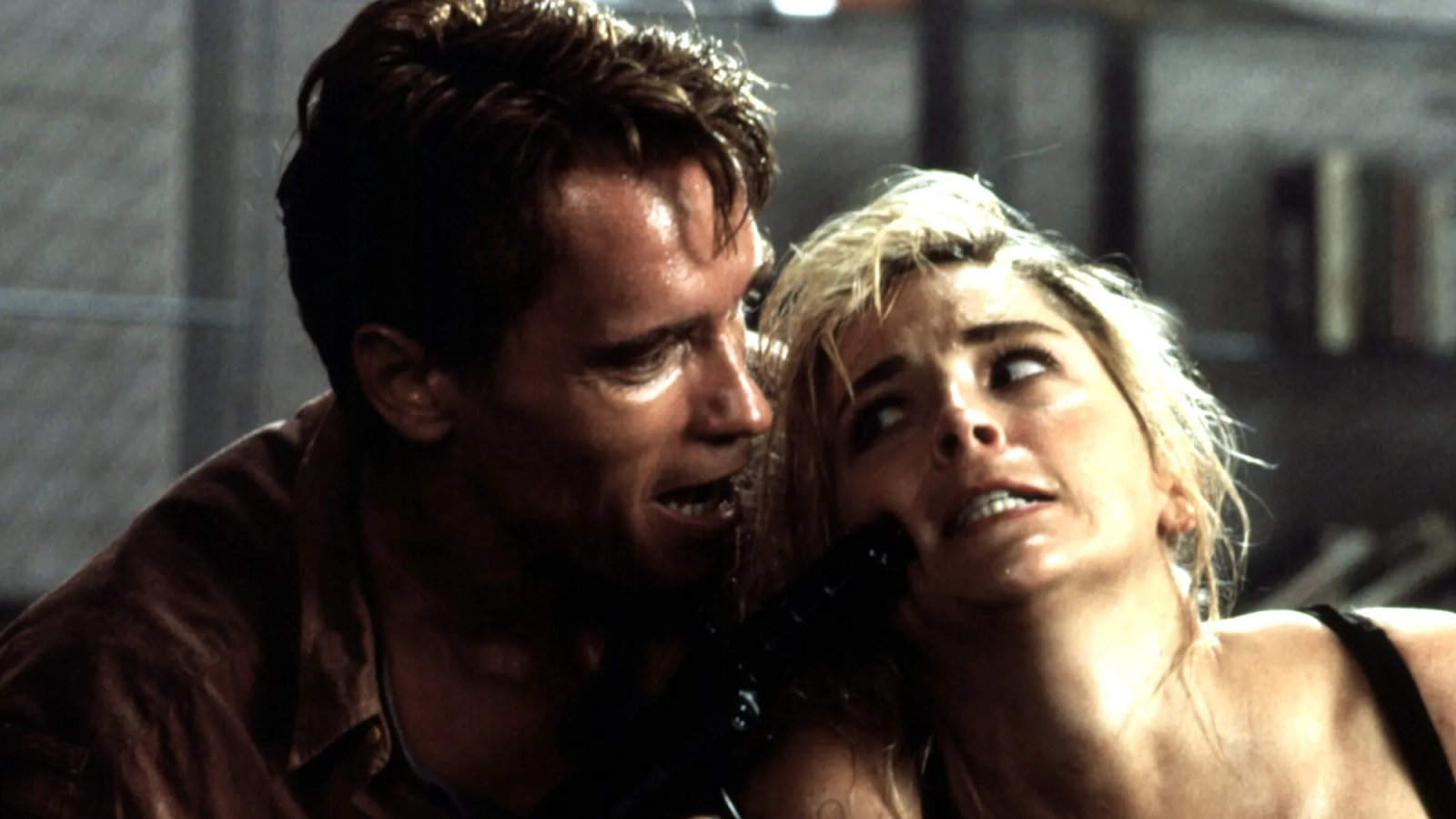
Although one Arnold Schwarzenegger movie is a sci-fi satire classic, the adaptation altered its original short story almost beyond recognition. Some sci-fi movies fail to live up to their source novels since they don’t have the screen time necessary to sufficiently explain and ground the complex lore and worldbuilding of the books. Others simply don’t have the budget required to convincingly replicate a world onscreen that was originally introduced on the page.
However, director Paul Verhoeven’s 1990 classic Total Recall doesn’t struggle with either of these issues, but the movie still altered its source material radically. One of the most impressive dystopian sci-fi action thrillers ever, Total Recall brought together an amazing lineup behind and in front of the camera. Verhoeven was fresh off the success of Robocop when he directed this adaptation of Philip K. Dick’s satirical short sci-fi story “We Can Remember It for You Wholesale,” with a script from Alien’s Dan O’Bannon and Roland Shusett, and Big Trouble in Little China’s Gary Goldman.
Total Recall Altered Philip K. Dick’s Original Short Story Almost Beyond Recognition
Since Ridley Scott’s earlier classic Blade Runner was based on a book from the same author, Do Androids Dream of Electric Sheep?, it wouldn’t have been surprising if the movie stuck closely to its source material. However, Verhoeven’s sci-fi instead radically altered the story, much like I Am Legend’s loose Richard Matheson adaptation over a decade later. In the original story, Douglas Quaid is a mild-mannered desk jockey who visits the false memory implantation service Rekal Incorporated in the hopes of installing a memory implant of wild adventures as a secret agent on Mars.
However, the short story’s protagonist is shocked to discover he actually was a real secret agent on Mars, and his memories of this time were suppressed. In the original story’s unexpectedly sweet ending, Quaid asks to receive a schmaltzy and self-aggrandising memory implant wherein he meets aliens in his childhood, and his kindness impresses them so much that they opt not to invade Earth. To everyone at Rekal’s shock, these sentimental memories turn out to be real.
Total Recall’s Big Changes Ironically Made The Movie More Prescient
Compared to the short story, Total Recall has both a more complex and a more cynical storyline. Where I Am Legend’s movie changes were mostly limited to the adapation’s divisive altered ending, Total Recall’s changes start early and alter the entire course of the movie. Quaid’s journey to Mars, his battles against corrupt corporations, the Martian colonies, his wife’s attempts to kill him, and everything involving the infamous Kuato are unique to the movie adaptation.
However, these changes are far from universally negative. Unlike a lot of movies that alter their original stories beyond recognition, Total Recall replaces the missing elements of Dick’s story with compelling, original new ideas. This ironically makes Verhoeven’s movie more timely decades later.
Quaid’s inability to tell whether he is an actual secret agent or just living inside a simulated memory implanted by Rekal calls to mind everything from AI panic to the discourse around social media personae and digital doubling, making Verhoeven’s movie feel uniquely prescient over three decades later. Thus, Total Recall’s changes are not only understandable but downright laudable as they turned a fun, poignant story into a satirically sharper, more salient movie.
