


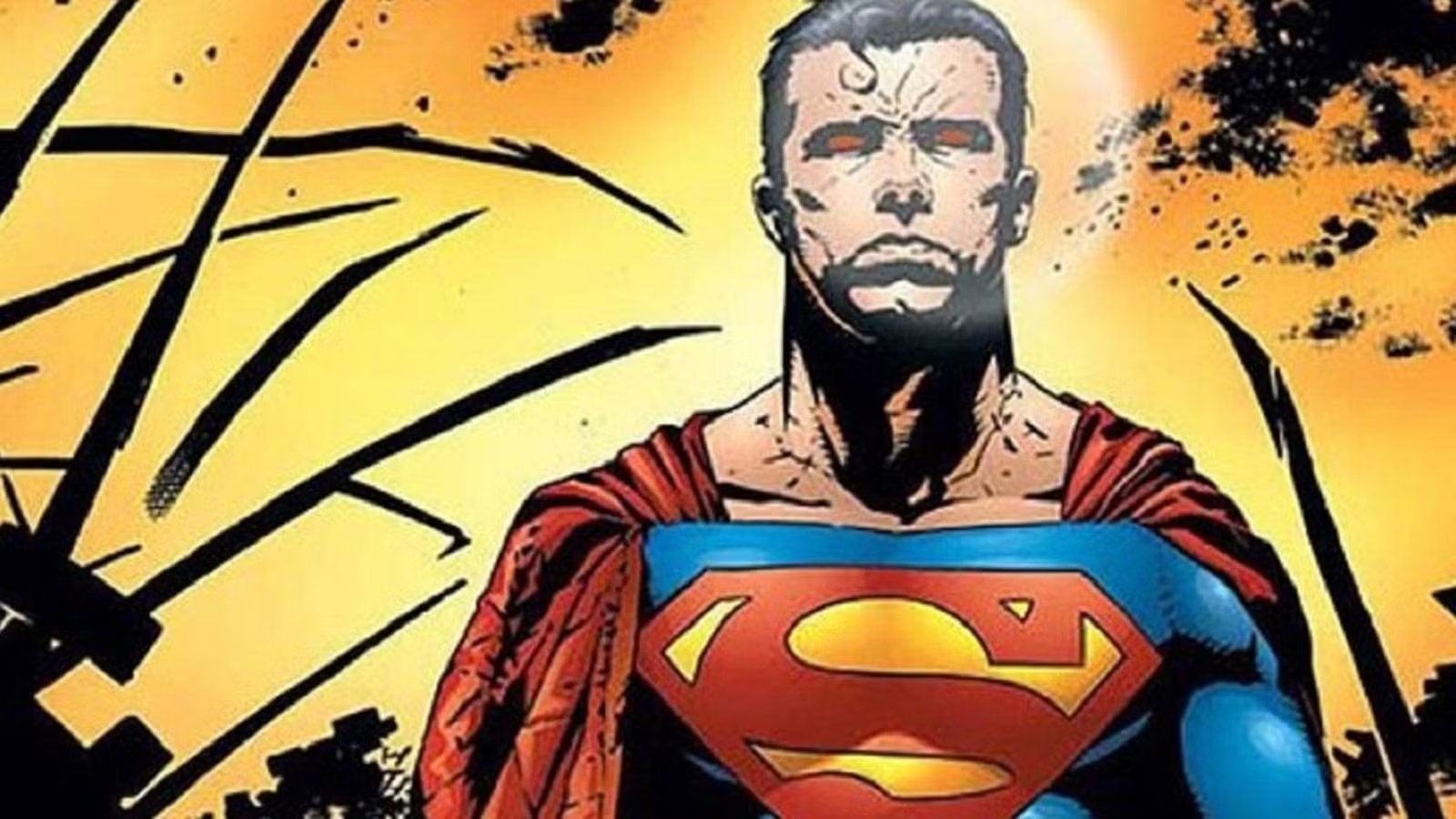
In every Look Back, we examine a comic book issue from 10/25/50 years ago (plus a wild card every month with a fifth week in it). This time around, I head to January 2001 for a look at a classic Superman speech.
I was a big fan of the original Superman triangle era, but I think that even the biggest fans of the Triangle era would note that, by the end of the 1990s, there was probably time for a change in the books. Again, the creators involved on the books were all EXCELLENT creators still, and it certainly wasn’t a case where Dan Jurgens, Jerry Ordway, and Louise Simonson weren’t still doing strong work, but I think even the best creators in the industry can sometimes hit a point of diminishing returns on a series after so many years on a title.
Heck, as much as I still enjoyed the books, look at the last six months or so of Jack Kirby, Stan Lee, and Joe Sinnott on Fantastic Four. They were definitely a major step down (although that could be because Kirby was planning to leave Marvel, of course). So there was probably something to be said for change just for the sake of shaking up the titles, and so Jeph Loeb and Joe Kelly were brought on board Superman and Action Comics, respectively, and given a bit of a freer rein. I actually covered the revamp in an old Look Back here.
As the 21st Century began, one of the hottest books in the comic book industry was one of the hottest books in the comic book industry was The Authority, by Warren Ellis, Bryan Hitch and Paul Neary (and then a follow-up run by Mark Millar, Frank Quitely, Arthur Adams and Gary Erskine). The concept of The Authority was that the United Nations’ official superhero team, Stormwatch, had previously been split into three divisions: Stormwatch Prime, the public-facing superhero division; Stormwatch Red, a high-powered division for major displays of force; and Stormwatch Black, a covert team.
After a horrifying alien attack killed most of the main members of Stormwatch, the covert group split off into its own team, The Authority, which would take on threats without regards to international politics. If they saw a problem, they would just try to solve it, treaties be damned. If they had to kill to do so, they would kill to do so. Mixed with widescreen action by the brilliant art team of Hitch and Neary, the series was a major success, and helped to inspire a number of comics that, in turn, helped to inspire the Marvel Cinematic Universe. The Authority at the time was outselling each of the four Superman titles in the direct market.
However, inherent in the embrace of these “follow no rules” heroes was a bit of a sleight towards old school heroes like Superman. Essentially, if Hero X is cool because Hero X is different from traditional heroes, doesn’t that inherently suggest that the traditional heroes are NOT cool? Well, in January 2001’s Action Comics #775, Joe Kelly and Superman had an answer to that idea (I’ve previously spotlighted this issue for To Quote a Phrase, another one of my columns, but it is just too good to skip for Look Back).
Who are The Elite?
The cover of Action Comics #775 by Tim Bradstreet had the evocative cover question, “What’s So Funny about Truth, Justice & the American Way?” This, of course, was a play on the Nick Lowe song (later popularized by Elvis Costello and The Attractions), “(What’s So Funny ‘Bout) Peace, Love, and Understanding” mixed with Superman’s famous slogan from the 1950s TV series. The issue, written by Kelly, was drawn by pencilers Doug Mahnke and Lee Bermejo, and inked by Tom Nguyen, Dexter Vines, Jim Royal, José Marzán Jr., Wade von Grawbadger and Wayne Faucher, with colors by Rob Schwager and letters by Comicraft.
The issue opens with a giant monster having been killed by the mysterious group known as The Elite, who don’t mind the fact that their destruction of the monster killed thousands of people in the process, and destroyed millions of dollars worth of property…
Image via DC
Superman eventually discovers The Elite, who are a clever parody of The Authority (the British leader of The Authority was Jenny Sparks, the British leader of The Elite was Manchester Black)…
Image via DC
The rest of the Elite are parodies of various Authority characters. Superman begs the Elite to stop their violent ways, and Black mocks him and his ideals as being outdated…
Image via DC
Superman is sickened not just by The Elite’s behavior, but by the fact that the world seems to like The Elite better than him.
How does Superman deal with The Elite?
Throughout the story, The Elite mocked Superman and repeatedly challenged him to fights before Superman finally agreed to take them on and in doing so, gave them a taste of their own bitter medicine. He agrees to a duel on the moon, broadcast to the whole world.
At first, it seems as though the Elite has destroyed Superman totally. Then, in a nice bit, a disembodied voice tells them that they’ve just now pushed him too far. Superman then seemingly uses his powers in creative ways to kill off all the Elite until he is left face-to-face with the Elite’s leader, Manchester Black. He then seemingly lobotomizes Black, and Black, of course, can’t take his own medicine at all, and begins to cry about how unfair it all is. Superman then explains that he was just showing everyone how bad vengeance and spite is. When Black protests that Superman really DID just kill his teammates, Superman reveals that he just faked it all (the bit about giving Black a mini-concussion hasn’t aged well, though – remember, we didn’t know as much about concussions back then)…
Image via DC
Black, of course, vows revenge on Superman, and Superman retorts that that is fine, and then the money quote, where he defends what Black felt was an outdated dream, “Dreams save us. Dreams lift us up and transform us. And on my soul, I swear… until my dream of a world where dignity, honor and justice becomes the reality we all share — I’ll never stop fighting.”
Image via DC
It’s probably a bit overkill to have Superman then write an article as Clark Kent about how right Superman is, but hey, can we really blame the guy?
If you folks have any suggestions for February (or any other later months) 2016, 2001, 1976 and 1951 comic books for me to spotlight, drop me a line at brianc@cbr.com! Here is the guide, though, for the cover dates of books so that you can make suggestions for books that actually came out in the correct month. Generally speaking, the traditional amount of time between the cover date and the release date of a comic book throughout most of comic history has been two months (it was three months at times, but not during the times we’re discussing here). So the comic books will have a cover date that is two months ahead of the actual release date (so October for a book that came out in August). Obviously, it is easier to tell when a book from 10 years ago was released, since there was internet coverage of books back then.
