


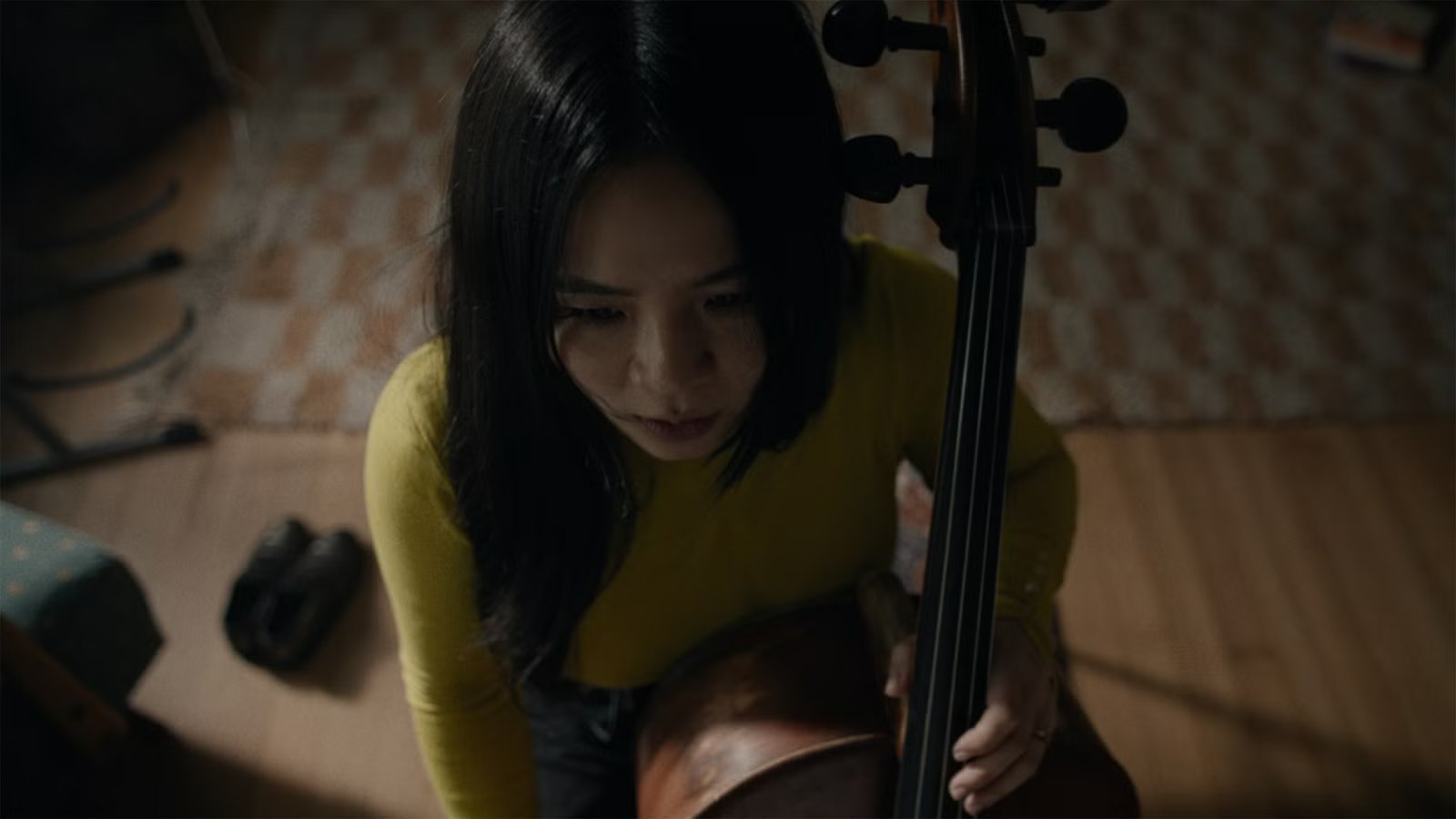
What is the difference between a ghost and an ancestor? In many cultures, the answer lies in memory. Are there people who still remember them? Honor them? Rock Springs starts off in familiar territory, exploring the concept of ghosts through the lens of grief. Even the premise is a classic in the horror genre, that of recently widowed mother Emily (Kelly Marie Tran) moving her daughter Gracie (Aria Kim) and her mother-in-law (Fiona Fu) to a remote cottage in Wyoming, which borders with the woods. But slowly, as the film goes on, writer/director Vera Miao demonstrates a steady hand in atmosphere and a thoughtfulness in complex ideas of trauma, past atrocities, and the strength of diasporic communities.
Structured in chapters, the film first follows Gracie, who has stopped talking ever since she lost her father. The communication within the family is at its most fragmented, not only because of their recent loss, but also because of cultural barriers. The grandmother is a first-generation Chinese immigrant who speaks only Mandarin Chinese, teaching Gracie the ways of honoring her late father through prayer. Meanwhile, Emily is not Chinese at all — she’s Vietnamese, adopted by white parents. This separation bleeds into the storytelling approach within the chapters, as we often see events over and over again but from different perspectives.
Aria Kim Rock SpringsCourtesy of the Sundance Institute
The main takeaway both mother and daughter come to learn is that they’ve moved during the seventh month of the lunar calendar — a time when ghosts would appear and wander. Most of all, they are warned of “hungry ghosts” who can come and take people away.
For a good portion of the film’s setup, the narrative struggles to find footing. Many shot choices and sound design feel borrowed from other horror titles; a viewer might grow impatient waiting for Rock Springs to deliver in scares, or at least form its own identity. But when we see Gracie take an interest in a creepy-looking doll, or when she stares into the woods for too long, only to get grabbed by a malevolent force, the film takes a while to get going.
It’s not until midway through when Miao dedicates significant time to a sequence starring Benedict Wong, showcasing the history of Rock Springs 140 years ago, that the film starts to reveal its intentions and thematic goals. Wong plays a Chinese migrant worker who — along with his nephews (one of them played by Jimmy O. Yang) — works at the Rock Springs coal mines. As the Chinese men relax on their day off, a mob of armed white miners attack them. Homes are burnt down, and several men are murdered. It’s this harrowing sequence, shot and edited unlike the rest of the film, that will be most remembered. Miao takes an impressive approach in asking the audience to watch and not look away from the horrors.
Jimmy O. Yang and Benedict Wong Rock SpringsCourtesy of the Sundance Institute
These past atrocities trickle back to the present day, as horrific crimes morph into polite microaggressions, and we come to understand why the “hungry ghosts” are the way they are, haunting the woods. As Rock Springs approaches its second half, Miao’s handling of tension and atmosphere pays off. One particular moment with Emily playing the cello is effectively creepy, where she constantly turns back to see if the ghost of her dead husband is watching. These moments build beautifully on top of one another. Tran delivers an incredible performance as a mother who not only struggles with her own Asian-American identity but with lonely grief and her attempts at keeping two generations of the family together.
The film is not without its issues. In addition to its disjointed narrative, there is something to be said about the creative choice for how the “hungry ghosts” are portrayed. Because once revealed, they aren’t ghosts at all. Actually, it’s one ghost… err… one monstrous-looking thing.
The decision to have the source of the haunting come from a horrific painful past is one thing, but to portray the haunting as a monster that looks like Monstro Elisasue from The Substance — not to mention it just looks completely different from the pale but clearly human-looking ghost of the dead father — raises a few eyebrows. When multiple victims are not portrayed as multiple ghosts but instead one single mass, it’s tough not to consider what that could thematically imply.
Still, Miao’s intentions on how we should process historical tragedies are clear. Despite the heavy atmosphere, the creepy moments, and the horrific visuals, Miao leads Rock Springs with a rare thoughtfulness. It’s not so much a horror film that just plainly shows something horrific, but it offers a path to heal from it. That acknowledgment and acceptance comes through in the climax, where Tran’s performance melds with Miao’s resolution and delicate handling of how we should remember and honor people from the past.
It seems natural to pair ghost stories with historical atrocities that have been erased. When done well, they not only inform those who are unfamiliar with the historical event (I, for one, wasn’t aware of the real-life Rock Springs massacre of 1885 before seeing the film), but help those who do know find a path towards reckoning and healing. Though the film takes a while to click and makes a few questionable creative decisions, there is much to be appreciated about Rock Springs and its surprising modern-day relevance. With beautiful performances from Tran and Wong, this is a thoughtful feature debut, where Miao’s desire to (literally) unearth horrific events in the past will help us comprehend and deal with what’s happening in the present.
Rock Springs premiered January 25, 2026 at Sundance Film Festival.
Rock Springs
Release Date
January 25, 2026
Runtime
96 minutes
Director
Vera Miao
Writers
Vera Miao
Cast
Pros & Cons
- Kelly Marie Tran gives a fantastic performance as a mother struggling with grief and cultural identity.
- The flashback sequence in the middle portion is harrowing, along with a great performance from Benedict Wong.
- The film?s resolution and overall handling of a horrific past atrocity is very admirable and thoughtful.
- Vera Miao beautifully explores themes of cultural diaspora, Asian American identity, Chinese beliefs, immigration, and racism both past and contemporary.
- It takes a while to get going, with its disjointed storytelling approach and lack of scares or scary set pieces.
- As a horror film, it often feels derivative of other more effective horror titles.
- The creative decision on how to portray the ?hungry ghosts? leads to some questionable implications.
