


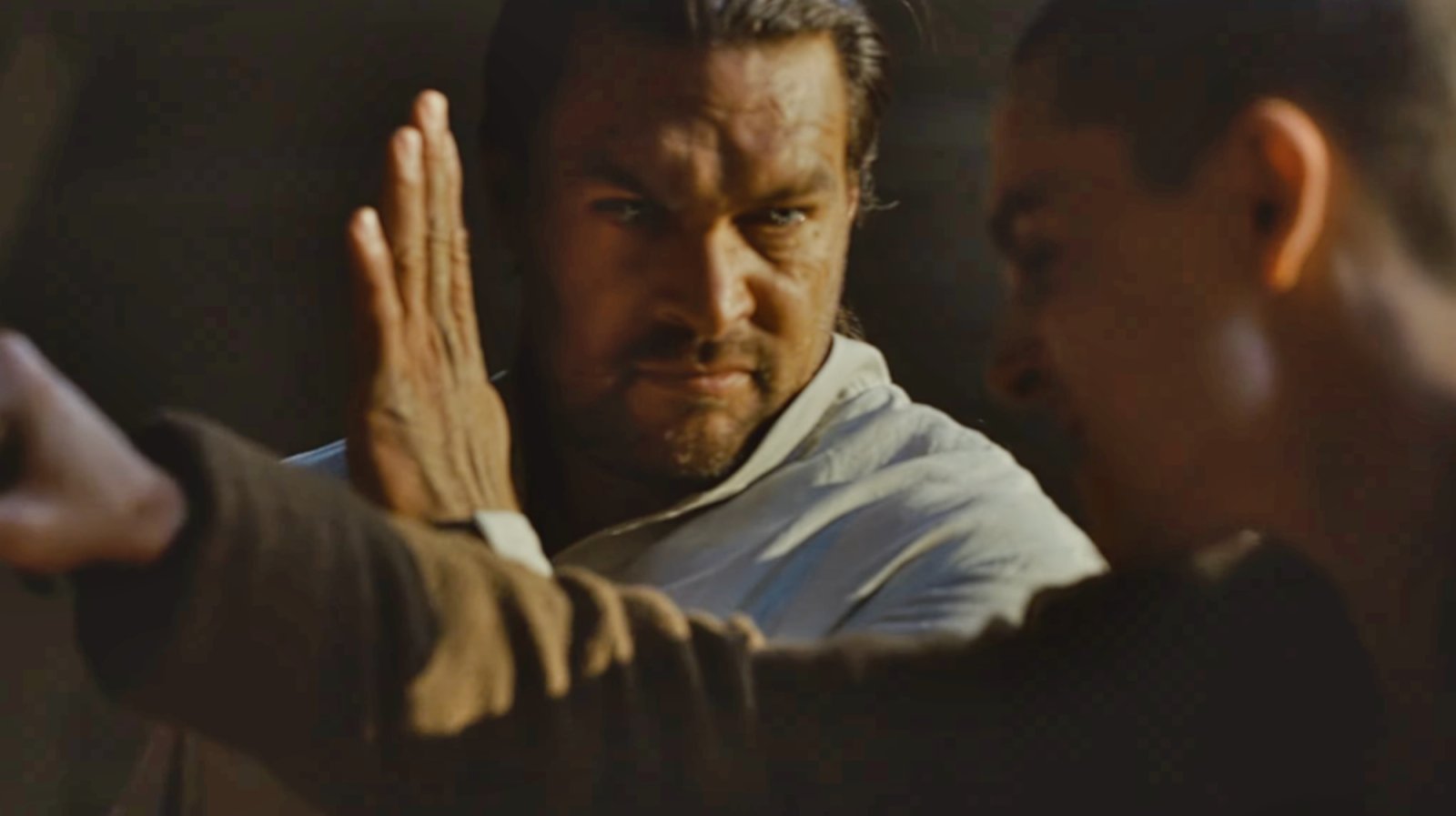
Dune: Part Three has started its promotional campaign with an epic teaser trailer, and fans already have a lot of questions. However, one of the most immediate concerns for many fans was spotting the familiar face of Jason Momoa in the footage. Momoa starred in Dune (2021) as Duncan Idaho, the loyal “swordmaster” of House Atreides, who was one of the biggest friends and mentors of Paul Atreides (Timothée Chalamet).
SPOILERS: Duncan laid down his life on Planet Arrakis, protecting Paul and his mother, Lady Jessica (Rebecca Ferguson), from the Emperor’s elite hit squad, the Sardaukar. So how is he showing up in Dune: Part Three?
Duncan’s Return Was Always Part of the Story
Jason Momoa in Dune: Part Three / Warner Bros. Pictures
Sorry, but there’s no other way to have this conversation, except to say, “Have you read the books?”
Dune author Frank Herbert created a deep well of lore when he made the series, but director Denis Villeneuve has only adapted some of it for his two blockbuster movies. Well, Herbert’s second novel (and the inspiration for this film), Dune: Messiah, jumps way deeper into that lore than the first novel does – including introducing a way for characters to return from the dead. It’s not some major spoiler to say that, either: resurrection has always been part of the Dune universe, and Herbert came up with one of the wildest ways to do it.
Dune’s Ghola Resurrection System, Explained
Warner Bros. Pictures
In Dune, there are several main organizations that work in coordination to make the galactic empire work. The Villeneuve Dune movies and HBO’s Dune: Prophecy spinoff show have made the witches of the Bene Gesserit Sisterhood a main focus of the franchise. However, there are two other organizations, the “Spacing Guild” of interstellar navigators and “Bene Tleilax,” masters of genetic engineering and enhancement, who are major parts of the series, as well.
One of the Tleilaxu’s greatest achievements are “Gholas,” artificial humans created from the genetic template of a dead person, requiring as little as a single cell of DNA to get the process started. Unlike clones, gholas were empty shells that were used to bring comfort to loved ones by giving them back some semblance of the person they lost. They had no memories, but were instead conditioned to carry out certain tasks and endeavors – although who truly controlled those agendas was sometimes in question.
Dune Director Teases the Pivotal Importance of Duncan Idaho’s Return
Dune: Part Three / Warner Bros. Pictures
So by now you can surmise: Momoa’s Duncan Idaho is not truly back in Dune: Messiah as we knew him, but rather his ghola is made, and seemingly put to task training the new era of House Atredies warriors, like he once did for Paul.
However, it’s well known to fans that Duncan Idaho’s resurrection (and the arc of his character) becomes a much bigger thing in the larger Dune saga. Like everything that has to do with House Atredies, Duncan’s ghola becomes something greater than what is initially intended – primarily through his bond with Paul and the Atredies.
But that’s a story for Dune: Part Three to tell, but director Denis Villeneuve teased us with how he will interpret Duncan’s continuing arc in Dune: Part Three: “The idea is that I think he [Jason Momoa] created that kind of tremendous, charismatic character, that our heart was broken seeing him falling in the first one, and then the desire to see him back. And he comes back just at the right moment in the story. And it’s a very, very important comeback: Paul is struggling with his identity, and having that strong Atreides figure coming back from the past will have a tremendous impact; that’s what I will say.”
Dune: Part Three will be released in theaters and IMAX on December 18th. Discuss the film and the new trailer with us on the ComicBook Forum!
