


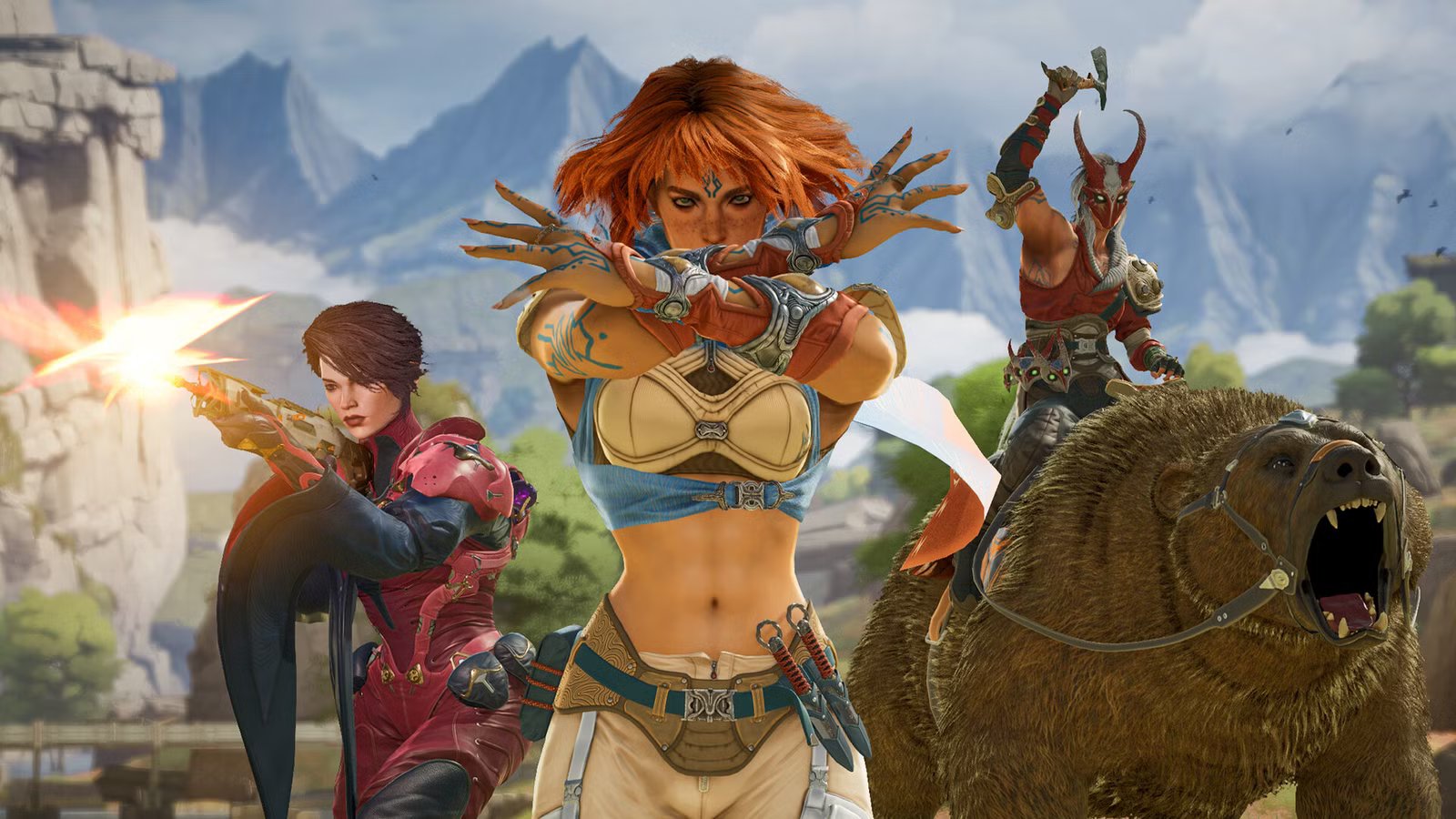
When brand-new multiplayer first-person shooter Highguard launched on Steam, it felt like sentiment was predetermined. For a multitude of reasons, ever since the game was revealed at The Game Awards last month, the internet has mostly rallied against it. Personally, I never understood why. Despite the chatter, the competitive PvP FPS raid shooter arrives in a crowded market, but carries the promise of a developer team with a strong pedigree from Apex Legends and Titanfall.
However, within Highguard’s first 24 hours, early data paints a more complicated picture defined by mixed messaging, sharp community criticism, and a steep drop in concurrent player counts. In response, the developers have pushed back against claims that the game is dead on arrival, arguing that smaller, dedicated communities can still define success in today’s live-service landscape.
Steam Reviews Point To Early Dissatisfaction
highguard gameplay screenshotImage via Wildlight Entertainment
One of the most immediate red flags surrounding Highguard’s launch has been its Steam user review score. Within its first day, the game accumulated thousands of reviews, with only a minority marked as positive, resulting in a “Mostly Negative” overall rating. This is often a difficult perception hurdle for new multiplayer games to overcome, especially in a genre where first impressions carry significant weight. It’s worth noting, though, that since this is a free-to-play game, basically anyone can leave a review even if they barely even touched that game. Review bombing is becoming more and more common.
Although that doesn’t mean that the game is without its issues. A recurring theme across user reviews is frustration with performance and optimization, especially on PC, where hardware specs can vary dramatically from one player to the next. Players have cited inconsistent frame rates, technical hiccups, and general instability as barriers to enjoying the core experience. Others have taken issue with progression pacing and balance decisions, arguing that the game does not yet feel refined enough to justify long-term investment. As a live service, it will certainly evolve dramatically over time, but for a 1.0 launch, it seems like a lot of players expected more.
While early Steam reviews do not always define a game’s future, they do influence discoverability and player trust. For Highguard, the challenge now lies in whether post-launch updates and communication can meaningfully shift sentiment before the negative narrative becomes even more entrenched. The developers already shared a detailed roadmap for the entire calendar year, promising new content like characters, maps, modes, and weapons consistently every few weeks.
Player Counts Aren’t Ideal, But Churn Is Expected
highguard multiplayer map horse ridingImage via Wildlight Entertainment
SteamDB charts show that Highguard reached a notable peak concurrent player count shortly after launch, over 97,000 players on Steam alone, which obviously doesn’t include data from PlayStation 5 or Xbox Series X|S, suggesting strong initial curiosity. However, that momentum proved short-lived, with concurrent numbers declining sharply as the day progressed. Now, the next day, it’s fallen by over 80% from its launch day peak on Steam. While fluctuations are normal for new releases, the speed of the drop has fueled skepticism among players watching the game’s performance in real time.
In the current multiplayer landscape, player counts are often treated as a proxy for success, even when developers caution against that mindset. For Highguard, those numbers quickly became part of public discourse, with some players labeling the game as struggling almost immediately after release. But with matches only requiring six total players, it’s not really a topical narrative.
It is worth noting that many successful multiplayer titles have endured uneven launches before stabilizing. Still, early volatility places additional pressure on developers to respond quickly, both with fixes and with messaging that reassures players the game has a clear path forward.
Developers Push Back On The “Internet Hate Machine”
highguard base breaching screenshotImage via Wildlight Entertainment
In response to the growing conversation around player counts and reviews, Highguard’s developers have publicly addressed concerns, arguing that massive concurrent numbers are not the sole measure of success. “Honestly, we don’t need [player counts] to be super huge in order to be successful,” lead designer Mohammad Alavi told the press in a group interview at a preview event last week, as reported by PCGamer. “We’re a small team. A six-player match [Highguard’s max player count at launch] is not hard to find. What we’re really hoping for is a core group of fans that love us. That will allow us to grow. Being the ire of the internet hate machine sucks, but at the same time, I try to just focus on making the best game I can and getting that game into people’s hands. At the end of the day, that’s all that really matters.”
That stance has resonated with some players but frustrated others, particularly those who feel the current state of the game does not yet justify that long-term vision. The disconnect highlights a broader tension in modern live-service development, where sustainability, perception, and momentum are tightly intertwined. Many players feel that an alpha and beta period could have benefited the game, so issues like the small team sizes on massive maps may have been considered more heavily.
For Highguard, the coming weeks will be critical. Whether the game can recover from its rocky start will depend on how quickly it can address player concerns, improve technical performance, and demonstrate that its long-term goals translate into meaningful enhancements for the community already giving it a chance.
Systems
Released
January 26, 2026
Developer(s)
Wildlight Entertainment
Publisher(s)
Wildlight Entertainment
Multiplayer
Online Multiplayer
Cross-Platform Play
Full
Number of Players
Single-player
Steam Deck Compatibility
Unknown
