


This article contains spoilers for Jury Duty Season 1. The first three episodes of Season 2, Jury Duty Presents: Company Retreat, are available now on Prime Video; the season will continue on March 27 with two more episodes, and the final three episodes will arrive on April 3.
The first season of Prime Video’s Jury Duty was a huge surprise. Coming out of virtually nowhere, the pseudo-reality show focusing on one real guy stuck in the middle of a bunch of actors pretending to be on a jury was laugh-out-loud funny, heartwarmingly sweet, and best of all, stuck the landing when it came to its reveal to the main dude, Ronald Gladden. Thankfully, Gladden also ended up being very nice and very game. So naturally, Prime is doing it again with Jury Duty Presents: Company Retreat, a sort-of sequel, sort-of extension of the brand that once again sticks a normal guy in an abnormal situation.
So with three episodes out on Prime today, has the streamer managed to capture lightning in a bottle once again? Or put more simply: Does Jury Duty Season 2 justify its existence?
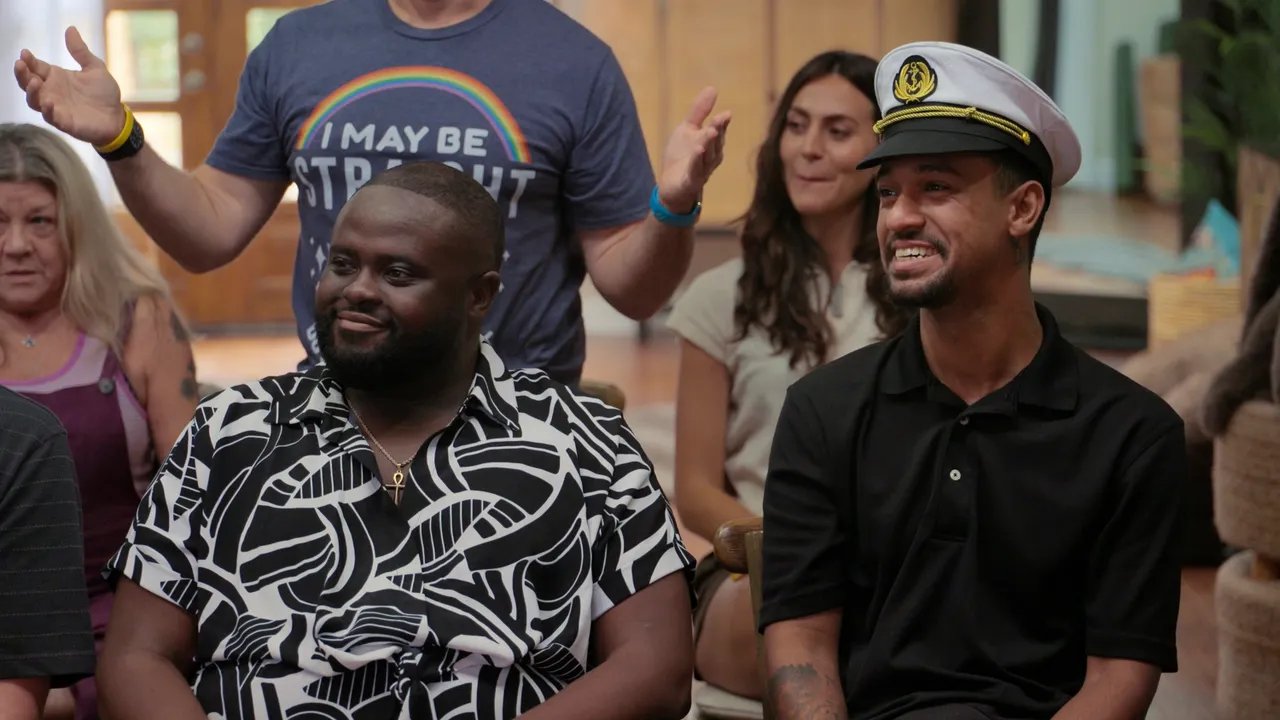
PART OF THE ENSEMBLE FROM JURY DUTY PRESENTS: COMPANY RETREAT.
Before we get there, a bit of a primer on the first Jury Duty, as ‘the little show that could’ came out three years ago, and may have escaped your notice, given it was on Amazon’s Freevee service, something that no longer exists (though you can now watch the first season for free on Prime Video). Created by Lee Eisenberg and Gene Stupnitsky, the series found Gladden recruited for jury duty on a civil trial ostensibly being “documented” for a series about juries – though everything from the jurors to the witnesses and even the judge were all actors. All eight episodes of the show were scripted as a semi-choose your own adventure; there were paths the producers nudged Gladden down, and all the performers were given both scripted lines and options to improvise. But ultimately, it was up to trusting that Gladden would do the right thing in the trial versus noping out of the whole situation.
Adding to the madness, one of the jurors on the trial – the first season was set at the Huntington Park Superior Court in Los Angeles – was James Marsden; not Marsden pretending to be someone else, but rather a hyper-actualized version of his celebrity self. And upping the hilarity, other than a vague knowledge of Sonic the Hedgehog, Gladden didn’t really know who Marsden was, despite the celeb doing his best to make everything in the trial about himself rather than what was going on “legally.”
RONALD GLADDEN AND JAMES MARSDEN IN SEASON 1 OF JURY DUTY.
Gladden’s lack of Hollywood knowledge helped in that several of the other actors involved were of the “hey, I know that guy!” variety, though not as recognizable as Marsden. Mekki Leeper, playing a nerdy juror, was already known for his role as the head of the campus comedy newspaper on HBO Max’s The Sex Lives of College Girls. And Kirk Fox, instantly recognizable to fans of Reservation Dogs on FX or Brooklyn Nine-Nine on Fox, was also on the jury, though his beard and shaggy hair helped disguise his identity.
In addition to the trial, which – to amplify the drama and comedy – found the jury sequestered and living in a hotel together, every character had their own weird quirks and storylines, from an extremely off-kilter inventor to one juror with a gambling addiction. Everything was goofy, but not so goofy that Gladden caught on to it being fake at any point. The actors also seemed to genuinely like Gladden and enjoyed spending time with him. The eventual reveal of the deception had the possibility of feeling like a horrible betrayal, but instead, the earnestness with which the cast expressed being honored to spend time with Gladden made the whole, well, trial feel worth it. In addition, the production team took care to highlight the inner workings of jury duty, calling attention to how the system can feel like a grueling chore that takes you away from your job and family, but really is in place to help make things right. It doesn’t always work out that way, but when Gladden does help make the correct decision at the end, it feels like a triumph not just for him and the TV show, but the judicial system at large.
RONALD GLADDEN IN THE FIRST SEASON OF JURY DUTY.
It’s also, given the viral success of the first season, nearly impossible to reproduce. While the producers could have found someone who hadn’t seen the first season of Jury Duty to thrust into a similar situation, the second season goes a different route entirely. The setup is the same – a regular guy named Anthony is surrounded by actors and scripted situations, unaware he’s the only “real” person in the “documentary” – but the setting, cast, and thrust of the show are very different. Titled Jury Duty Presents: Company Retreat, you can probably intuit a little bit of what’s happening here, but the short version is that Anthony is hired as a temp for a hot sauce company called Rockin’ Grandmas, which is holding their annual company retreat and having it documented for a series about small businesses, hence all the cameras.
What follows over eight episodes is an epic disaster, with the focus on pushing Anthony into stranger and more uncomfortable situations. Part of the pressure is that – and mild spoilers past this point – due to a botched marriage proposal in the first episode, Anthony is left on his own by the HR manager he’s ostensibly supposed to be temping for. Adding to that powder keg, this retreat is the last one for company founder Doug (Jerry Hauck), while his burnout son, Dougie (Alex Bonifer), is supposed to take over as CEO…and Dougie immediately grabs Anthony as his second to back him up in his increasingly harebrained schemes.
What follows over eight episodes is an epic disaster, with the focus on pushing Anthony into stranger and more uncomfortable situations. “
While the action of Company Retreat always stays razor-focused on the seemingly game-for-anything Anthony, who is clearly having the best time of his life, the scope of the production has amped up considerably from the first Jury Duty. There, most of the action was focused in one courthouse; here, they constructed a massive set for the retreat in order to help facilitate every aspect of Anthony’s journey. Bigger isn’t necessarily better, but this level of production coordination is impressive. It’s a stunt show more than a reality show, as the tension for viewers lies in whether this will go off the rails at any point.
We won’t spoil what happens throughout the season – all eight episodes were provided for critics – but to get back to the initial question, there is a palpable difference in stakes when it comes to being on a jury versus working as a temp at a family-owned hot sauce company. The trial in the first Jury Duty may have been relatively small potatoes, but there is a social and ethical responsibility inherent in the process to deliver the proper verdict, which was part of the moral test at the heart of the show. This is nothing against being a temp, but it doesn’t hold that same weight, and Anthony in particular, based on the scant info we find out about him, seems more than happy to be a temp for two weeks versus gunning for (or desperately needing) the job.
JURY DUTY PRESENTS: COMPANY RETREAT.
There are stakes that develop, particularly in the final batch of episodes, but more often than not, Company Retreat plays like a big budget dinner theater production of The Office. The events around Anthony often feel less organic – credit at least in part the lack of an inciting personality like Marsden in the new season – and more like they are happening around him rather than to him or with him. Ronald always felt like the person ultimately choosing to turn to page 133 in the Choose Your Own Adventure of Jury Duty; Anthony in Company Retreat is often treated like they’re reading the book to him.
That is to say, Jury Duty’s second season doesn’t quite justify its existence…except for one small caveat: It is hilariously, uproariously funny. And in those final batch of episodes, you’ll find something as wholesome, sweet, and tear-inducing as the first season of the series. On the funny bent, the whole cast of comedy/improv performers crushes it, completely committing to their outrageous roles. The best of the bunch is Rachel Kaly as the Bones-obsessed Claire, the company’s one remote worker, who manages to make every single line and action gut-bustingly funny; if there’s one big breakout from the show, it’s her. Alex Bonifer and Emily Pendergast get the most to do as CEO apparent Dougie and stuck-in-a-love-triangle customer service rep Amy, respectively, and are by turns earnest and hilarious. Other stand-outs include Rob Lathan as the office weirdo, Jim Woods as the “woke” dude with a dark past, and Marc-Sully Saint-Fleur as a snack aficionado who helps power some full-hearted TikTok videos with the team.
The whole cast of comedy/improv performers crushes it, completely committing to their outrageous roles. “
In fact, the whole cast is uniformly good, and based on two seasons, the ultimate legacy of Jury Duty and Company Retreat is less about the prank aspect of the show than how affirming they both are about people. Sure, everyone tricked Ronald in Season 1, and Anthony is tricked in Season 2. But the relentless, improv-powered positivity of the series shines through in the sort of real, uplifting character interactions that will make you feel better about human nature…even if that nature is a fake TV production manipulating one man through hundreds of behind-the-scenes professionals, Truman Show-style.
Does Company Retreat offer up the surprise of that first season of Jury Duty? No. But given how hard you’ll laugh at every episode, how impressive it is on a purely technical level, and how much it will pivot your thinking to “humans can be good, actually,” perhaps after a satisfying first season, we didn’t want more Jury Duty. Instead, Company Retreat might be exactly what we need.
