


Horror has a history of using gender nonconformity and perceived transgression as a source of fear, and few of those portrayals have aged well with audiences or critics. Alfred Hitchcock’s Psycho, The Silence of the Lambs, and House at the End of the Street are just a few examples of films that use gender-related twists to shock and subvert expectations.
Few films, however, have inspired as much lasting debate as Robert Hiltzik’s Sleepaway Camp. Released in 1983, the low-budget slasher became infamous for its final reveal, which has continued to spark discussion as attitudes toward gender, sexuality, and horror storytelling have evolved.
What Happens At the End of Sleepaway Camp?
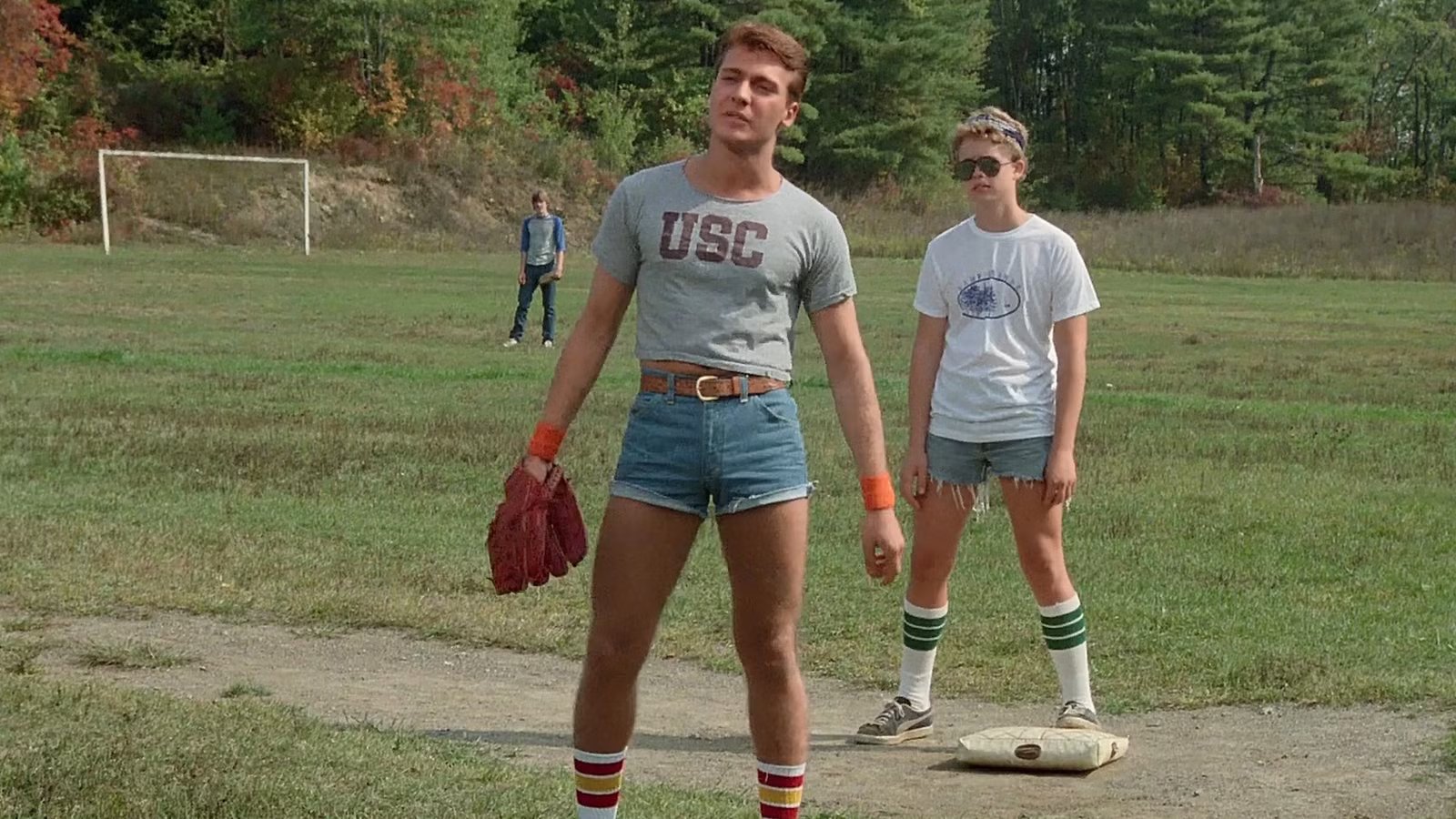
Released in 1983, Sleepaway Camp follows cousins Angela Baker (Felissa Rose) and Ricky Thomas (Jonathan Tiersten), who head to Camp Arawak for a summer away from home. Complete opposites, with Angela being withdrawn and socially anxious and Ricky being outspoken and energetic, the two balance each other out as they settle into camp life.
However, Camp Arawak is anything but the ideal summer vacation, with negligent counselors, cruel campers, and, in true slasher style, a string of murders. While the film hints that Angela is the killer, it’s the final reveal that gives it its place among the most controversial in horror movie history.
In Sleepaway Camp’s final scene, Angela is seen alone on the beach, bloodied and holding the head of another camper. Then a flashback reveals that Angela is actually Peter, who was raised as a girl by his aunt after Angela’s death as a child.
Cutting back to the present, the film closes with an unsettling image of a naked Peter standing there with his mouth wide open, holding a knife. As he makes a deep and disturbing hissing noise, a counselor exclaims, “My god, she’s a boy,” before the screen fades to black.
Early Criticisms of Sleepaway Camp Focused on Shock Value and Sensationalism
Angela and Ricky are at Camp Arawak in Sleepaway CampImage via United Film Distribution Company
Upon release, much of Sleepaway Camp’s criticism concerned its place among the slasher subgenre, rather than its themes and ending. It drew comparisons to Friday the 13th, released three years prior, with many calling it a “low-budget” knock-off and derivative.
The few criticisms the film did receive regarding the reveal focused on its shock value and perceived sensationalism rather than its implications for gender or sexuality. Some reviewers, like the Chula Vista Star-News, called the twist “obscene,” noting the sudden disclosure of Angela’s assigned sex at birth alongside the film’s depictions of violence and adolescent behavior.
Others noted that the ending was grotesque or disturbing, with The Morning Call describing it as “simply horrible,” though these comments were often related to the context of the film’s campy gore rather than a targeted critique of representation. Overall, discussion of the twist was relatively minor at the time, overshadowed by complaints about the film’s acting, writing, and adherence to slasher tropes.
Angela at the end of Sleepaway CampImage via United Film Distribution Company
In the years since its release, Sleepaway Camp’s ending has been viewed as problematic. The reveal that the film’s killer was assigned male at birth and raised as a girl is considered by many audiences to be transphobic, made worse by the fact that its inclusion was primarily to shock viewers.
Sleepaway Camp also implies that Angela and Peter experienced trauma as children after discovering that their father had a relationship with another man. In a flashback, it’s revealed that they witnessed their father in bed with Lenny (James Paradise), later cutting to a scene that shows both siblings pointing to one another in bed.
The purpose of this scene was to link the discovery of her father’s sexuality to the cause of her actions. Many viewers have since considered this an anti-LGBTQIA+ message that paints sexual identity as a source of trauma and violence.
Modern criticism has scrutinized the film for its representation. Willow Maclay, a transgender writer for Cléo magazine, condemned the movie for “equating mental instability with having grown up in a gender role not concurrent with your identity,” emphasizing that growing up in a misaligned gender role doesn’t lead to violence or mental illness. BJ Colangelo of Dread Central reiterated these concerns, noting the transphobic and homophobic undertones of both Angela and her father.
Others have been more divided. Transgender activist Calpernia Addams noted that while Sleepaway Camp is “the worst possible portrayal of a supposedly trans storyline,” it can still be appreciated as cheesy ’80s horror with a unique twist ending.
Transgender writer Alice Collins of Bloody Disgusting similarly noted that the film is “steeped in queerness, especially when compared to its contemporaries.” However, she also argued that the “forced gender bending” should be treated as abuse rather than a LGBTQIA+ story.
The biggest divide among fans and critics is whether Angela should be considered transgender. Some, like Addams, claim that Angela isn’t actually transgender, but rather a child forced to live as a girl. She compared the character to David Reimer, a Canadian man who was forced by his parents to live as a girl.
Others, like Collins, suggest that Angela should be understood as a transgender girl, pointing out that in the sequels, the character is shown as a woman using feminine pronouns. “So despite Aunt Martha being insane, she just happened to stumble upon a person who was already a girl, and it was an accident that her brainwashing worked,” Collins explained in her review.
In an interview with Dread Central for the film’s 40th anniversary, actor Felissa Rose also defended the film and described it as “an adolescent story of a young person coming of age.” Claiming that Angela’s search for gender identity and sexual orientation was “extremely exciting for 1982,” she believes the slasher has been wrongly accused of being transphobic.
While Angela’s story can be interpreted in different ways, the film’s intentions and its impact don’t always align. With so few positive representations of transgender characters in mainstream cinema, violent or duplicitous portrayals can become synonymous with perceptions of transness.
Consequently, these contribute to real-world stigma and harmful cinematic tropes. As a result, Sleepaway Camp’s legacy continues to be determined as much by its cultural impact as by its cult status within horror.
