


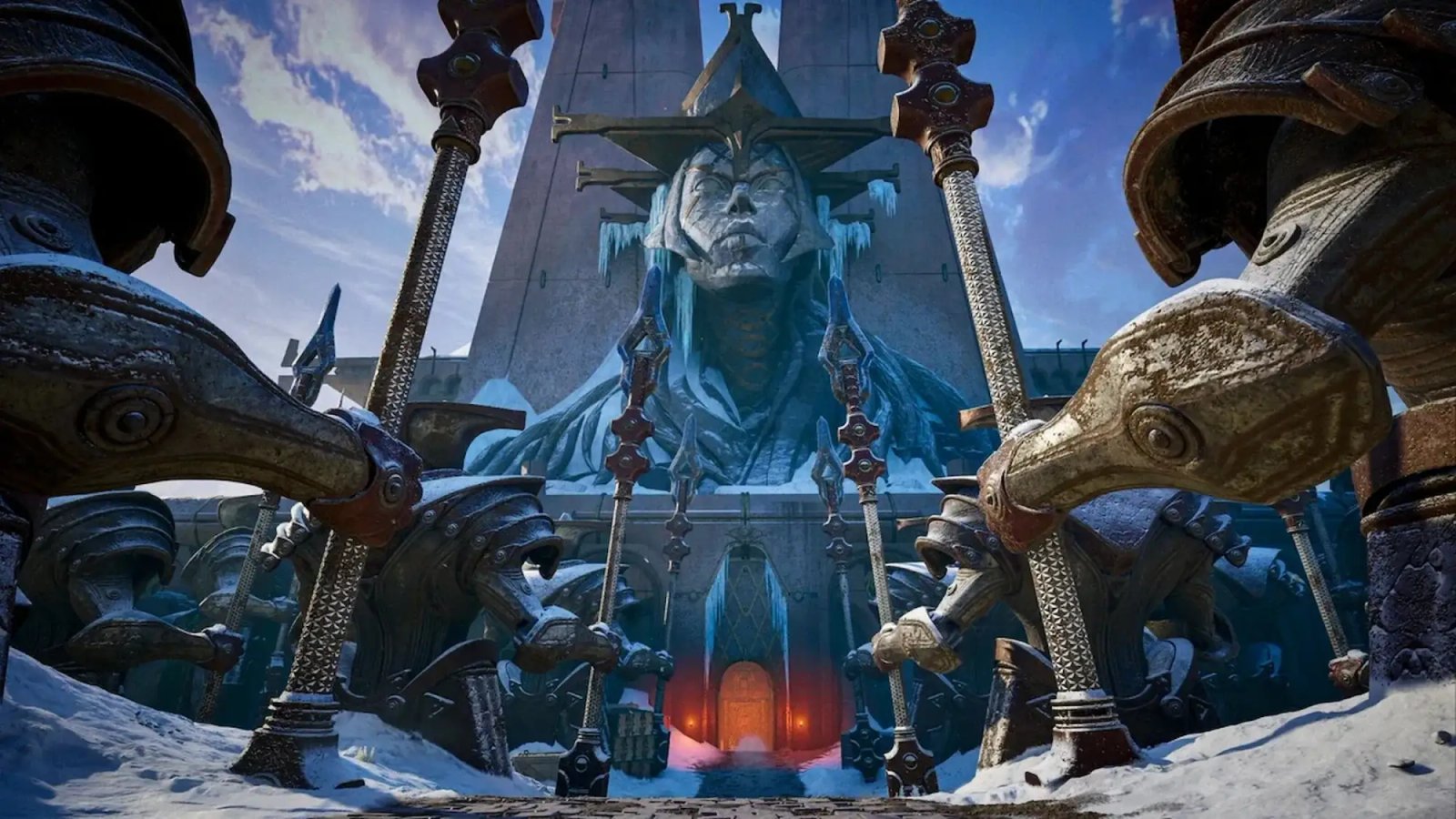
We’ve all played games that promise the world and deliver disappointment. Some stumble through buggy mechanics, some grind through tedious progression, but every now and then, a game surprises you in a way that feels personal, like it actively resists being fun. For me, that game was Highguard.
I’ve played several sessions of Highguard, enough to understand how it works, how it fails, and how it could have been great. Yet, I uninstalled faster than I ever thought possible. From the first match, it was clear this wasn’t a game finding its footing. This was a game full of ambition and promise that had somehow become hollow, messy, and exhausting.
I Couldn’t Tell What Highguard Wanted to Be
From the first match, I was lost. I thought, maybe this is just the learning curve. Maybe it will click in a few games. It didn’t. Highguard has no idea what it wants to be, and it wears that indecision on every screen. Every system is borrowed, stitched together, and half-baked into something that barely functions as a game. One minute, I’m reinforcing walls like a tactical shooter, except those walls do nothing because there are a dozen ways to bypass them. The next, I’m mindlessly mining resources in a survival-style mini-game I’ve seen a dozen times elsewhere. Then suddenly I’m looting a massive map for color-coded gear that is supposed to feel rewarding, but instead feels like checking boxes.
It’s frustrating. Every system is a borrowed fragment, patched together with barely a thought for flow, cohesion, or fun. Combat doesn’t reinforce progression. Progression barely exists. Pacing swings violently from tedium to chaos with a very loose rhythm and hardly any sense of momentum. I kept searching for a groove, for the beat that should make matches feel interesting and compel me to continue playing. It never exists. This game could have been amazing if they just picked one idea, polished it, and committed to it. Instead, what I got is a half-formed Frankenstein stitched from systems that work in isolation but collapse in combination.
How the Launch Made Me Lose Hope
The Game Awards reveal promised excitement, hype, and a grand debut. It should have been a statement: to showcase the game in front of the world in all of its splendor. In reality, in hindsight, it only exposed the cracks. Weeks of silence leading up to release, no public playtests, and a reliance on a single flashy reveal left the game unprepared for the spotlight. By the time I played, every flaw was on display. Every misstep I’d hoped could be hidden in a beta or patched quietly hit me in the face like a brick.
First impressions matter a lot in live-service games. Avoiding that early feedback is a gamble, and Highguard lost. The result was obvious from my first match: a game that couldn’t hold my attention, couldn’t reward my effort, and couldn’t make me feel like my time was worth it. I wanted to stay. I really did. I wanted to see if things could improve. But the cracks were structural. There was no patching this overnight. There was no excuse.
The Game Awards moment should have been a launchpad. Instead, it highlighted the problem: the game wasn’t ready for players, and it never had been. Every session I played reminded me that the developers had gambled on spectacle over substance, and I paid the price with my time and patience.
Why The Half-Commitments Hurt My Every Match
Unfortunately, trying to play Highguard got to a point where it was a futile effort fueled by frustration over what it could have been. To that end, every match I played reminds me why I uninstalled in the first place. Abilities are weak and largely boring. Mechanics that should feel fun feel hollow (due to mechanic stitching this game seems built on). I bounce from system to system, hoping to find something satisfying, only to find another half-baked idea, another clumsy implementation. Reinforcing walls, grinding resources, looting color-coded gear, the systems clash, the pacing collapses, and the experience feels nonsensical rather than thrilling.
Even now, I see the ambition behind it, and it makes the failure sting even more. This isn’t a game struggling to find its footing. This is indecision made concrete. Every choice feels compromised. I keep thinking about how this could have been amazing if they just committed to one idea, polished it, and executed it with confidence. Instead, I got indecision stitched together as gameplay, and that got really frustrating, fast. The only really redeeming quality of the game is that it tried to do something a little different from the standard hero shooter, but that doesn’t matter when the rest of the game is just patchwork.
Looking at the Steam reviews, it all makes sense. Mostly Negative. A flood of frustrated players echoing the same problems I see: mismatched 3v3 maps, gear and progression that feels meaningless, and gameplay that doesn’t flow well at all. But I’m not quoting them. These are my gripes, my sentiments, resonating loudly across the Internet. I’m telling you what I feel while playing, and seeing the community respond this way only reinforces my frustrations I have with this game. The game’s half-measures dominate every session, and it doesn’t take long before the uninstall feels inevitable.
I want Highguard to pick a lane, lean in, and commit. I want it to strip away everything that doesn’t work, to rebuild the systems that could be good, and to make one cohesive, rewarding experience. But right now, I’m done. I hit uninstall because the game in its current form is not broken, but boring, hollow, and unworthy of my valuable time.
Maybe someday the developers could rebuild it. Maybe they could strip away the clutter, commit fully to one vision, and turn it into something worth playing. That’s a massive maybe. If the developers want a second chance with me, they’ll have to Cyberpunk 2077 this game: tear it apart, rebuild it, and commit fully to a vision that actually works. Until then, this will remain a title I uninstalled in record time, a miss with potential that never even seems like it tried. Highguard promised ambition, but delivered indecision instead.
What do you think? Leave a comment below and join the conversation now in the ComicBook Forum!
