


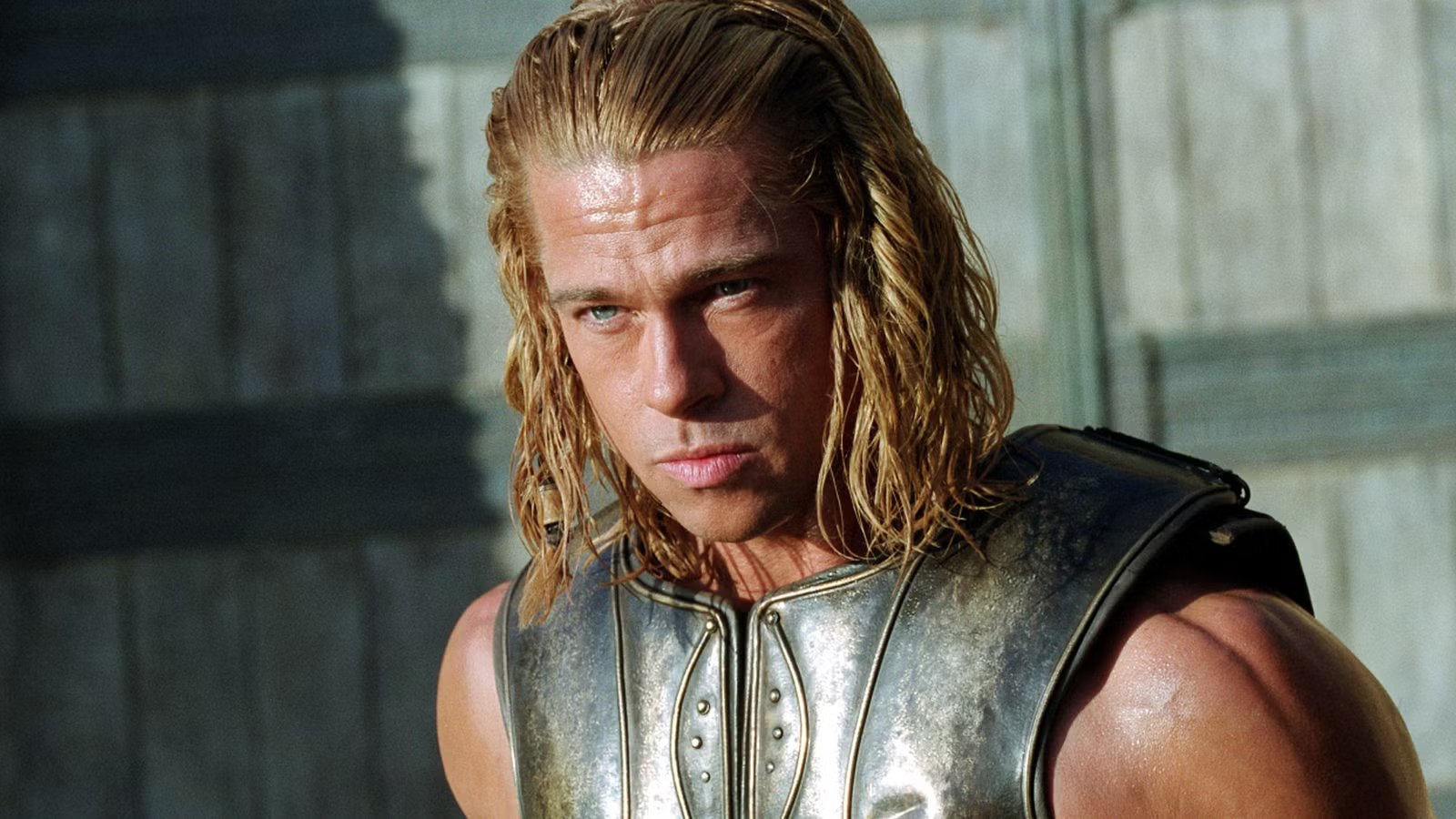
For many people, The Lord of the Rings, especially The Two Towers, is the gold standard for large-scale onscreen battles. From Helm’s Deep to Pelennor Fields, The Lord of the Rings created unforgettable battles. In 2004, though, Brad Pitt’s Troy gave the fantasy franchise a run for its title when it delivered some stellar action and iconic battles. The battles outside of the City of Troy proved that The Lord of the Rings had serious competition for best battles.
Troy was written by David Benioff and directed by Wolfgang Petersen and brought Homer’s The Iliad to life as a major Hollywood epic. With Brad Pitt as the hero Achilles, Orlando Bloom as the young Prince Paris, and Eric Bana as Hector, the movie was stacked with massive stars. While the movie may not hold up from a story perspective or even with the dialogue, the battles have an undeniable stellar quality about them. They help to bring a sense of massive scale to the movie and are the only thing that keeps it relevant.
Troy Created Incredible Battles and Single Combat Scenes
The story of Troy focuses on the Greek assault on the city of Troy after the Prince, Paris, took the wife of the Spartan king back to Troy with him. Helen of Troy is a legendary figure, commonly known as “the face that launched 1000 ships.” From the opening of the film, Petersen establishes that the movie will have some of the best large-scale fights ever.
Massive armies assemble together under King Agamemnon to take over whatever region he sees fit. From this moment, Achilles proves he is the best, taking down a giant person with only a single stab of his sword. This single combat scene is only the tip of the iceberg. Once the war for Troy starts, the big battles only become more epic.
As Achilles and his men hit the beach, they charge the Trojan forces and commit a full assault on the temple of Apollo. It’s an impressive display that sets the tone for how the rest of the siege of Troy will go. The marching shield wall of Achilles’ movements is so cool to see, and it proves the superiority of his command and combat skills. When Agamemnon’s forces hit the beach, it only becomes a bigger blood bath.
This pattern is repeated outside the walls of Troy, after Paris cowardly crawls away, and Hector has to finish his duel. An all-out charge erupts, and it becomes chaos on the field. While the big chargers are great to see, it’s getting to focus on one or two combatants within the even better chaos.
From watching Hector fight off countless soldiers to his horrifying and fateful duel with Patroclus, each of these moments creates an even stronger overall sense of death and danger for all involved. Every single battle and duel is a high point of Troy, which helps to justify the rest of the lacklustre movie.
The Fight Choreography is the Only Thing that Saves Troy
Image via Warner Brothers/courtesy Everett Collection
While all the fights and duels may be impressive and memorable, the rest of the movie is nothing like that. Troy is very much a product of its time in the early 2000s. The movie feels dated when it comes to performances and dialogue, and the overall tone. Despite an all-star cast, no one turns in career-best performances.
The emotional moments lack gravitas, and the dialogue just feels tired almost as soon as the movie begins. Even with it being based on one of the greatest pieces of classic literature, the movie still fails to live up to the source material. Troy truly is saved by the battles. They are gritty and intense, bringing the audience into the action. Without them, the movie would have been forgotten long ago.
Troy will likely be overshadowed by Christopher Nolan’s The Odyssey when it comes out, but it’s hard to say if Nolan will create better battles than Troy had. When action is on the screen, the movie is truly one of the best historical epics and rivals even some of the best onscreen fights ever.
