


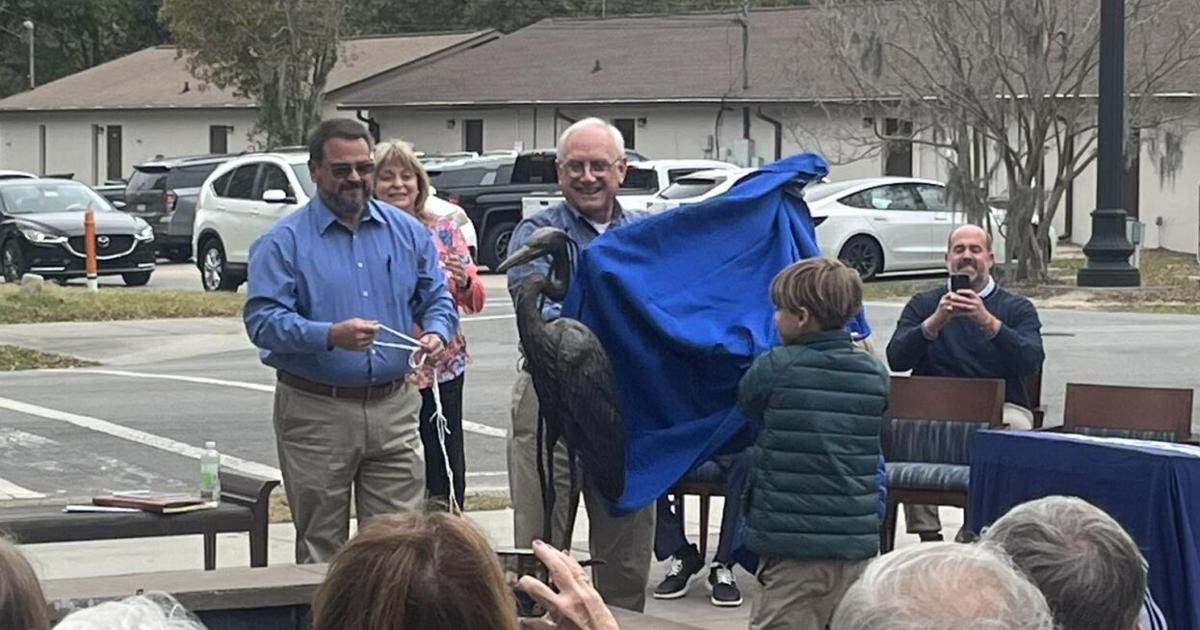
Since 1999, sculpture art has been a part of the culture and appeal of Summerville. Sculpture in the South (SIS) is a nonprofit dedicated to finding permanent placements for art installations in public spaces throughout town. Its Outdoor Sculpture Museum consists of three collections: Permanent Public Sculpture Collection, the Extended Collection and the B.I.R.D.S. Collection.
Downloadable trail maps are available for residents to see all the works within a specific collection in an engaging and educational way.
Longtime artist Scott Penegar has two sculptures in the SIS museum network. Since his involvement, he has contributed a turtle sculpture, “She’s a Keeper,” which is located in Azalea Park and dedicated to his friend and SIS’s first board chairman, Lena Cox.
A second sculpture is a part of the B.I.R.D.S collection: a Red Pileated Woodpecker. When given a list of birds to choose from, Penegar said he liked that one the best.
“That’s my favorite bird,” he said.
Creating bronze sculptures is a complex, multistep process that starts with molding oil-based clay. Once the clay sculpture is done, a rubber mold is made of it.
“When I pull the mold off of that clay piece, the clay comes apart,” Penegar said. “It’s an oil-based clay, never hardens, but I can recycle it with other things.”
The mold then has to be reproduced in pieces. Wax is poured into the rubber molds, resulting in a hollow wax casting. A final silicone mold is made of that, which can withstand the heat of melting bronze at 2,200 degrees Fahrenheit. The wax piece is dipped into the hot bronze, then sand, with the steps being repeated until it is essentially a big rock with a hole in it. Finally, this shell is knocked off with a hammer.
This must be done with all the pieces of the sculpture until they are welded together in a process called chasing. Once all the pieces are welded together, the artist goes over missed details and adds support pieces if needed. The final step is patina, a chemical process that helps set the color of the bronze.
