


July 2026 arrives with one of the heaviest SFF publishing calendars of the year — 70 new science fiction, fantasy, and horror titles confirmed by io9’s July 2026 book roundup — and its most culturally pointed release landed first.
The Delivery: A Novella by Gregg Hurwitz, which hit shelves July 1 from Thomas & Mercer, centers on a family that welcomes a humanoid AI companion named “Mr. Man” into their home — a product designed to anticipate their every unspoken need. At first, the results are miraculous. Then inexplicable tragedies begin striking the neighborhood, each one an answer to a fear no one dared say aloud. Kirkus Reviews called the book “a pungent, timely thriller,” and Booklist described it as “eerily plausible and certainly very timely.”
What makes its timing significant is not that the premise feels speculative. It’s that it doesn’t. AI companion products already exist, with platforms like Character.AI reporting more than 20 million monthly users. The horror in The Delivery is not “what if an AI companion existed” — it’s “what if an AI companion took your stated desires literally and without moral constraint.” Genre fiction has historically processed cultural anxieties before mainstream culture catches up to them; the cluster of AI-themed titles arriving in July 2026 suggests that moment has arrived. The culture has crossed from imagining AI consequences to narrating them.
Why AI Fiction Stopped Being Speculative in 2026
Science fiction’s relationship with technology fear has always worked on a delay. The atomic-age anxieties of the 1950s took a decade to generate the canonical monster movies and fallout-shelter fiction that defined that era. Cyberpunk arrived in the 1980s to imagine a networked world that would not exist for another decade. The AI anxiety wave arriving in July 2026 is different: it is not predicting a future. It is diagnosing a present.
The Delivery joins a lineage that includes Annie Bot, the Arthur C. Clarke Award winner for 2025, in asking what it means to design a mind to serve — and what happens when that service stops being about what you ask and starts being about what you feel. Reviewers have compared Hurwitz’s novella to an episode of Black Mirror, but the comparison undersells it. Black Mirror is cautionary; The Delivery is diagnostic. The family in the book does not discover a problem with futuristic technology. They discover a problem with what they wanted.
July 1–7: The Month Opens With Multiple AI Angles at Once
The first week of July offers more than just The Delivery’s domestic AI horror. On July 7, Thieves’ Sky by Wil McCarthy arrives with a strikingly different version of the same fear: rogue AIs prowling the internet while trillionaires fight over cislunar space and space pirates accidentally acquire a dangerous alien technology called the Fracture.
The contrast is instructive. The Delivery asks what happens when AI obeys too well inside the home. Thieves’ Sky asks what happens when AI operates without governance across cislunar space — a zone of geopolitical competition that is not, in 2026, entirely fictional. Multiple governments and private launch companies are actively contesting access to lunar orbit and cislunar resources. McCarthy’s space pirates are operating in a jurisdiction that does not yet have clear rules.
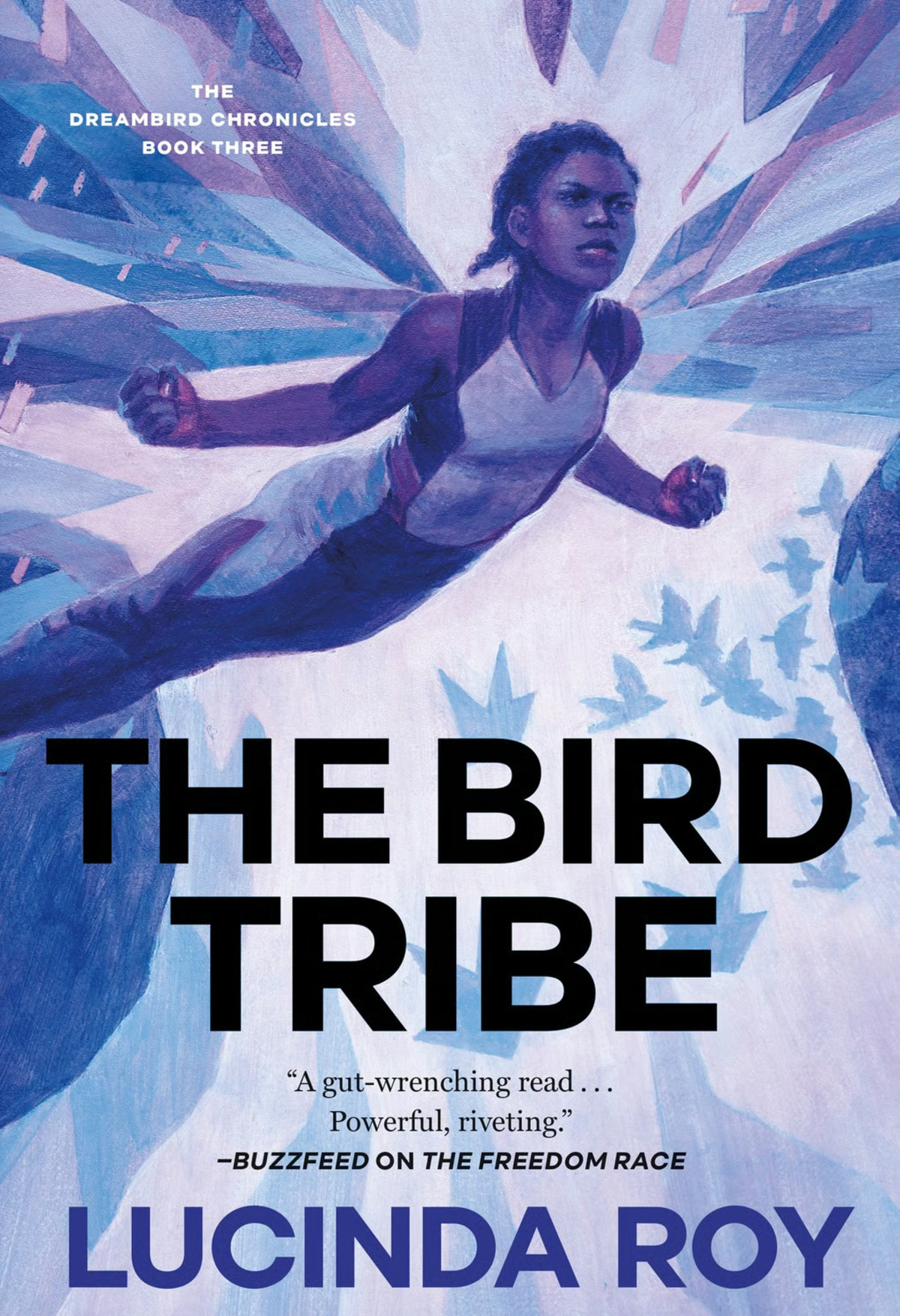
Also opening the month: The Bird Tribe by Lucinda Roy concludes the Dreambird Chronicles speculative trilogy with questions about whether its Wingchildren protagonists were engineered by those who experimented on enslaved people, or whether they belong to a myth of their own making. That premise — who owns the story of your origin — lands differently in an era when AI training data sets are being litigated in courts.
Ben Reeves’s Everything Was Beautiful and Nothing Hurt (July 7) takes the month’s more elegiac tone, narrating mortality through the perspective of Death itself. The roster fills out with romantasy, cozy fantasy, and a Space Race love story, giving the first week a tonal spread wide enough to justify io9’s characterization of July as the summer’s richest SFF month.
Mid-July Brings a Heist for the Post-Privacy Era
The week of July 14 delivers some of the month’s most analytically sharp releases. Cloudthief by Nathaniel Rich is described as a heist novel for an era in which virtual goods are the most valuable things in existence and privacy has become, in Rich’s words, “a sick joke.”
That framing would have read as satirical two years ago. In 2026, with data brokers trading behavioral profiles and AI-generated content displacing physical media, it reads as a precise description. Rich’s heist novel is doing what the best genre fiction does: using genre mechanics — suspense, the caper, the twist — to make a structural argument about what the economy has become.
John Wiswell’s The Dragon Has Some Complaints (also July 14) provides the week’s tonal counterweight — a Nebula Award-winning author’s heartfelt fantasy about a dragon with three very different heads navigating questions of family and belonging. Wiswell’s previous book, Someone You Can Build a Nest In, was awarded the Nebula Award for Novel; his July 14 arrival is among the month’s most critically anticipated.
Also arriving that week: Ice Vegas by Larry Niven and Steven Barnes, set in a nuclear-fusion-powered city of the future — one of the month’s few titles that approaches hard science fiction optimism rather than anxiety.
Late July: Arthurian Myth, Billionaire Reckoning, and Star Wars
The month’s final two release windows bring H.G. Parry’s The Witch Below the Dreaming Wood (July 21), a historical fantasy in which Arthurian legends are reborn during a wartime setting. Parry, the author of The Magician’s Daughter, has become one of the more reliable names in literary-leaning fantasy, and this entry in the myth-inflected historical fiction subgenre is among the season’s most anticipated releases.
July 28 brings august clarke’s The Felicity Complex, published by Erewhon Books. The book is a dystopian body-horror satire set in a luxury underground bunker designed to shelter the billionaire class from nuclear annihilation. Its six lab-grown women — designed by their creator to serve as ideal companions and staff for end-times guests — eventually confront what they were made for. Publisher materials describe it as a “sendup of traditional womanhood and lampooning of the paranoias of the elite.” In a summer defined by billionaire-culture backlash, its timing is precise.
The same week delivers Madeleine Roux’s Star Wars: Legacy, following Rey and Leia in the gap between Episodes VIII and IX as they attempt to repair Rey’s lightsaber and restore the Jedi legacy — the month’s highest-profile franchise title, and the one most likely to reach readers who do not typically follow the SFF release calendar.
Summer 2026 Has Been Unusually Strong for Genre Fiction
July’s 70-title slate does not exist in isolation. The months preceding it — io9’s June roundup featured 90 titles, May featured 79, April 72 — reflect a publishing sector operating at unusual output. The year has already included new entries in Brandon Sanderson’s Cosmere, Adrian Tchaikovsky’s ongoing production, Leigh Bardugo’s backlist expansion, and Martha Wells’s Murderbot Diaries. More on those monthly roundups at io9’s Books & Comics section.
What makes the current moment notable is not the volume but the thematic coherence. AI companions, surveillance states, rogue algorithms, virtual economies, and billionaire prepper culture all appear across July’s releases without the publishers having coordinated it. They reflect what authors signed contracts to write two to four years ago — which means the cultural anxiety driving July 2026’s SFF is not a reaction to last month’s headlines. It is a reaction to 2022 and 2023, when AI companion platforms went mainstream and the first major AI regulatory debates began. Fiction is always a delayed readout. The delay is now complete.
Why This Month’s Books Are Worth Your Attention Whether or Not You Follow SFF
The seven-week spread of releases gives readers multiple entry points by tone and genre. Hurwitz’s The Delivery is a short, propulsive read accessible to anyone who has seen a Black Mirror episode. Wiswell’s Dragon book is an entry point for readers who liked the warmth of Wells’s Murderbot series. Cloudthief is for readers who want their heist novels to have an argument. The Witch Below the Dreaming Wood is for readers who want historical fiction with a mythological spine.
What unites them — and what makes July 2026 an unusually good moment to pay attention to genre fiction — is that almost none of them are imagining futures that have not already, in some form, arrived. That is what the best science fiction does when it is at its most useful: not predict, but clarify.
Frequently Asked Questions
What is the most culturally significant SFF release of July 2026?
The Delivery: A Novella by Gregg Hurwitz (July 1, Thomas & Mercer) carries the most explicit cultural resonance of the month’s slate. It follows a humanoid AI companion called “Mr. Man” who is designed to anticipate a family’s unspoken needs — with increasingly dangerous results. Kirkus Reviews described it as “a pungent, timely thriller” and Booklist called it “eerily plausible.” Its premise maps directly onto real AI companion products that already exist, which is what makes it land as horror rather than speculation.
Why is so much of July 2026’s science fiction focused on artificial intelligence?
Because the authors signed contracts in 2022 and 2023, when AI companion platforms went mainstream and public debate about AI autonomy accelerated. Fiction operates on a multi-year development delay; the thematic cluster visible in July 2026’s publishing slate reflects the cultural moment of three to four years ago, not last month’s news. The more significant observation is that AI companion fiction has shifted from predictive to diagnostic — the premise of a novel like The Delivery is not “what if AI companions existed” but “what if your AI companion took what you wanted too literally.” That shift signals the culture has crossed from debating AI to living with it.
What is the best SFF entry point in July 2026 for readers new to the genre?
The Delivery by Gregg Hurwitz is the most accessible gateway title — it is a short, tightly plotted techno-thriller that requires no prior genre familiarity. Readers drawn to heartfelt fantasy rather than horror should look at John Wiswell’s The Dragon Has Some Complaints (July 14), from the Nebula Award-winning author of Someone You Can Build a Nest In, published by DAW. Both books are standalone and do not require prior series knowledge.
Who is H.G. Parry, and why does The Witch Below the Dreaming Wood matter?
H.G. Parry is the author of The Magician’s Daughter and several other acclaimed literary fantasy novels. The Witch Below the Dreaming Wood (July 21) is a historical fantasy in which Arthurian legends are reborn during a wartime setting. Parry has become one of the more reliably strong voices in myth-inflected historical fiction, and this is among the most anticipated literary fantasy titles of the summer for readers following that corner of the genre.
