


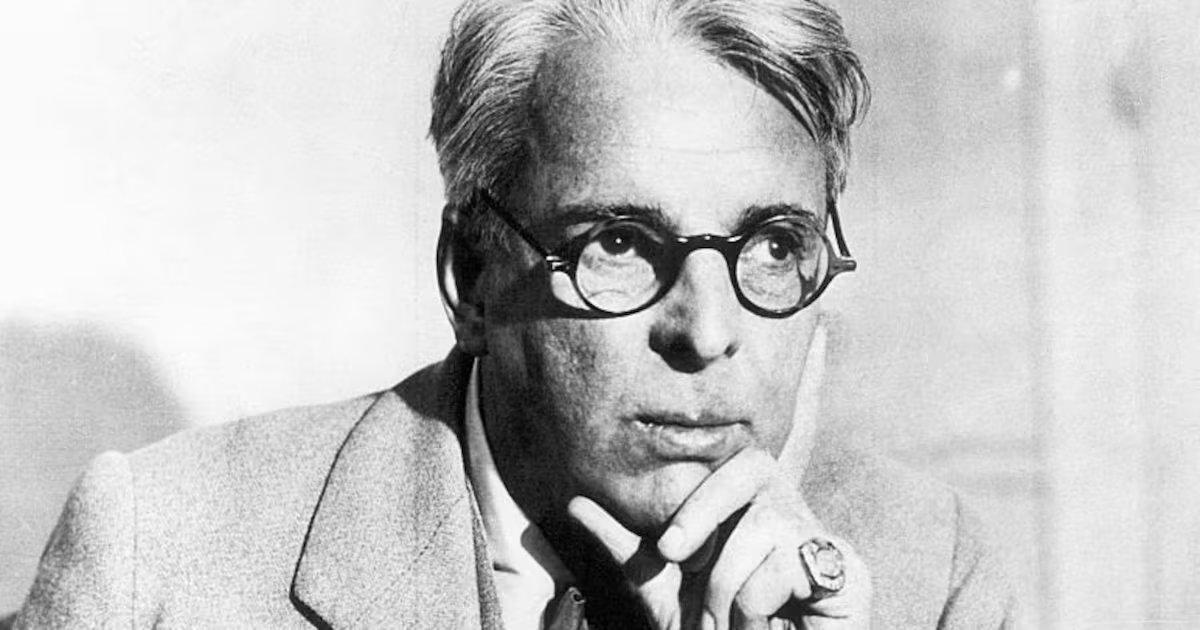
The Magical Writings of W.B. Yeats: The Original ‘A Vision’ and Other Essays on Occultism, edited by John Michael Greer (Aeon Books, £50)
This beautiful large hardback, edited and introduced by independent esoteric scholar, practitioner and author John Michael Greer, gathers for the first time into a single collection key magical writings by Yeats, distilled from the poet’s lifetime of occult, folkloric and parapsychological studies. While academia persists in its discomfort with Yeats’s magical leanings – even though these leanings form the foundation for much of his work – Greer states that as editor, he has bypassed solely literary concerns, instead intending his anthology for “students of the mysteries. . . to introduce them to the thought of one of the most innovative and original occult thinkers of the 20th century“. First published by Yeats from 1900 to 1925, these essays reveal the fascinating development of the poet’s spiritual philosophy. Adrienne Murphy
On Land and Water: Irish Wildlife through Image and Poetry by Sheena Jolley and D.J. O’Sullivan (Menma Books, €30)
Sheena Jolley, who lives in west Cork, has spent considerable time photographing birds and mammals on Irish islands and abroad. Her book is a unique marriage of images and words in collaboration with the poetry of the lighthouse keeper and naturalist D.J. O’Sullivan. His poems were published in 1947 in Light-keeper’s Lyrics, with a second collection in 1993, the year he died.
Jolley’s sublime pictures feature a diverse array of birdlife including the courtship of guillemots, the billing of puffins and scampering sandpipers, but also foxes, dragonflies, seals and bees. O’Sullivan’s expressiveness is evident in Nightfall in Inishtrahull, when he writes of the sea “Ensaffroning the wavelets far and wide”, to accompany a photograph of charismatic baby otters playing beside the shore. Paul Clements
The Nun of Ravensbrück: The Irish Nun Who Defied the Nazis, by Cathi Fleming (Hachette, £15.99)
Fleming’s book is based on the true story of an Irish nun who joined the French Resistance during the second World War. Sister Kate McCarthy, a naive yet fiery Franciscan, tends to injured soldiers in northern France as war breaks out. When she falls in with a cast of colourfully drawn saboteuses, she goes from ministering POWs to helping them escape.
The group are found out by schnell-shouting Nazis and end up in a concentration camp, where Kate is sustained by spiritual conviction and memories of Drimoleague. The book is a paean to acts of quiet resistance and enduring faith, but falls short of fully exploring its more important themes. The Nun of Ravensbrück is a pious, well-meaning novel that doesn’t live up to the remarkable reality. Harry Higgins
