


Captured on Nintendo Switch 2 (Docked)
In 2025, Aspyr surprised players with a shadow drop of the 2013 Tomb Raider reboot on Switch 1 & 2, with the latter port especially showcasing the power of Nintendo’s new handheld. This sudden release naturally spurred discussion over whether there would be ports of the latter two games in the Survivor Trilogy.
Though the jury’s still out on whether we’ll ever see a port of Shadow of the Tomb Raider, it seems a lot more likely now that Aspyr shadow-dropped Rise of the Tomb Raider: 20 Year Celebration during the June Nintendo Direct.
While the more advanced graphics of the sequel contribute to a slight hit to performance, this is an overall solid port of arguably the best entry of the Survivor Trilogy. Lara’s sophomore outing feels like a refinement of the strengths in its predecessor, combining big set-piece action sequences with more pensive puzzle-solving in the eponymous tombs. Tie it all together with Metroidvania-esque exploration, gorgeous graphics, and all the original DLC bundled in, and you’ve got a great package that offers a lot of bang for your buck.
Captured on Nintendo Switch 2 (Docked)
Rise of the Tomb Raider is set about a year after Tomb Raider (2013), following Lara’s adventures in Siberia pursuing a mysterious MacGuffin called the Divine Source, which supposedly holds the key to eternal life. But Lara isn’t alone in this pursuit: an ancient shadowy organisation called Trinity wants the Divine Source for its own purposes and will stop at nothing to find it first.
Luckily for Lara, they don’t have the same expertise in ancient history as she does, and as she races against them to uncover its location, her search is aided as she learns more about the life of an ancient messiah figure named The Prophet, whose history is inextricably linked with the Divine Source.
It’s not exactly the most memorable narrative, yet the plot does a great job of giving you the ‘summer blockbuster’ feel as our intrepid heroine overcomes impossible odds and show-stopping set-piece moments. Lara isn’t the most charismatic character, but she goes through some satisfying character development throughout her journey to becoming the titular adventurer we all know and love.
Captured on Nintendo Switch 2 (Handheld/Undocked)
Meanwhile, a cruel Trinity leader named Constantine plays the role of the main villain, stealing many of the scenes he shows up in with his cold demeanour and unrelenting commitment to his goal. He’s easily the most punchable person in the game and is a highlight of the story; a rather simple and irredeemable villain such as him feels like the perfect foil for Lara.
Falling in line with series expectations, the main gameplay loop here ultimately focuses on heavy exploration with some combat encounters peppered in to mix up the pace and put some pressure on the player. It’s not exactly an open-world game, but the game world features a couple of expansive hubs that you frequently return to after finishing side content, and these hubs feature plenty of secrets and collectibles to snap up between missions.
As you complete tombs, gather collectibles, and kill enemies by the dozens, you also gather experience points and resources you can then use to upgrade Lara and her gear back at a camp.
Captured on Nintendo Switch 2 (Handheld/Undocked)
The highlight of the experience here is easily the optional challenge tombs, which are both more frequent and more interesting than those found in this game’s predecessor. Each of these tombs is designed somewhat like a miniature dungeon from the older Zelda games, built around a central gimmick or puzzle element that you need to decipher to get to a treasure at the end. One of my favourites — the Ancient Cistern — is built around a high central tower surrounded by water, and Lara needs to puzzle out how to gradually raise the water level so she can reach the treasure at the top.
Not only is each tomb memorable and distinct, but they all largely manage to hit that fine balancing point between challenge and simplicity. When you finally figure out what’s needed to solve the puzzle, there’s a wonderful sense of satisfaction that comes from finally reaching the end, and this is reinforced by you also being given some sort of new skill or ability.
Even when not exploring a tomb, exploration feels rewarding given that each hub exchanges sheer size for content density. There are hidden relics, treasure maps, caches, and huntable animals seemingly every few feet, routinely rewarding the player for scouring every corner.
Captured on Nintendo Switch 2 (Docked)
There are also some side quests from NPCs that usually prompt you to return to previously completed areas, giving you new challenges to overcome while granting an opportunity to mop up any collectibles you may have missed the first time around. This is the sort of well-paced game that does a great job of both giving you lots of rewarding things to explore and uncover while also not hosing you down with meaningless content bloat and empty activities.
Combat, on the other hand, doesn’t fare nearly as well. While stealth sections are satisfyingly tense and give you plenty of options for distracting and taking down foes, enemy encounters tend to fall apart when the bullets start flying. Though Lara has a solidly versatile and growing arsenal of weapons to respond with, the shooting controls feel too stiff and are rather unsatisfying to navigate using the Joy-Con.
This is something that would hopefully be solved with the newly added gyro controls, but they maddeningly only work when examining relics in Lara’s inventory – gyro controls seemingly don’t apply at all to shooting sections.
Captured on Nintendo Switch 2 (Handheld/Undocked)
You can somewhat get around the control issue by enabling mouse mode, but this itself proves to be awkward due to how the Joy-Con simply doesn’t feel great in the hand as a mouse and still requires you to utilise the face buttons even when held on its side.
The good news is that combat encounters are only maybe 30% of the total experience—they’re a core part of the gameplay loop, but you’ll spend the vast majority of your time crawling around tombs and digging up relics. And while the shooting controls are disappointing, fights usually don’t last long enough to overstay their welcome and really highlight the deficiencies.
This being the ‘complete edition’ of a decade-old game, there’s a decent amount of additional content from later DLC additions that’s been seamlessly integrated into the core game. The highlights are some story-focused quest chains that task you with exploring the famed Croft Manor and with tracking down the Baba Yaga witch in a new tomb, both of which feel like a natural extension of the best parts of the original campaign.
Captured on Nintendo Switch 2 (Docked)
Additionally, there are some more arcade-like additions such as a roguelite mode and a zombie survival mode, both of which help to remix existing content and give you a bit more to chew on once you’ve hit 100% completion.
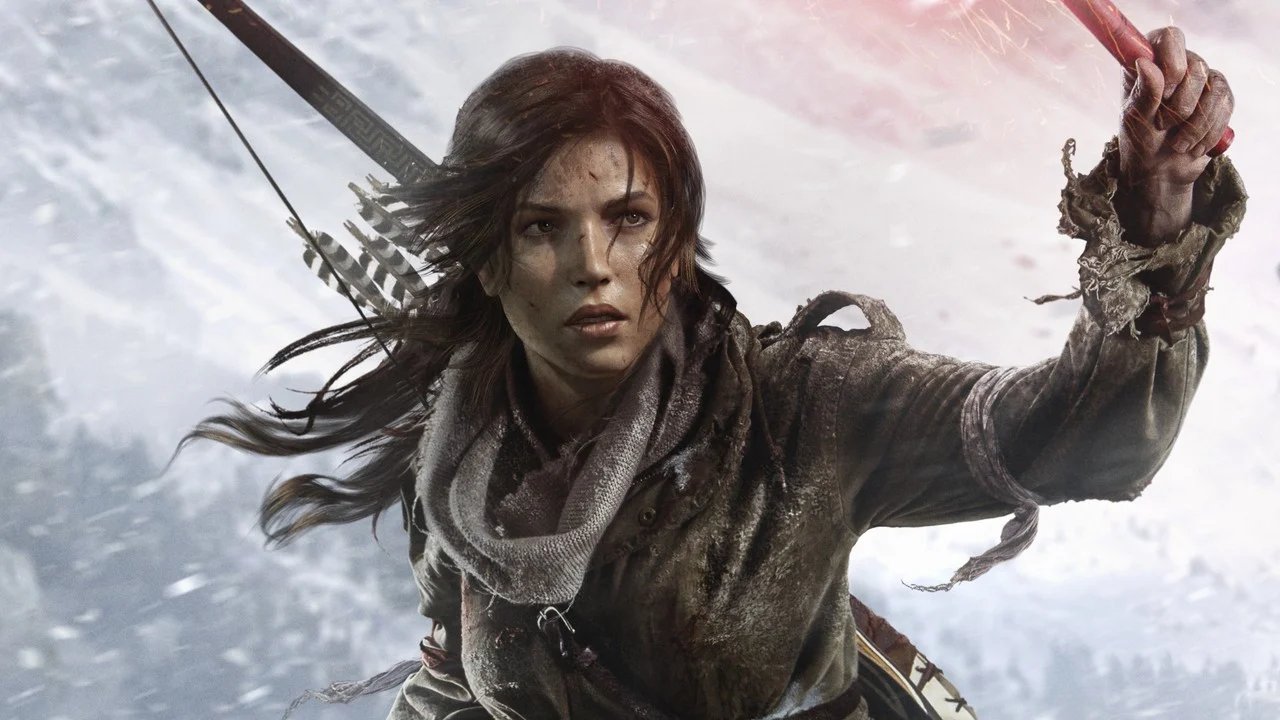
Regarding the graphical presentation, Rise of the Tomb Raider showcases the strengths of the Switch 2 hardware through the stunning visuals on display here. The grimy, crumbling environments of the tombs are fully realised with impressive detail, as features like cobwebs hanging off skeletons and the soft light emanating from Lara’s glow stick help to give the environments meaningful texture and contribute lots to the immersion. Character models are also well-detailed and animated, with the much-touted TressFX hair making an appearance here for realistic motion as Lara’s ponytail sways with the action.
Captured on Nintendo Switch 2 (Handheld/Undocked)
All this runs at a smooth 1080p and 30fps in both docked and handheld, with no significant drops to be found even in the busier sections. Granted, it’s a little disappointing Aspyr couldn’t get this one to 60fps (even in docked mode) to match its predecessor, but this game was a notable visual step-up when it first launched back in the day and a stable 30fps still feels adequate for the gameplay. As is often the case for these kinds of ports, the absolute best performance and presentation is traded for the ability to play the game portably with no content cuts.
Conclusion
Rise of the Tomb Raider is a great addition to the Switch 2 library, standing as a strong example of the vision of the platform offering full-fat home console gaming on the go. Satisfying exploration, incredible visuals, and loads of content all running at a smooth 30fps combine to make this a must-have buy for your personal library, even if a forgettable story and some occasionally wonky controls hold this one back from perfection.
I’d suggest you pick this one up at the next available opportunity – it’ll keep you busy for a while and is especially the kind of game that really shines in handheld.
