


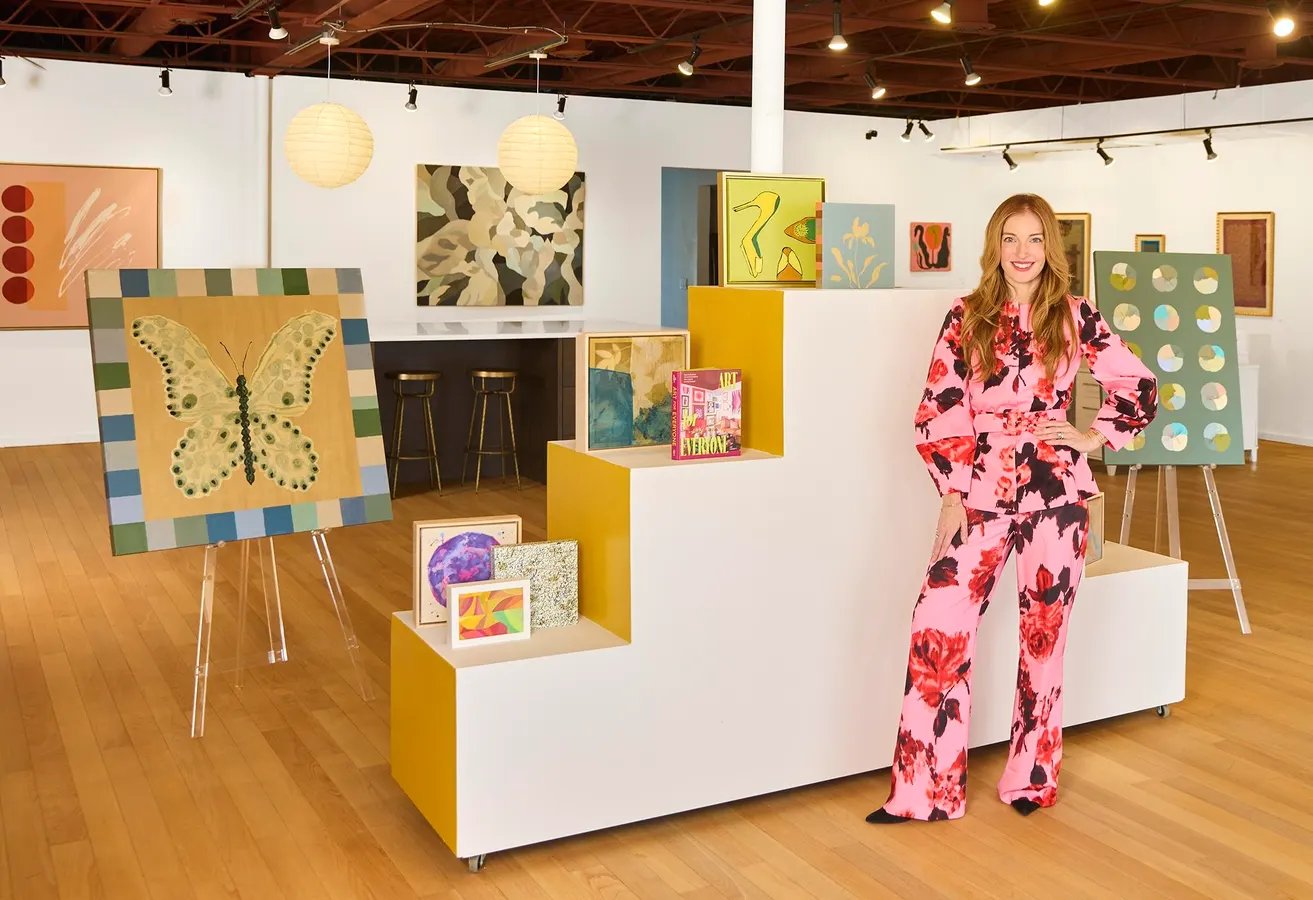
Author and curator Liz Lidgett
Adam Albright
One of the biggest challenges for anyone decorating their home—whether they hire a professional or go it alone—is figuring out what to put on the walls. While wealthy collectors often consult art advisors, for the average person, buying art can feel like a complicated process. As a result, many people end up purchasing mass-produced pieces from big-box retailers, investing in artwork they don’t truly love, or choosing pieces that simply don’t work in their space.
Another part of the problem sourcing from galleries or buying from artists can feel downright intimidating. According to Liz Lidgett, curator of Liz Lidgett Gallery and author of Art for Everyone, for generations, the art world worked very hard to feel exclusive. “People absorbed the message that art was for a certain kind of person, and most of us were told we weren’t that person.”
Art For Everyone by Liz Lidgett
Liz Lidgett
So how do you cut through the noise?
Why Mass-Market Art Isn’t Going Away Anytime Soon
There are two reasons why mass-market art continues to dominate the market. Lidgett tells me the two main reasons are that it’s safe and it matches the couch. But the bigger problem, she explains, is that it doesn’t make a statement.
Play Puzzles & Games on Forbes
“But when you buy directly from an artist, suddenly it feels like a statement, and a lot of people aren’t sure they’re qualified to make that statement. What I want people to understand is that buying mass-produced art when there are thousands of incredibly talented working artists who need your support is a missed opportunity — for your home and for them.”
The logistics of buying art can also feel overwhelming to the average person, according to artist and owner of Elizabeth Sutton Atelier (the midtown Manhattan boutique which sells her art, dinnerware, and fashion accessories among things), Elizabeth Sutton.
“The average person doesn’t know what size they need, what style speaks to them, or even what a realistic price point looks like. They walk into the conversation with no map. So they default to what’s easy and familiar: mass retail. There’s no risk because there’s no decision.”
Most people want to do what’s easy and aren’t necessarily looking for pieces they connect with. Instead, they’re searching for something that simply works with the furniture and architecture of their homes. But doing this means they often miss out on the true power of art.
The Intimidation Factor
Another reason many consumers turn to mass-market art is that galleries can feel intimidating. But Lidgett hopes her gallery feels more accessible. It represents more than 50 artists, approximately half of whom are women or BIPOC. While Des Moines isn’t known as an artists hub, her gallery has an extensive national reach. In fact, 80 percent of the work it sells ships to clients across 45 states and seven countries.
The overwhelm and intimidation factor surrounding art are two of the reasons Lidgett wrote her book. While the guide addresses many of the questions customers ask at her gallery, it also breaks down how to find art that speaks to you, work with galleries, buy art on a budget, and display artwork in any space.
“But beyond the practical stuff, it’s really a permission slip. I wanted every reader to finish it and think, ‘I can actually do this’ — regardless of their budget, their background, or whether they’ve ever set foot in a gallery,” she tells me.
Social Media And Art
Artist Elizabeth Sutton
Elizabeth Sutton
Today, most art buyers don’t start their search in galleries, but rather they start on Instagram. When it comes to discovering art, Lidgett says Instagram is genuinely one of the best discovery tools ever created for collectors.
“I have found artwork and artists through social media that I never would have had the chance to connect with otherwise.”
Sutton agrees, stating that most leads for her fine art business come directly from Instagram.
Lidgett is also a fan of the platform’s ability to democratize access to artists and galleries.
“Social media has completely eliminated the gatekeeping that used to make this hard and now it’s easier than ever to work with a gallery or find an artist whose work you’ll love forever. ” says Lidgett, “I have found artwork and artists through social media that I never would have had the chance to connect with otherwise.”
The Price Is Right—Or Is It?
One of the most complicated aspects of buying art is understanding its value.
“Art is a deregulated commodity. There is no universal price guide. Value is entirely in the eye of the beholder, and that’s actually a beautiful thing,” reveals Sutton.
However, there are factors that make some pieces more expensive than others.
“Complexity, time, and the artist’s market position all factor in. A highly detailed commission from an established artist will cost more than a simple piece from an emerging one. That’s not a flaw in the system — it’s the system working correctly.”
Lidgett carries pieces ranging from $200 to $20000 at her gallery, with most works priced under $5000. However, she notes that most people, no matter where they buy art, don’t actually end up overpaying.
“Overpaying at the primary market level is harder to do than people think, but at auction or through resellers, doing your research on an artist’s price history is essential. When in doubt, ask the gallerist or the artist directly — transparent pricing is a sign of a healthy, trustworthy relationship.”
As the art world becomes increasingly accessible through social media and online galleries, and consumers have more opportunities than ever to buy meaningful work. The challenge isn’t finding art, it’s giving yourself permission to trust your taste and bring home something you genuinely love.
