


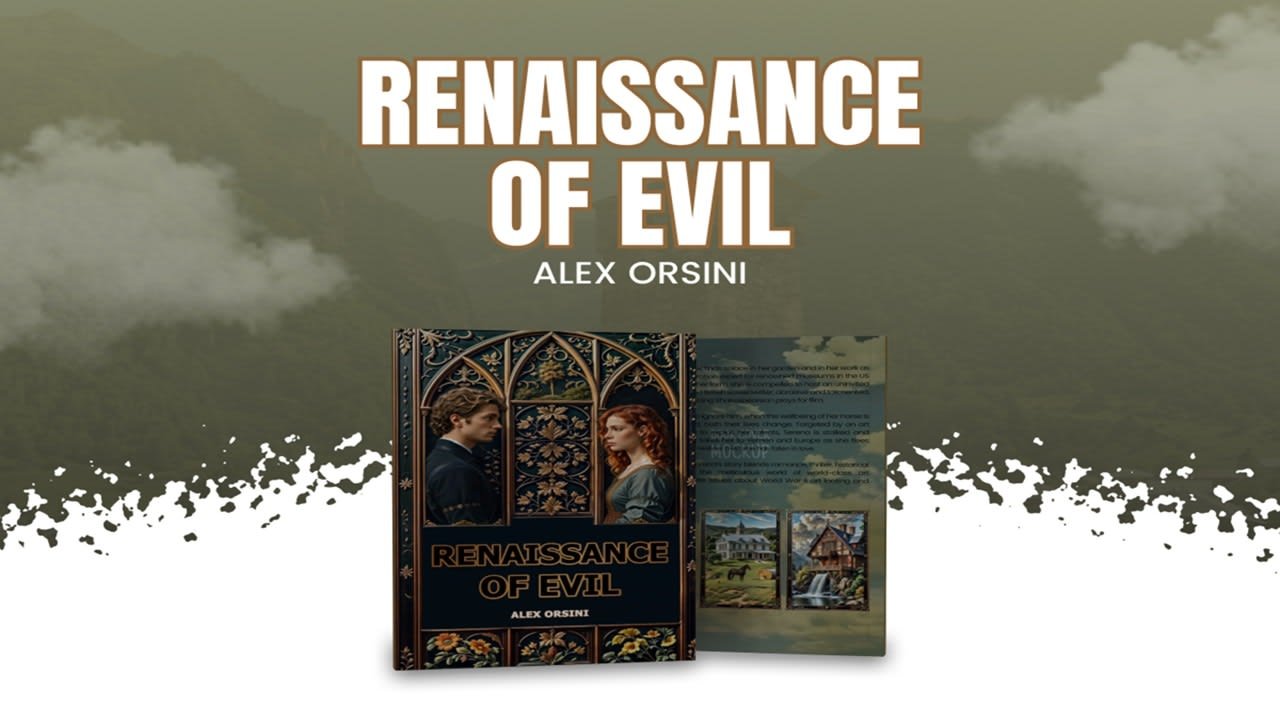
In an era where storytelling increasingly blurs the lines between fact and imagination, Renaissance of Evil by Alex Orsini stands as a compelling example of how fiction can illuminate history in ways that are both engaging and accessible. Rooted in real-world events yet driven by narrative creativity, the novel explores the complex and often overlooked world of art restoration and wartime cultural loss, offering readers a richly layered experience that goes beyond traditional historical fiction.
A Unique Literary Vision
Renaissance of Evil is a story about passion and a love letter to those who embrace a deep appreciation for the arts and for history. The book gets its inspiration from the looting of cultural artifacts during World War II, a unique subject fascinating to many scholars. However, such looting and its damages have very rarely been presented in a way that appeals to a broad audience.
Alex Orsini helps transform this intricate and technical subject into a highly compelling story. She does not present the facts in an academic, straightforward manner. Instead, she builds a fictional storyline that envelops real-life historical elements. By providing her readers a chance to delve into the depth of the plot itself and connect emotionally with the content, she engenders insight into the significance of the preservation of art.
This approach positions Renaissance of Evil at the intersection of education and entertainment, a space where readers can both learn and immerse themselves in a captivating story.
Discovering the Technical World of Art Restoration
Art restoration is a heavily under-appreciated field; operating in a professional facility behind closed doors, it rarely gets the acknowledgement it deserves. Despite its being a powerful tool in helping immortalize humanity’s cultural heritage, it remains in the shadows. Through Orsini’s storytelling, this hidden world emerges into the light with explanations of the meticulous processes, the challenges of preservation, the ethical considerations, and the sheer difficulty in trying to assess and restore old or damaged artworks.
The novel delves into themes such as:
- The recovery of looted masterpieces
- The delicate balance between preservation and alteration
- The historical significance of artistic techniques and materials
These plot elements help give the readers a much deeper understanding of what restoration experts do and why their work truly matters. The author is on a mission to ensure that historical and artistic concepts are accessible to the general public. She delivers.
A Narrative Rich in Detail and Atmosphere
Renaissance of Evil is precise in its attention to detail; the novel focuses on the traditions of 15th-century and Early Netherlandish art, referencing masters of the craft such as Hans Memling and Jan van Eyck. Mention of these strong influences caters deeply to the novel’s structure and its integrity in dealing with the arts and historical works. The book transports the reader into a different world where art is a living, breathing piece, in this case a long-lost looted predella, woven into the fabric of society and history itself. Such is the detail-driven story-writing of the author. This bold and unique narrative helps encapsulate the techniques of creating and restoring art, developing an immersive experience that induces a feeling of pride in art enthusiasts and general readers.
At the same time, the book maintains a strong narrative pace, ensuring that the richness of its subject matter does not overwhelm.
Blending Genres for Broader Appeal
Renaissance of Evil is not like any other typical novel; it creates its own category as it moves away from traditional genres. Although rooted in historical fiction, the novel encompasses elements of mystery, excitement, suspense, adventure, romance, and human drama, creating a diverse and multidimensional reading experience that caters to a wide audience and ensures that many people will broaden their interest in World War II history and develop a strong interest in the art restoration field.
- Readers interested in history will gain insight into a significant period and its cultural impact.
- Art lovers will become knowledgeable about the intricacies of restoration and classical techniques.
- General fiction readers will be captivated by the story’s suspense and emotional depth.
By targeting multiple interests simultaneously, the novel achieves a level of versatility uncommon in its category.
Standing Out Among Comparable Works
In the broader literary landscape, works such as Stealing the Mystic Lamb have explored the history of art theft and recovery in a nonfiction context. These books provide valuable insights but often cater to a more specialized audience.
Renaissance of Evil, by contrast, offers a fresh perspective by using nonfiction as a vehicle for storytelling. This allows the author to explore not only the historical facts but also the emotional and psychological dimensions of her characters.
This distinction is significant. While nonfiction works inform, fiction has the power to immerse, and it is this immersive quality that makes Orsini’s novel particularly impactful. By combining authenticity with narrative freedom, she creates a story that is both informative and deeply engaging.
A Commitment to Accessible Knowledge
At the heart of the book lies a clear mission: to educate readers about World War II’s impact on art and culture while making that information easy to understand. In a digital age where information is abundant but often complex or fragmented, this goal is especially relevant.
Orsini’s writing simplifies intricate topics without oversimplifying them. She provides clarity where confusion might otherwise exist, offering readers a gateway into subjects they may not have previously explored.
This commitment to accessibility is one of the defining qualities of the novel. It ensures that readers from all backgrounds can engage with the material, regardless of their prior knowledge of art history or restoration.
An Engaging and Thought-Provoking Experience
Beyond its educational value, Renaissance of Evil succeeds as a work of storytelling. The novel’s structure, pacing, and character development work together to create a reading experience that is both engaging and thought-provoking.
Readers can expect:
- Unexpected twists that maintain suspense
- A narrative that evolves in complexity as the story progresses
- Characters whose journeys reflect broader themes of loss, discovery, and resilience
This combination of elements ensures that the book remains compelling from beginning to end.
Availability and Reader Engagement
To further dive into the world of art and history and gain insights into how the technically quiet world of art restoration works, Renaissance of Evil is available through major online retailers, including Amazon. Readers can easily access the novel in print or digital format, making it a highly convenient journey for people who want to take the first steps into these topics. While purchasing the book, readers are also invited to stay connected with the author through her social media platforms. Such channels help provide updates on new information, press releases, future sequels, and insights into the writing process; also, they bring opportunities to connect and engage with a wider community of readers and art enthusiasts.
Conclusion
Renaissance of Evil is a thoughtful exploration of history, art, and human experience. By blending factual inspiration with imaginative storytelling, Alex Orsini has created a work that resonates on multiple levels.
The book educates without overwhelming, entertains without sacrificing depth, and invites readers to view history through a new and compelling lens. It stands as a testament to the power of fiction to illuminate reality, offering a narrative that is as enriching as it is engaging.
For anyone seeking a story that combines intellectual substance with narrative intrigue, Renaissance of Evil is a remarkable addition to contemporary literature, one that not only tells a story but also preserves and illuminates the legacy of the past for future generations.
This article was written in cooperation with Tom White
