


With more people reading manga and webtoons (aka vertical scroll comics) than ever before, Beat’s Bizarre Adventure gives three writers an opportunity each week to recommend some of their favorite books and series from Japan, Korea, and elsewhere. But now that we’ve written over 100 of these columns, it’s time to ask the writers themselves some questions! Where did they come from? Where are they going? Just how great is Dick Fight Island?! Let’s get into it.
When did you first discover manga?
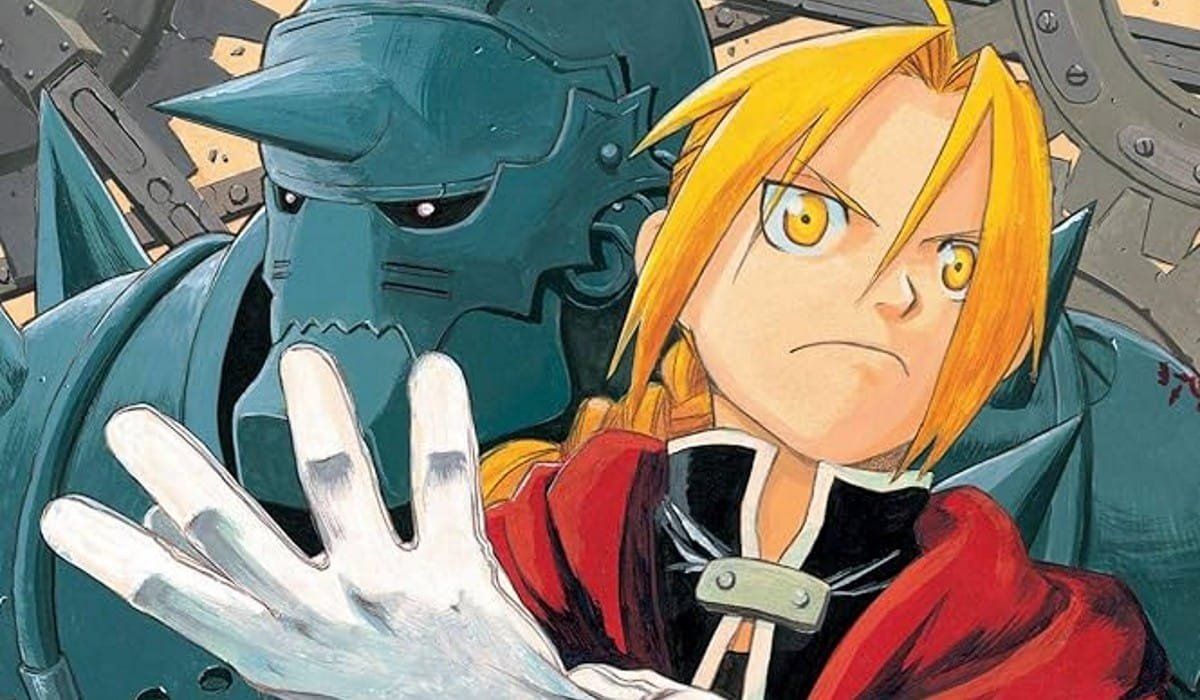
Adam Wescott: The first manga series I remember seeking out knowing it was manga was Fullmetal Alchemist. I saw someone in middle school walking around with a copy of the first volume, and thought, “why does that book read right to left?” So I picked up a copy from the local bookstore. The dubbed version of Fullmetal Alchemist 2003 was airing around that time, and I loved the show so much that I went hunting around for the manga. The rest is history!
Before that, though, I read volumes of Pokémon Adventures and Pokémon: The Electric Tale of Pikachu. I wonder how many other folks got into the medium that way? (Likely a lot of them.) I still have a soft spot for Pokémon Adventures, though I haven’t read beyond the initial arc with Red and his Polywhirl.
D. Morris: Gather around, children, and let me tell you of the olden days of manga fandom. In my day, we used to get chapters of manga published monthly and they were printed right to left. They were collected either at the size of a western comic or something slightly larger than what we get today.
Jokes about my age aside, I got into manga around the time Dragon Ball became big in the United States and also when I started reading Wizard Magazine. They had a manga and anime column that guided me to stuff like 3×3 Eyes and Domu: A Child’s Dream (both of which I’ve covered for this column). Soon I was reading most of the manga that Dark Horse Comics published at the time, and I was off to the races.
My journey was shaped by availability
Justin Guerrero: Naruto was my very first manga series. It was 2006 and I had already been into anime without knowing it: Yu-Gi-Oh, Digimon, Sailor Moon and of course Dragon Ball Z. But it wasn’t until my classmates got me into Naruto that I learned that anime was often based on manga. There was a lot of new terminology for an 11 year old to wrap their head around, especially since I thought anime was made in the United States and not in Japan.
Once I learned what manga was, my classmates lent me volumes of Shonen Jump that used to be sold at Blockbuster back in the day. That’s how I was introduced series like Ranma ½, D.Gray Man, and Tegami Bachi: Letter Bee. Just to name a few I read around that age.
Merve Giray: Similar to my friends here, my journey was shaped by availability. Anime had always been present thanks to television, and I was able to watch so many fun and interesting series like Dr. Slump, You’re Under Arrest, and Lady Oscar, along with more popular series like Captain Tsubasa and Magic Knight Rayearth. But my gateway to manga, for better or worse, was the dial-up internet and scanlations. The earliest manga I can remember reading are Naruto and Masakazu Katsura’s I”s, around 2003. Good old days!
My friends and I collected Shonen Jump
Derrick Crow: When I was a kid, my friends and I collected Shonen Jump monthly magazines and often read them together. That was my first real exposure to manga after having watched shows like Yu-Gi-Oh! My first foray into collecting manga for specific series, though, started with Rave Master. I saw the first volume in a Scholastics catalog and asked my mom if I could get it. Once I began to earn my own money I bought more and more volumes, first from Waldenbooks and then from Hastings—neither of which are still around.
Hilary Leung: I wasn’t a big manga reader in elementary school and the first few years of high school, because my parents had this (well-meaning but very misguided) thought that I needed to read “serious” books. This meant no books with pictures once I was old enough to read harder chapter books. My connection to manga was through TV with all the anime that were available back then, like all the shows Derrick mentioned. I didn’t know that Yu-Gi-Oh! was based on a manga!
It wasn’t until high school that I learned about the existence of manga from one of my best friends, who was fiercely passionate about it. Still, it took me years to actually pick up a manga volume. My first might’ve been Maid Sama!, though don’t quote me on that. I just loved the anime and needed to know if those two idiots would finally get together.
When did you first discover webtoons?
AW: Long before WEBTOON opened its doors abroad, I used to hear rumors about popular Korean comic series like Tower of God. But I never took the time to investigate; there were so many manga series to read! Flash forward to 2017, when a good friend of mine introduced me to the WEBTOON series Your Letter and Gourmet Hound. Your Letter in particular had me digging through WEBTOON to find more like it.
Later, when I joined KComicsBeat, I broadened my scope to research webtoons outside of WEBTOON–reading works posted to Tapas, Lezhin and Manta among others. I found all kinds of cool series I had no idea existed. Still, most of my favorites are from the early days of English language localization, before the various webtoon companies decided that the only series international readers were interested in were LitRPG, romantasy and Boys’ Love. (No offense to Boys’ Love comics though, I know they rule.)
JG: I first saw advertisements from WEBTOON in the NYC Subway System around 2017 or 2018. But it wasn’t until I was in the pre-production phase for my webcomic and attended my very first NYCC in 2019 that I learned about WEBTOON and webtoons, starting with the NYCCxWEBTOON lanyards which I still have. After looking the site up when I got home, I pivoted my webcomic from Comicfury to WEBTOON CANVAS. To prepare for this new format, I started reading a lot of webtoons.
After publishing my work, I joined a CANVAS Club and was exposed to so many more webtoon series, not just on WEBTOON but other platforms like Tapas and Tappytoon. Cut to a few years later and I am reading series from multiple platforms, though to this day I still prefer the self-published series on CANVAS and Tapas.
MG: I can never seem to remember these firsts, it’s all a blur. It was probably around 2018-19 and through Boys’ Love. Quick, everyone, pretend to be shocked!
HL: It took me longer to discover webcomics, and I think it would be around 2020 or 2021 when I discovered Korean BL. I was stunned by how different webcomics were from manga. It had color; it was not read from right to left; and most webcomics were being serialized online.
What keeps you reading manga and webtoons?
AW: What I love about manga is its variety and accessibility. You have so many different kinds of stories covering every subject that you can imagine–science fiction, motorcycle racing, even rakugo. Since manga is traditionally printed via cheap paper and includes multiple artists, there’s a tolerance for risk as well as a certain non-pretentiousness that appeals to me. Other comics cultures venerate their books as holy relics in a way that I can find unapproachable. For manga, though, the page is often a means to an end. While this can sometimes lead to cookie-cutter drawings, the best stuff hits the sweet spot for me between simplicity and uniqueness. I’d say the same for my favorite webtoons, although the format’s diversity still isn’t very well known outside of South Korea.
While I started with shonen manga like Fullmetal Alchemist, reading Shaenon Garrity’s Overlooked Manga Festival blog series back in the day introduced me to the wild world of shojo. Since then I’ve tried to keep a balanced diet. If I get bored of one kind of manga or webtoon, I’ll go and read something else entirely.
JG: There’s a charm to the self-publishing scene that just hits differently compared to big budget studio-created webtoons. These small series done by just one person in their own time, often with frequent or infrequent updates, just draw me in. There’s also the extra touch of watching the artist’s work evolve as they hone their style.
Manga’s dynamism
DM: I started reading manga because there was nothing like it being published in the United States. As someone who loves international film and appreciates seeing stories from different cultures, manga gives me that window into another world.
I was also a fervent reader of Shaenon Garrity’s Overlooked Manga Festival blog. It turned me onto iconic artists like Kazuo Umezz, Shotaro Ishinomori and Keiko Takemiya. Since that time, other publishers in the North American market have entered the game and diversified the offerings available in English. A decade ago it would have been impossible to imagine that Shintaro Kago would have a US publisher. Now Fantagraphics regularly releases his work. Micro-publishers like Glacier Bay put out more iconoclastic and experimental material. On top of that, publishers like VIZ, Seven Seas, and Kodansha are licensing works by influential artists for those of us interested in manga history.
MG: One of the primary aspects that draws me to manga is the medium’s focus on movement. Whenever I tried to get into superhero comics or certain graphic novels, the pages made me think of looking at stills from a movie, rather than actually watching the movie. I’m drawn to manga’s dynamism, even when a series is minimalist or has low stakes.
When I first started, I would read whatever I could find like a hungry kid. But inevitably, you refine your palate and have less tolerance to certain tropes, themes, or ways of expression. That being said, I’m still far from being a critical reader. I obstinately hang on to that inner child who loves the medium and wants to be excited, no matter what!
The human spirit
DC: I just enjoy experiencing stories. Comics are a medium that is easy to enjoy (and easy to visualize) and manga offers so much variety. The only things stopping me so long as I have access are money and time. As for my tastes, well, as established earlier I grew up a shonen kid. As I branched out through manga and anime, I’ve come to appreciate a variety of stories, especially those aimed at a mature audience (mature in themes that is). Since we’ve decided that the dumbest/cruelest version of AI is the future society wants, stories focused on the human spirit have become even more important to me lately.
HL: The nice thing about webtoons is that they’re uploaded on a chapter by chapter basis. If they’re originals, you’re forced to keep up with new chapters each week to know what’s happening.
Manga has more of a nostalgia factor for me, because I started with manga before webcomics. When I do read manga, it’s to revisit classics that I’ve loved, or pick up a classic for the first time. Going from webcomics to manga gives me whiplash because for some reason, I find manga a little harder to read.
Both manga and webcomics suffer from the same problem, and I think it’s a problem that all creative works face: originality. I can’t blame the creators since the industry crushes/cancels stories that are brave enough to be weird. But sometimes I read manga/webcomics and think, “This feels awfully familiar.” As I’ve grown older, I’ve tried to diversify what I read as possible because we have to support our creators. Without them, we won’t have any more stories to read. Who knows? Maybe the story that’s a little bit unconventional will be a rare gem.
Do you prefer physical or digital?
AW: While form absolutely influences the way that comics are read, I’ve spent enough time online that I’m by no means a stickler for reading hard copy. These days I’m agnostic and will happily read either print or digital depending on what is available. My one exception would be that webtoons are almost always better read on your phone than in print edition, since the printed versions always rearrange the panels to mixed results.
DM: I will read manga anywhere, whether I’m riding public transportation or sitting in the comfort of my own home. I’m moving to a new place that has a comfy chair that will be perfect for reading new volumes of my favorite series. Usually I prefer physical copies when it comes to manga; but recently I’ve gotten a tablet that’s helped to save space in my home.
JG: I live in a small New York City apartment, so space isn’t a luxury I can afford. I am very picky with what comics I buy that I intend to collect or keep. Because of that, most of my library is digital, but that is more for convenience and costs. I am not made of money and some comics can be quite costly to collect. I do prefer physical media more though. It’s nice to hold it, not worry about my internet, and smell that lovely scent of printed paper. Reading it on a screen is just different, even if that’s what I do more often.
MG: For vertical comics, definitely digital. Owning print copies is important considering the uncertainties surrounding the digital platform landscape, but if I can, I prefer to read a work as it is originally intended. Format changes present challenges; when switching from a vertical to print comic, there’s always the risk that the visual narrative or pacing won’t “work out.”
Two pages at a time
MG: For manga, or any comic that uses this format, I definitely prefer print. But like Justin, I sometimes go digital before committing to the print due to budget, availability or space constraints. Nothing beats touching paper physically! I don’t know if it’s a concern for the younger manga creator generation, but I also find Naoki Urasawa’s comment on layout to be very insightful. During the announcement of his works’ digitalization process, he talks about how manga is supposed to be read two pages at a time, since print was the only format then, and creators approach that layout with intention. I can’t lie, though, that the ability to zoom in on digital pages is a blessing for my old eyes.
DC: I still prefer print, but the vast majority of my reading is digital, mostly because of storage. My tiny apartment is already overflowing with too many books. So I have to decide how much I really want to own something physically versus compromising for digital. I have nothing against digital, it’s quite nice to take lots of stories with me wherever I go in the palm of my hand. But print will always be my first love. As for where I like to read, basically wherever I can get access.
HL: Webcomics are much easier to read when it’s digital and manga is easier to read when it’s in print. Digital is easier when I’m commuting and I can read on my phone. (Also, it’s easier to hide spicy scenes when I’m on my phone). I do try to buy print volumes as much as possible, but it’s usually works that I’ve read before and know I’ll love. Print is easier in some ways because I can pick up a volume and flip to a scene, versus digital where I might have to go through 10 chapters before I find that scene. There’s also something to say about flipping a page and being smacked in the face with a gorgeous double page spread.
What series made the biggest impact on you?
AW: Fullmetal Alchemist was my proper introduction to manga as an art form work seeking out on its own terms. The Future arc of Osamu Tezuka’s Phoenix blew my mind with its cosmic scope. Taiyo Matsumoto’s art in Tekkonkinkreet was so different from what I was used to that I thought it was ugly at first; reading and loving it taught me that manga could look like anything. Basara was my introduction to shojo comics, and the moment I realized there were all kinds of amazing works for girls that I was missing out on. Dorohedoro’s mix of satanic violence and heartfelt comedy stuck with me ever since I read the first chapter on Viz’s old IKKI website.
As for webtoons, Your Letter taught me that Korean comics could take full advantage of color and the vertical strip format. I also have a soft spot for the cartoonist Ha Il-kwon (Taste of Illness), who always takes big artistic risks in his work. They didn’t always pay off, but you can tell that he has greater ambitions for his comics than to just recreate movie storyboards.
In terms of recent works, I adore what I’ve read of Kazumi Yamashita’s Land, which is the kind of series that got me into reading manga to begin with. I’ve also been glad to see The Legend of Kamui and Miss Ruki published in English lately. Both older works that remain excellent today! As for webtoons, those cowards at WEBTOON need to license No Home and introduce a wider audience to its greatness.
DM: For me it was Domu: A Child’s Dream by Katsuhiro Otomo. I’d read manga before, but the way Otomo uses the medium of comics in that book blows my mind. There’s an aerial fight near the end where Otomo has the backgrounds move relative to the characters that I think about constantly. It’s an astonishing book that I hope to see printed here again. Give us the Otomo Complete Works, Kodansha!
As for manga that currently wow me, it’s definitely Tower Dungeon by Tsutomu Nihei. Nihei is a long time favorite, and it’s shocking that it’s taken him this long to do a fantasy book. He’s a natural for the genre with his focus on world building, space and creature design. Tower Dungeon is one of the best manga I’ve read in ages, and I’ve been singing its praises to anyone who will listen to me.
It has to be Haikyuu!!
JG: Yu Yu Hakusho. Oh my god, where do I start? I briefly saw the anime on Toonami as a kid, but it wasn’t until around 2006 that I rediscovered it while borrowing Shonen Jump volumes. I fell in love with Yoshihiro Togashi’s art style, action and supernatural storytelling, as well as his mix of comedy and darkness. If you were to stumble on my very early comics online, you’d notice how much of it was inspired by Togashi.
It wasn’t until high school that I read another series that influenced me just as much–Kouta Hirano’s Hellsing. Hirano had very simple panelling compared to many other artists, but his bold art style with lots of emphasis on blacks, glove-wearing characters, and wild sense of story escalation all wowed me. It just lives in my head rent free. If you thought I was a vampire enthusiast today, you should have met me in the 2010s after I read Hellsing!
MG: Reading Nojico Hayakawa’s Endou-kun no Kansatsu Nikki back in 2013 was a cultural reset for me. (It isn’t licensed in English unfortunately, but the artist’s Strobe in the Dark is finally coming to English from TOKYOPOP.) It took me years to pinpoint exactly what it was about the creator’s paneling that I found so arresting. Hayakawa became an artist I kept coming back to, and one whose works I would pester publishers to license for English readers. I wouldn’t say they’re comparable, but Shoko Hidaka’s intentional approach to paneling (Blue Morning, Anti-Romance) also leaves me in awe!
DC: Death Note, I’’s, Hikaru no Go, and CLOVER are four striking examples of series that impacted me growing up in different ways. They found me at the correct time in my life and taught me how to appreciate stories and art in a new way. Unfortunately, there haven’t been as many later in life with such raw impact. But there have certainly been many that I’ve thoroughly enjoyed and been wowed by. Of course I have the luxury of internet access to bounce back and forth through the decades.
HL: It has to be Haikyuu!! I love my volleyball boys so much. I’ve talked about it before in my entry, but Haikyuu!! is the only manga I’ve read that ended in a satisfying way. Even though Hinata was the main character, every player and their supporter got their time to shine and Haruichi Furudate made sure to give them all well-rounded character journeys. Yes, I was rooting for Karasuno, but Furudate made me cheer—and cry—for everyone. I carry the lessons he incorporated into every training session, every game, and every loss with me after the end of the series. It was also just hella enjoyable and hilarious. What more could you ask for? Give us Season 5 of the anime and not just a movie.
Also, I echo Adam. We need No Home out in English. I will name my firstborn after the first publisher that licenses it.
Your favorite work you’ve read for BBA?
AW: In terms of manga, the most pleasant surprises I’ve had doing columns are Alien Nine, Gene Bride, Since I Could Die Tomorrow and Pet Shop of Horrors. All of those gave me something that I wasn’t expecting. Then again, rereading Mars for the column reminded me that Mars was still great! (So is the Karma arc of Phoenix.) For webtoons, my favorite by far that I’ve covered is CHA CHA on the Bridge, which is sadly no longer legally available now that pocket comics is gone. Maybe somebody else will license it again one day…
DM: Since it’s finally getting reprinted, I have to shout out BECK which is one of the all time great rock and roll stories. I love rock and roll and so does Harold Sakuishi. Now a new generation gets to experience the legend of Japan’s greatest fictional rock group once more.
MG: One work that I specifically read for the column was ES: Eternal Sabbath. It turned out to be a captivating read. Audiences want more weird sci-fi manga, please and thank you!
DC: First off, thank you Junji Ito for providing me with so many stories to call on when I’m pressed to meet a deadline. You will continue to serve me well I’m sure. But really, re-experiencing series I’ve enjoyed in the past that perhaps aren’t well known today, like Eureka Seven: Gravity Boys & Lifting Girl or Legendz, and sharing them with a wider modern audience has been a lot of fun. Not to mention finally making myself pick up that FLCL omnibus that’s been sitting on my shelf for years so I can talk about it here. Those are the most fun for me, and hopefully I can continue contributing for a long time. Viva la BBA!
HL: While scrambling to find a work to talk about for BBA, I revisited an old favorite Gakuen Alice. I’ve seen how delighted creators are when we talk about their works and I’m hoping that TokyoPop or another publisher will see that there’s still a lot of love for Gakuen Alice and bring it back in print! I also want to shout out my fellow fujoshi Merve Giray because without her, the world wouldn’t know the magnificence of Dick Fight Island.
Thanks for reading all this time, and follow Beat’s Bizarre Adventure to get weekly manga and webtoon recommendations!
