


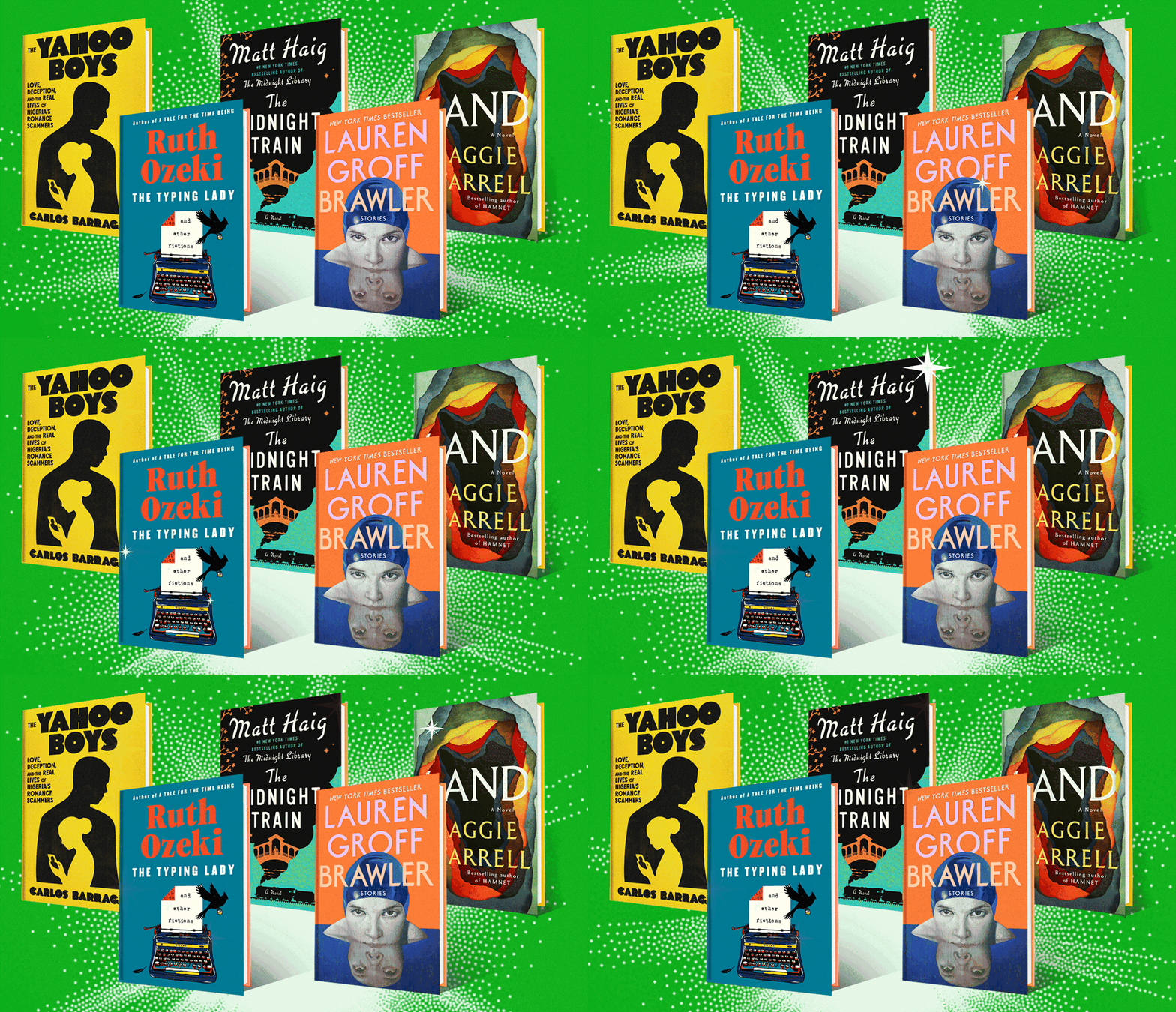
The Typing Lady and Other Fictions by Ruth Ozeki (June 2)
I’m not usually drawn to short stories — I like a nice, meaty novel — but this is another recent collection that mesmerized me. Ozeki is the author of, among other works, two fantastic novels, 2013’s A Tale for the Time Being, which was a finalist for the Booker Prize, and 2021’s The Book of Form and Emptiness. This new collection of 11 eclectic stories includes the tale of a widow who secretly creates a dating profile for her granddaughter as a way, it seems, to work through her own unprocessed grief. In “The Typing Lady: An Author’s Note,” the narrator becomes fascinated by a woman at the library typing on her laptop, who may or may not be Ozeki herself.
“Whistler” by Ann Patchett details a chance reunion that resurfaces warm memories and old traumas.
HarperCollins Publishers
Whistler by Ann Patchett (June 2)
In the absorbing latest from Patchett (Tom Lake, The Dutch House), Daphne, 53, a high school writing teacher in Manhattan, encounters her beloved former stepfather, Eddie, by chance while wandering the Metropolitan Museum of Art. They joyfully reconnect after decades apart, which forces Daphne to reckon with the car accident from her childhood that tore him from the family and affected her more deeply than she’d ever realized. It’s a thoughtful, tender story about memory and regrets, love and family. I loved it.
“Yahoo Boys: Love, Deception, and the Real Lives of Nigeria’s Romance Scammers” by Carlos Barragán investigates the lives and schemes of these charming young conmen.
MacMillan Publishers
Yahoo Boys: Love, Deception, and the Real Lives of Nigeria’s Romance Scammers by Carlos Barragàn (June 9)
I cover fraud as well as books, so I was immediately drawn to this eye-opening, behind-the-scenes look at the criminals who perpetrate the devastating romance scams we at AARP work so hard to help our readers understand and avoid. After Barragàn, a New York Times reporter and researcher based in Spain, saw his mother drawn in by an online suitor who pretended to be a handsome soldier, he set out to find the perpetrator. His quest brought him to the epicenter of romance scams: Lagos, Nigeria. He moved there for six months to interview the young men known as Yahoo Boys (“baby-faced teenagers with whispers of mustaches above their lips”), who spend hours on their phones catfishing victims around the world, eventually cajoling many of them into parting with their cash. While Barragàn makes it clear that these boys are mired in poverty and have few opportunities for legitimate work (and you do sense a bit of sympathy in his writing), he doesn’t make excuses for their crimes. Rather, he explores their motives and details their methods, which can only help in the fight against fraud.
“The Frenzy” by Joyce Carol Oates is a short-story collection that probes the dark side of human nature.
Penguin Random House
The Frenzy by Joyce Carol Oates (June 16)
Oates’ fiction tends to be dark — “I’m holding a mirror up to the world we’re in,” she explained to AARP last year — but it’s also brilliant, as evidenced by these engrossing short stories that dive into the minds of characters prone to cruelty or struggling with destructive desires. They include a seriously disturbed middle-aged man preying on a young woman, a family friend who both obsesses and infuriates him; and a widow who has a disconcerting visit with her late husband’s former colleague, an older man who’s ill. As she considers a painting the man loved, Pablo Picasso’s Night Fishing at Antibes, she thinks, “We are all fishing in dark waters, at night. Each in our own groping way.” Oates reminds us that monsters lurk in those depths.
