


Rob Cowley, Canadian art specialist and president of Cowley Abbott, joins BNN Bloomberg to discuss the growing market for international artists in Canada.
Canada’s art auction market is seeing growing demand for international masterpieces as collectors increasingly pursue rare works tied to quality, provenance and historical significance. Auction houses say the strength of Canadian collections is helping attract more global attention to sales held domestically.
BNN Bloomberg spoke with Rob Cowley, Canadian Art Specialist and President of Cowley Abbott, about rising interest in international artists in Canada, the enduring appeal of the Group of Seven and Emily Carr, and how rarity and quality continue to shape long-term artwork values.
Key Takeaways
- Canadian auction sales have remained strong since the pandemic, driven by demand for rare and high-quality artworks.
- International artists such as Vincent van Gogh and Pierre-Auguste Renoir are appearing more frequently in Canadian auctions instead of being sold abroad.
- Collectors continue to pursue iconic Canadian artists including Emily Carr, Lawren Harris and the Group of Seven.
- Artwork values are often influenced by rarity, provenance, historical significance and the condition of the piece.
- Art collecting opportunities now span a wide range of price points, including online auctions aimed at newer buyers.
Rob Cowley, Canadian art specialist and president of Cowley Abbott Rob Cowley, Canadian art specialist and president of Cowley Abbott
Read the full transcript below:
ROGER: It is art auction season, and Canada is seeing a growing market for international artists, with works from Vincent van Gogh and Pierre-Auguste Renoir. Joining us to talk about Canada’s art market is Rob Cowley, Canadian art specialist and president of Cowley Abbott. Thank you very much for joining us today with a Renoir.
ROB: With a Renoir right here beside us, which is being offered in our auction tomorrow evening, Wednesday the 27th. We’re delighted to have this painting.
ROGER: Where does this sit price-wise? What do you expect?
ROB: The estimate on the painting is between $150,000 and $250,000. It comes to us from a Canadian private collection. We’re delighted to have it. Again, one of the globe’s best-known artists historically, and a fine little painting by Renoir.
ROGER: It is a beautiful painting, and it’s sitting beside me. I’m not going to get too close to it. “Bull in a china shop” comes to mind.
Let’s talk a little bit about the art collection market in Canada. What is it like now? Is that the norm, or is it across the spectrum?
ROB: Across the spectrum. In fact, $150,000 to $250,000 right now is a great investment level for many collectors. Sales, even since COVID-19, have really been exceptional in Canada. The market’s been very strong. Part of that has been driven by the quality and rarity of works coming to the market, both Canadian and international.
We sold a private collection in 2022 and 2023 that grossed more than $36 million, including works by Emily Carr that exceeded $3 million and works by the Group of Seven that exceeded $2 million. Some of the strongest seasons and highest records we’ve ever witnessed have been in the past five years.
ROGER: Have Canadians suddenly woken up to the fact that art is an investment? Let me ask that question first. Do you buy art because it’s beautiful, or do you buy art because it’s an investment?
ROB: I think you do both. Certainly, you work with professionals, you work with advisers and you educate yourself as well. There absolutely is a place for investment in the art market, and we’re seeing it more and more.
But you also want to make sure that you’re looking at works that interest you, that you’re educating yourself, reading, speaking to specialists and buying in the right areas. Even with works by named artists, you’re looking for rarity and quality so they hold value over time while you enjoy them and hopefully increase in value.
ROGER: What’s changed? You mentioned the pandemic. Have Canadians started recognizing art more as an investment? We’re going to show some of the other pieces here as you answer that question and describe what we’re looking at.
ROB: What you found over the past five or six years, especially since the start of COVID-19, is that a lot of collectors and individuals had time to reconnect with their passion for collecting. They were also looking at financial markets and seeing that the right opportunities in art could rival those markets and sometimes exceed them.
The work we’re looking at here is a very rare etching by Vincent van Gogh. It was produced in the final months of his life. The subject is Dr. Gachet, who cared for him and provided him with printing materials. It’s one of the most sought-after prints in the global market. Versions of it are held by institutions including the Museum of Modern Art and the Museum of Fine Arts in Boston. It’s another example in the $150,000 to $250,000 range and a great opportunity for a collector.
ROGER: We have a couple of others here that I’m just loving. What makes these so attractive to buyers? Is it the name?
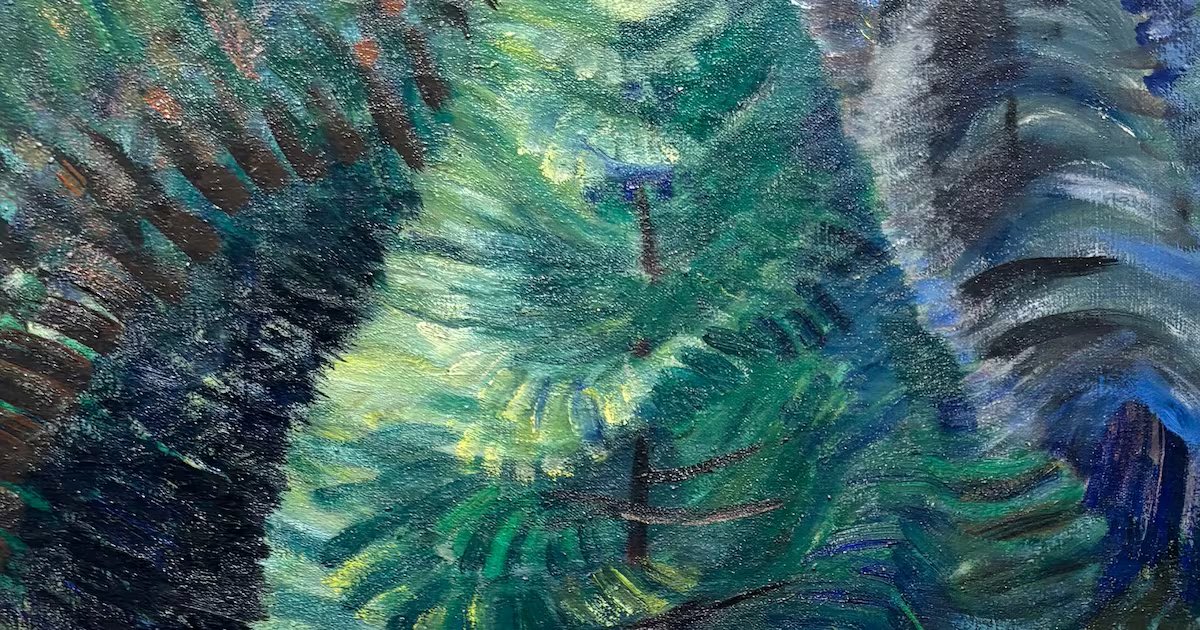
ROB: It’s certainly the name, but also the quality, the rarity and the period. This Emily Carr canvas is featured on the front cover of our catalogue. It’s a 1936 painting called Wind. This is exactly the kind of subject matter collectors are looking for.
It’s valued at $500,000 to $700,000. It hasn’t been on the market in more than 80 years. It was once considered for purchase by the National Gallery of Canada while Carr was alive. It’s coming to market for the first time, and with the strength of the market and such strong prices, quality and rarity continue to drive demand.
ROGER: There are obviously individual buyers who can afford these works, and other people looking at them saying, “This is out of my price range.” Are there ways to buy art as a group? Is there something like an ETF for art?
ROB: More and more, you’re finding consortiums and funds investing in artwork in group settings in Canada. That’s happening increasingly, and it’s another signifier of the opportunity for collecting and investment.
The New York sales that just wrapped up generated about $2.5 billion in sales, which was double last year. Again, that was driven by quality, rarity and opportunity for collectors. There are all kinds of opportunities for different types of collectors right now.
ROGER: And who gets to hold on to the piece of art if you’re a consortium?
ROB: That is certainly up for discussion.
I’ll talk about the last work here. This is a Lawren Harris painting from the Group of Seven. It’s a Lake Superior scene by the artist. Works like this have exceeded $1 million in recent seasons, and this painting could certainly do that.
It’s a fantastic example by the artist. Harris was the first artist to sell for more than $1 million, $2 million and $10 million at auction in Canada. This is valued at $500,000 to $700,000, which I think is a great opportunity for a collector.
ROGER: What artists or styles are hot right now?
ROB: It’s a wide range. Over the last 20 years, what you’ve witnessed is a widening of the market. Historical artists such as the Group of Seven and Emily Carr continue to be very strong, but you also have abstract artists like Jean Paul Riopelle and Marcelle Ferron, female artists and contemporary artists as well, including living artists like Kim Dorland and Kent Monkman.
It’s a very broad market. There are opportunities not only in the major live auctions twice a year, but also in online auctions, where collectors can begin collecting at below the $10,000 level. It’s not just about six-figure works. There are opportunities for collectors at most levels right now.
ROGER: From an investment perspective, what kind of returns are possible? I mean, like anything else, past returns do not guarantee future results.
ROB: Exactly. In New York this week, we saw some works double in value over five or six years. Often, it’s quality and rarity that drive those opportunities.
If we look at artists like Lawren Harris, when I started in the business 25 years ago, the record for a Lawren Harris painting was about $2.4 million. Now it’s more than $10 million. There are certainly opportunities, which is why you educate yourself and speak to specialists who can help guide you.
ROGER: All right. What do you like personally?
ROB: I love the painting beside us. I love the Emily Carr, and I absolutely love the Lawren Harris as well. We’re very fortunate because we get to spend time with all kinds of works every six months.
ROGER: Do you miss them when they go?
ROB: I really do. I was just saying before we started that you take it for granted a bit because you’re working so hard and talking about them all the time. Then the auction takes place tomorrow night, and suddenly they’re all gone.
ROGER: There are two seasons, right? Spring and fall?
ROB: Spring and fall. We are now collecting for our fall sale on Nov. 25, and in between that, we have lots of online sales at cowleyabbott.ca.
ROGER: All right, Rob, thank you very much for joining us.
ROB: Enjoy it.
ROGER: I appreciate it. He’s not leaving it, trust me. That was Rob Cowley, Canadian art specialist and president of Cowley Abbott, with some beautiful pieces of art.
—
This BNN Bloomberg summary and transcript of the May 26, 2026 interview with Rob Cowley are published with the assistance of AI. Original research, interview questions and added context was created by BNN Bloomberg journalists. An editor also reviewed this material before it was published to ensure its accuracy and adherence with BNN Bloomberg editorial policies and standards.
