


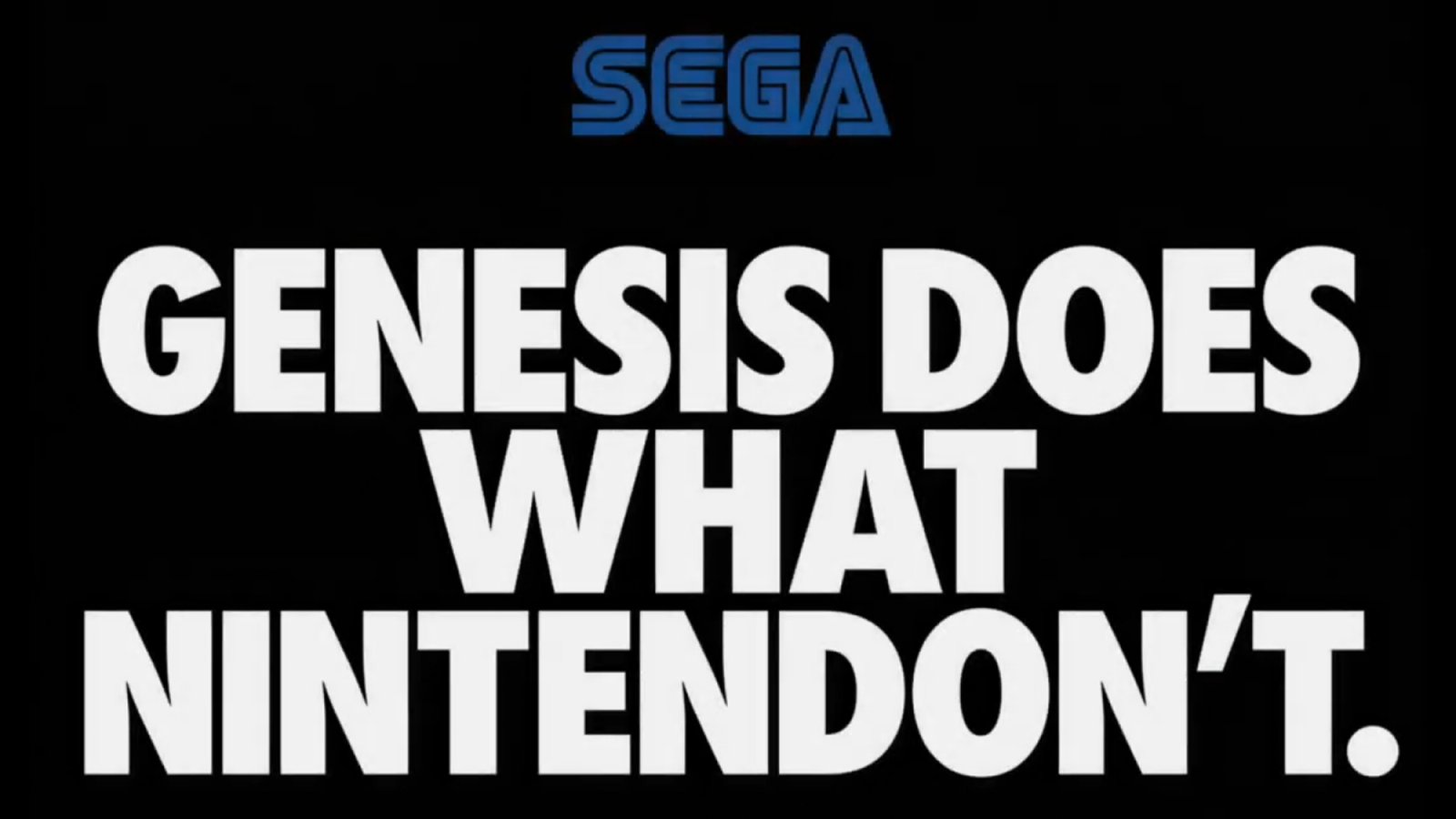
If there’s one thing about the video game industry that’s pretty much always been around, it’s competition. That’s nothing new in any industry, but video games are different, as there aren’t many business sectors where competition is described as a war. That’s what folks called the so-called console wars of the 1980s and ‘90s, when Sega went up against Nintendo to see which company could produce the best hardware and software. The competition was fierce, especially in the United States, where anti-competition laws don’t really exist. One company could lay waste to another in an ad, and Sega did exactly that to promote the Sega Genesis.
The console wars were more about hardware specs than individual games (for the most part), and when 16-bit technology was on the horizon, both Nintendo and Sega targeted it for their next console following the NES and Master System, respectively. Sega was the first to release a 16-bit console when the Sega Genesis hit the North American market in August 1990, and it gained significant market share. Nintendo was still rocking the 8-bit Nintendo Entertainment System, and while it innovated with games like Super Mario Bros. 3, which included a special chip to boost performance, Sega’s advertising campaign, “Genesis Does What Nintendon’t,” was hard to argue with.
Sega’s Ad Saved 16-bit Gaming
Play video
While Nintendo worked hard to create the Super Nintendo, it wasn’t the fastest to market. The SNES didn’t arrive in North America until August 1991, which was a full year after the Genesis. That gave Sega a significant advantage, and the company didn’t sit down and let it go to waste. The marketing campaign was fierce, and it worked incredibly well. By showing footage of what Nintendo had to offer, Sega killed the 16-bit console market with the latest and greatest games already on sale for the Genesis. On top of that, Sega also saved it from potential ruin.
Here’s where it gets personal because I lived through the console wars, and all I wanted was a Super Nintendo. My parents didn’t understand why, often saying, “You already have a Nintendo.” The older generation didn’t get it that a 16-bit processor was literally twice as powerful as an 8-bit processor, enabling more complex gaming. Sega certainly understood this, and while its advertising campaign was all about putting Nintendo on notice, it had a second-order effect: it demonstrated the Genesis’ power to parents who didn’t listen to their kids, helping them understand the value of the upgrade and, in turn, helping sell 16-bit consoles.
Sega took a significant lead against Nintendo, which was a big deal. Nintendo had cornered the market, having revived it following the Video Game Crash of 1983. The NES’ success was what kept video games alive, and between 1985 and 1990, Nintendo had no real competition. That’s not to say that there wasn’t any competition, but Nintendo was the Goliath to Sega’s David. Fortunately for Sega, the opportunity to take a lead in the race against its biggest rival came along thanks to the Genesis’ debut, but the console wars didn’t end there either. Still, you can’t discount the ingenuity of “Genesis Does What Nintendon’t,” and its impact on the industry.
Sega Won a Significant Battle Against Nintendo in the Console Wars
Image courtesy of Reddit & Sega
The Sega Genesis was an excellent platform with some seriously good games that stand the test of time. While that’s objectively true, the SNES wasn’t a bad console at all — it boasted a more refined library that kept Nintendo fans happy. Ultimately, Sega lost the console wars, ending with the Sega Dreamcast. After that failed in the market, Sega turned its attention entirely to software development, and the company has been killing it ever since. Nintendo continues to dominate its sizable market niche. Still, it’s interesting to take a look back and see how contentious things were in the early 1990s when Sega took off its gloves and went up against the biggest name in gaming.
What’s your favorite Genesis game? Leave a comment below and join the conversation now in the ComicBook Forum!
