


PRAGMATA was a mystery for so long. After first being shown in the summer of 2020, when the PlayStation 5 was announced in the debut Sony PlayStation live stream. The first all-new game property in years, it was very much a mystery about what this game was about. This little blonde girl with a mecha soldier guy was. After many years of silence, the game became kind of this random thing that’s never gonna happen in the online dialogue. Then all of a sudden, in 2025, it finally appeared again in a state of play in June, six years later. Quieting the doubts, we finally got to see what this game was, and it looked good. After playing the hands-on demo at NYCC last year, I was very excited by what I played and made this one of my most anticipated games to play this year in 2026.
Screenshot captured on PlayStation 5
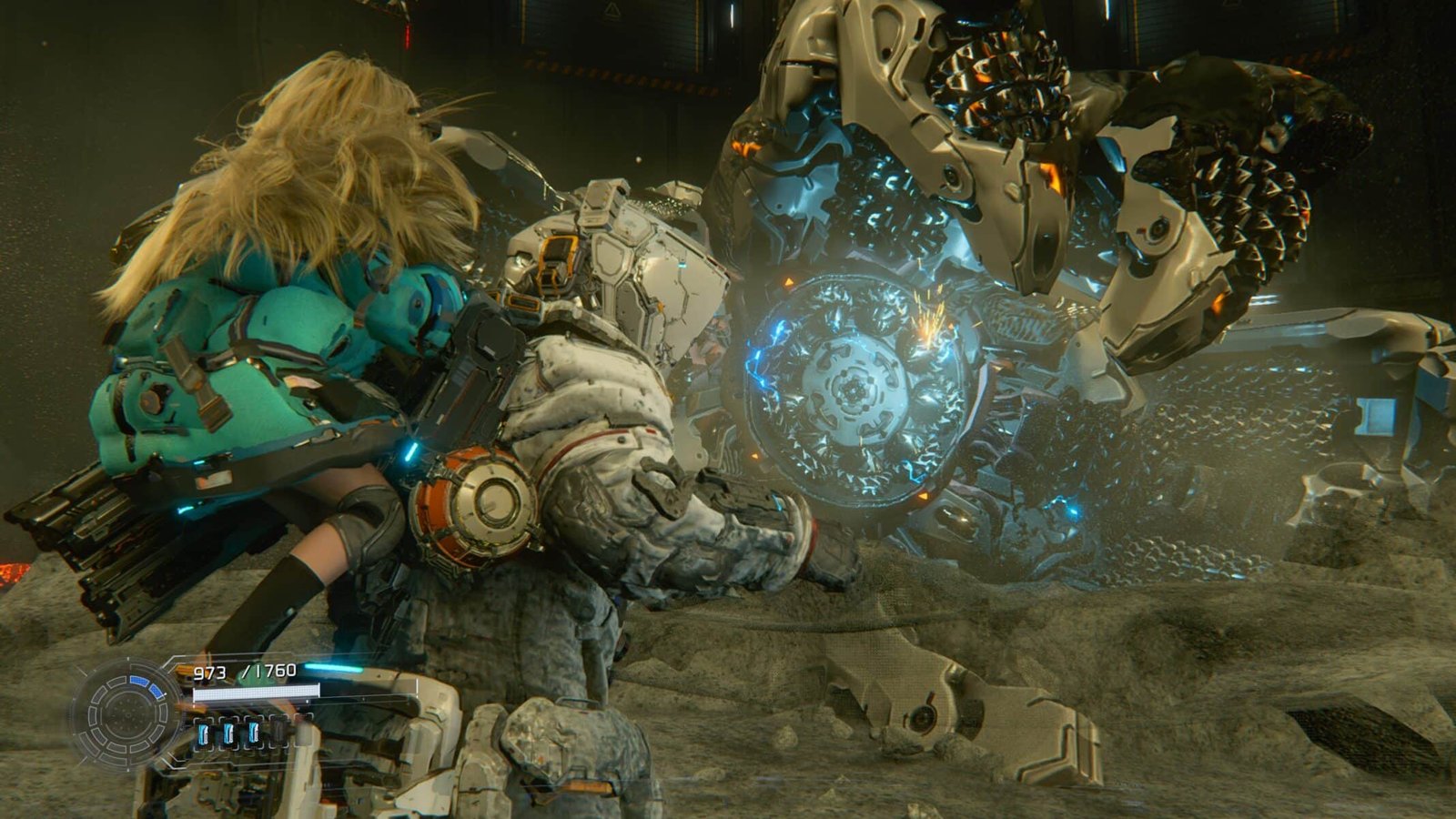
PRAGMATA is a third-person action adventure game where you play as Hugh Williams, who’s part of a support team sent to the moon to see why this installation by the Delphi Corporation called the Cradle has had its communications with Earth cut off. After landing, a moonquake hit, causing Hugh to lose his team and get lost deep within the Cradle. He’s saved by what looks to be a little girl who’s an android by her fixing his spacesuit. She’s a Pragmata named D-I-0336-7, which Hugh decides to call Diana, and after being attacked by robots controlled by the outpost’s AI operating system IDUS. Hugh decides to let Diana go with him as he tries to get to the comms tower to send a distress signal to Earth. Diana helps Hugh by hacking into the robots so that it’s easier to take them out.
I love this game straight up. I don’t have as much time and patience for video games currently as watching, and reviewing film and television takes up a lot of my free time. I can start plenty of games, but many, including some very beloved games from the last ten years, I can barely make it a quarter of the way through. PRAGMATA, though with its interesting mix of fast-paced third-person action play while also having you actively playing a puzzle game to overcome these enemies, ended up being completely engrossing. It does something different from the souls-like pattern and parry repetition style that has taken over the genre. The controls, at times, add a bit of difficulty with Hugh’s big spacesuit, making him a bit awkward to move in the heat of battle. There were times I was frustrated, but it actually made sense and just showed me how much I was into the game and wanted to get past a certain part.
Screenshot captured on PlayStation 5
The level design is pretty straightforward. It’s not a big open-world game; the levels are pretty clear with a starting point and an end point, with a big boss at the end of each one. With the setting of the Cradle being in disarray because of IDUS, it leaves the Cradle in the smaller sections. As you go further, the game seems to pull in influences from other games of Capcom’s past. The visual aesthetics feel like early 2000s games like Lost Planet, and the story focusing on AI and robotics does share some similarities to the Mega Man franchise, especially the Mega Man X and Mega Man Zero series. Each level feels like a different little world as the Cradle is supposed to be copying locations of Earth. We have forest location, city, and other familiar style levels.
These places are straightforward, but they do give you a lot of area to explore and find stat increasing items as well as things for Diana. The game’s main hub, where you go when you die or level up your weapons and suits, is called a shelter that you take and build out as a living area for Diana, crayons to draw, a sliding board, and a swing. The current nickname this game has is a dad simulator, which is a bit flattening, but mostly it gives the feeling of Astro Boy, Dr. Slump, and very much Mega Man in the relationship of a person with a childlike android. Diana is a fun character, and I liked just how nice and human they made the dynamic of Hugh and Diana’s friendship and interactions throughout the game.
Screenshot captured on PlayStation 5
You can also see the influence of other big Capcom hits and design philosophy in these games, especially from Resident Evil. Third-person perspective is familiar to modern RE games, but what stood out to me was how the robots had a definite horror-like feel to them. While there are some that look like a general drone or mech-style designs, the more humanoid-designed ones have a creepy demeanor in regards to how they walk and the dead eyes they have in their faces. There is a large one that looks like a giant chrome metal baby that moves and attacks like one that never actually stops being disturbing. Some enemies are based on animals as well, which also uses Capcom’s strengths from series like Monster Hunter in terms of strategy and types of combat interactions. The designs are also amazingly impressive. I had a great time figuring out how to deal with and defeat this large assortment of enemies.
Finding out that Shōji Kawamori, one of the people who created Macross and one of the best mecha designers in history, was a welcome surprise, as you can see his fingerprints in the whole design of the Cradle and everything within the world. It’s really apparent in the final part of the game, with some seriously incredible-looking designs for the final boss battle. The game can feel a bit frustrating at times, but never too much to make you want to quit. It has the right level of challenge on normal difficulty, along with higher challenges after you beat the game. The game also has training missions you unlock during the story, which feel like VR missions from the Metal Gear Solid franchise mashed up with challenge levels from 3D Super Mario games. That sounds like a crazy mash-up, and it is, but while challenging to the point of frustration, the rewards you get to improve your stats are needed for some of the later battles.
Screenshot captured on PlayStation 5
I could probably go on about the weapons, but they are all good with great risk and reward for each, and come around at exactly the right time. There are also Mods that give you effects for damage and health. Cool options for Diana’s hacking, mess up the robots, and decent puzzles. All this is good work, hand in hand with the story. The story did something surprising in how it weaves in ideas and worries about AI and how it affects humanity, mostly from a work and purpose perspective, as you discover all the scattered lore through the empty Cradle. It also juggles with the nature of corporations and their responsibilities in capitalism and how they treat people, and even this new species it’s bringing about. There’s a sadness at the heart of this game that is balanced out by the hope and joy Hugh tries to imbue Diana with about life and living on Earth. PRAGMATA is a stellar game and is a standout for the year already and for this current generation. Capcom has taken the responsibility of showing what this era can be and has another amazing title in its library to prove it.
Screenshot captured on PlayStation 5
PRAGMATA was played on a PlayStation 5 via a review code provided by Capcom.
Like this:
Loading…
