


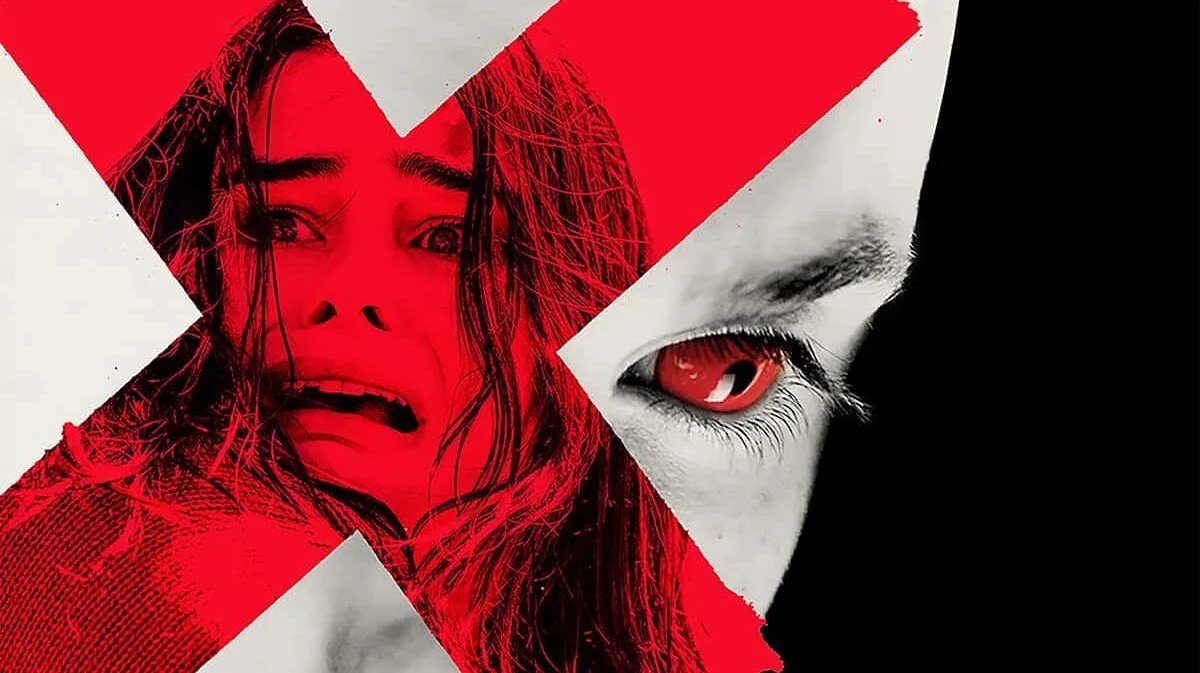
The original Faces of Death, which released in 1978 and was directed by John Alan Schwartz, is the stuff cult films are made of. Its claim to realism gave way to myths and urban legends that elevated its place in film history. Is the scene with the monkey getting its head bashed in by hungry customers that want to eat its brains real? Did the electric chair execution really happen as it was filmed? The movie built a legacy by blurring the lines between truth and fiction to explore death and the faces it leaves behind.
The new Faces of Death movie, while still somewhat interested in its titular promise and the original’s legacy, opts to turn the camera on the people watching the film to make a comment on desensitization. “Give the people what they want,” it says multiple times throughout. Problem is, that’s all it says.
Rather than exploring this idea more fully, it wastes a ton of opportunities to really push the boundaries on depictions of violence in media. Instead, it props up just another serial killer movie. At least it has great performances.
Directed by Daniel Goldhaber, the movie follows content moderator Margot Romero (Barbie Ferreira). She works for Kino, a stand-in for TikTok that promotes original content to feed the infinite scrolling machine. One day she sees a video of a killing that looks either legitimately real or too real to be true. She’s told not to flag it because DIY horror is in. But then the same user uploads another gruesome death video, and it looks like he’s recreating death scenes from the original Faces of Death movie.
Margot decides to find the person behind the killings, someone the audience is introduced to quite early on in the story. His name is Arthur Spevak (Dacre Montgomery) and he works for a company that makes it easy for him to find new victims. A game of digital cat and mouse ensues as Margot tries to track down the killer all while the killer does the same to stop Margot from interfering.
The first half of the movie showed promise. Margot’s role as a content moderator lets the movie poke fun at society’s hypocrisies regarding what ends up being considered appropriate or inappropriate for public consumption on screens both big and small. Margot is seen recommending the removal of reels containing sexual material and drug use only for ultra-violent videos to get a pass.
It speaks to our current values and how the lines we draw on digital morality are unstable at best, nonexistent at worst. The killer, Spevak, takes advantage of this level of indifference and so takes it upon himself to “give the people what they want.”
Goldhaber and co-screenwriter Isa Mazzei park the story in this message and then refuse to move from it for the remainder. Once Spevak’s designs are revealed, the movie becomes a series of tame murder sequences and weak callbacks to the original film that add little to anything. In fact, the Faces of Death angle is more a gimmick than a crucial component of the experience. The killer builds his death reels around a few scenes from the 1978 film but then forgets to explore the meaning behind them (which is the entire focus of John Alan Schwartz’s version).
There is one death sequence that leaves an impression, mostly because of the brutality it captures. It involves a couple of mannequins unloading their machine guns on a man tied up with tape. The camera stays locked on the victim as his body gets riddled with bullets and it looks damn near authentic. Unfortunately, you won’t be surprised by it because it featured heavily in the trailers.
The performances are certainly the movie’s strongest points. Barbie Ferreira and Dacre Montgomery imbue their characters with a sense of urgency and obsession that keeps the story moving at breakneck speed.
Montgomery in particular shines as the killer. He builds Spevak up as a psycho that represents the worst aspects of the internet, an amalgamation of multiple digital archetypes. He’s part incel, part troll, and part digital stalker. When he’s in killer mode, he wears red contact lenses and a generic white mask that prevents anyone online from identifying him. He looks scary, and Montgomery takes advantage of the visual he produces to give a very physical performance that leans into the weird.
Ferreira goes for relatability. She essentially makes a living as a professional doomscroller. She’s on edge, overwhelmed, and determined. She’s what our minds look like when they’re running on pure social media consumption for hours on end. Ferreira plays it frenetically at points, but it’s to make us care for her wellbeing.
Sadly, the performances aren’t enough to save it from becoming just another serial killer movie. It had everything it needed to get at something special. For some reason, the movie thinks people ultimately scroll to find real death videos, more so than sexually charged reels or clips of OnlyFans creators teasing their pay-walled content. The reality is, people have become indifferent and mindless scrollers. They’ll stop for a particularly gruesome or taboo video, sure, but then they’ll keep on scrolling until something else catches their eye. And it won’t necessarily be a kill reel that does that.
This idea could’ve hit harder if the story had focused on Spevak’s frustration with the new digital status quo, which is made up of people who simply doomscroll. You have this guy putting his twisted heart and soul online only for people to give it a look or two (at double speed, no less) and then move on to the next reel. There was a real chance to explore this here, but that’s not what happened. Instead, we just get reminded again and again that we need to “give people what they want.” Pity that the movie didn’t take its own message to heart.
Like this:
Loading…
