


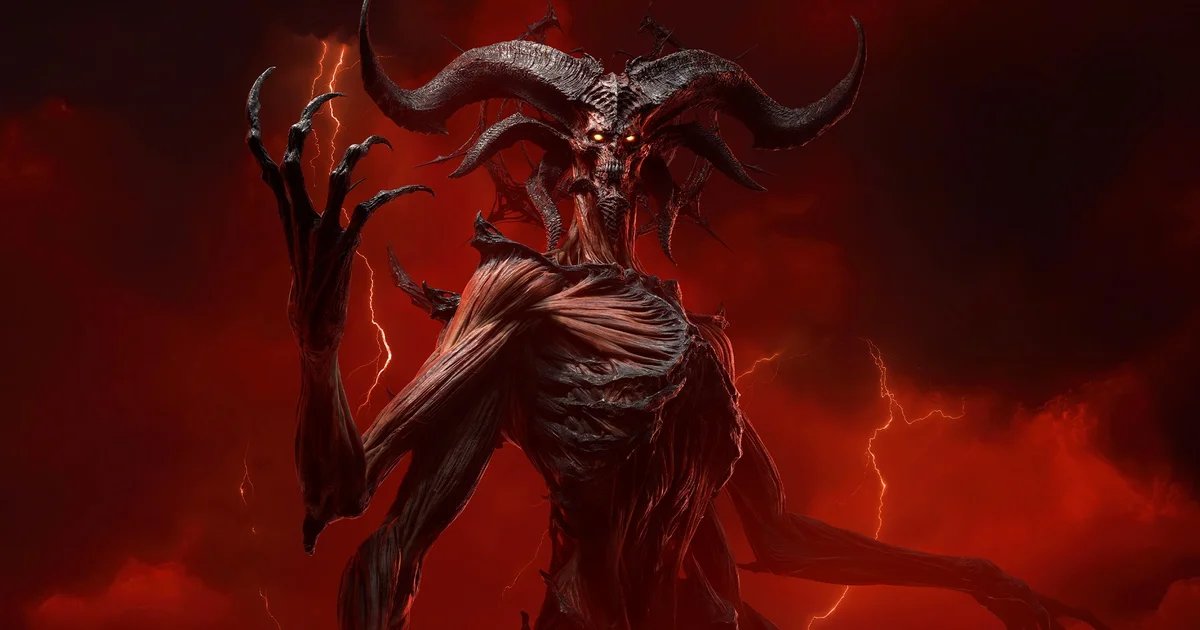
Diablo 4: Lord of Hatred has, without question, been one of my most anticipated releases of 2026. Diablo 4 is likely my most played game ever by sheer hour count, so it’s easy to see why this expansion is so high up on my list. However many rakes Blizzard has stepped on over the course of the game’s live service, however many seasons or events it botched, I maintain that no other ARPG matches Diablo 4 in either game feel or production value.
My memory isn’t that short, however, and I remember how disappointed I was with the game’s first expansion, Vessel of Hatred. Apart from giving us one of the best classes in the game with the Spiritborn, it did little to advance the narrative and often felt like it had the scope of a side quest.
Nevertheless, I remained hopeful that Blizzard’s eagerness for a comeback – and a one year gap – would result in something special.
Manage cookie settings
The events of Lord of Hatred pick up shortly after the conclusion of Vessel of Hatred. Neyrelle has found herself in another new region in her continued search for a way to prevent Mephisto, the eponymous Lord of Hatred, from escaping the stone she and the rest of the squad precariously trapped him in at the end of Diablo 4.
One of the things I always look forward to in Diablo is how each of its regions informs narrative and character makeup. Just like VoH’s Nahantu, LoH’s Skovos stands as a distinct new destination that brings fresh aesthetics, sights and sounds to a world with a lot of already existing variety.
The Skovos isles occupy what’s essentially the Mediterranean region of Sanctuary. You can easily mistake them for the Aegean islands, or any of the various Greek provinces. Blizzard liberally borrowed the red-tiled roofs, textured stucco walls and cobblestone streets of those real-world locales to create Skovos. One sub-region in particular has the closest thing we have to a parthenon in Diablo 4.
Skovos’ people take after DC Comics’ Themyscira, Wonder Woman’s birthplace. Much like them, the Amazons of Skovos are a matriarchal society of warrior maidens, led by a queen who plays a sizable role in the events of the expansion.
Image credit: Blizzard Entertainment.
Beyond its visual significance, Skovos has a unique place in Diablo lore as the birthplace of humanity’s progenitors, the direct descendants of Lilith and Inarius. This being the first time Skovos has appeared in any Diablo game immediately makes it the most exciting of any region to visit. The landmass in Skovos is a little smaller compared to some of the other regions, but there’s enough topographical and locational variety there that it never got boring in the 30+ hours I spent with the review build.
Given how much the Amazons factor into almost every facet of this expansion, you’d think that the Amazon class would be the no-brainer new addition. Blizzard decided, instead, to go with something bold: a hybrid class that may not immediately fulfil any existing fantasy, but ends up being the game’s most complex. The fantasy fulfilment has instead been left to the second new addition in Lord of Hatred, the Paladin.
The Paladin has been available for several months now, having shadow-dropped back in December. It is the sword-and-board class that Diablo 4 somehow survived years without having any version of; not even their Crusader off-shoot from Diablo 3. The Paladin does, however, borrow some skills from Amazons of games’ past, and one of its variants even incorporates Angelic moves.
Image credit: Blizzard Entertainment.
The Warlock has the look of your edgy, metalhead highschool friend who’s now well into his 40s, and continues to dress like the days you first met him. He dons a Metal Band black tee and baggy shorts, and always brings his rubber sandals to every occasion; he’ll never be caught dead with a good haircut. That may or may not be off-putting, depending on where you stand, but it’s that devotion that adds to the Warlock’s charm. Much like that friend – and the Warlock’s in-game lore as the grimy practitioner of the dark arts who’s not afraid to literally rip demons from Hell to do their bidding – you have to bring a certain level of commitment to the way you play it.
The Warlock is a demanding class to play. It occupies the dual role of summoner-caster; a wretched spawn of Necromancer and Sorcerer. It requires a kind of skill management that goes several steps beyond the typical ARPG flow of cycling through skill rotations. Because you’re able to tactically sacrifice some of your minions, and use others to buff and inform certain attacks, you end up needing to plan ahead often, at least if you want to be as effective as you can. When you successfully pull it all off, you’ll feel like you’ve achieved a sort-of mastery of the battlefield none of the other classes could offer.
Image credit: Blizzard Entertainment.
My favourite part of Lord of Hatred is its narrative. This is the most exciting and eventful campaign of the three, and it’s up there with the best of Diablo 3’s myriad stories. There’s practically no fluff, and it often comes across as an apology for Vessel of Hatred, whose forgettable campaign was characterised by long trudges through uninteresting story moments, only for each to amount to very little.
This campaign brings back the most interesting characters from the main game, in some ways representing the next stage of their arcs – and in others reexamining them altogether. Lilith (who remains D4’s most intriguing character) returns, but this Lilith feels like she’s in conversation with the Lilith from D4’s campaign. Her motives remain unchanged, but losing almost all of her power has exposed a side of her that I wished the first campaign had touched on. Her actions in LoH are more consistent with where I felt Blizzard should’ve taken her by the end of D4.
Lord of Hatred concludes with the sort of finality that signals the end of a story that began with Diablo 4. It’s not pulling any punches, and it’s not afraid to kill its darlings. It has a final boss with one of the most inventive mechanics in any recent action-RPG, a well-realised culmination of mechanics and themes.
Image credit: Blizzard Entertainment.
If you’re the sort who skips cutscenes in ARPGs out of habit, you’re going to miss out on some of the most spectacular cinematics Blizzard has ever created. The acting, direction (and shot composition in some) combine to deliver moments as heartbreakingly-emotional as often as they are triumphant. This is a tale worth witnessing unfold, and it’s one I am eager to experience again on my personal, non-review account.
Whether or not you sit through the campaign, however, you’ll find plenty to get excited about in Lord of Hatred’s gameplay. The new level cap of 70 paves the way for reworked and expanded talent trees for all classes. The new skill tree borrows some of the best powers that were previously locked to Legendary gear, essentially making them more accessible to all players.
The Talisman builds on that, adding another way for players to attain abilities and passives that offer serious boosts to some of the most basic functions, such as the number of healing potions or dodges. You can further specialise your build through sets and their set bonuses, which ends up adding one more item to the list of things to chase.
When the loot you get isn’t quite what you wanted, you can now upgrade its rarity and further tweak its affixes through recipes using the returning Horadric Cube. I didn’t get much use of it during the review period, but considering how many times I’ve hit a ceiling in my hundreds of hours of Diablo 4 when I simply run out of interesting gear, I am eager to see how I can use the cube to dig myself out of that hole without having to pray for a Mythic Unique.
Image credit: Blizzard Entertainment.
Indeed, another system that seems to target a pain point I’ve always had with Diablo 4 is War Plans, which essentially gamifies the endgame. Through it, you can create a playlist of the endgame activities you want to play, which feeds back into progression trees for each type of activity, all existing beyond the individual dungeons/runs. Completed plans offer extra rewards, on top of whatever else you earn after finishing each item in the playlist.
Lord of Hatred accomplishes the near-impossible task of delivering a game-changing expansion that fundamentally improves on the core of Diablo 4, and a weighty narrative conclusion that so brilliantly balances spectacle with emotional heft. Essential for any fan of ARPGs.
Reviewed on PC, code provided by publisher.
