


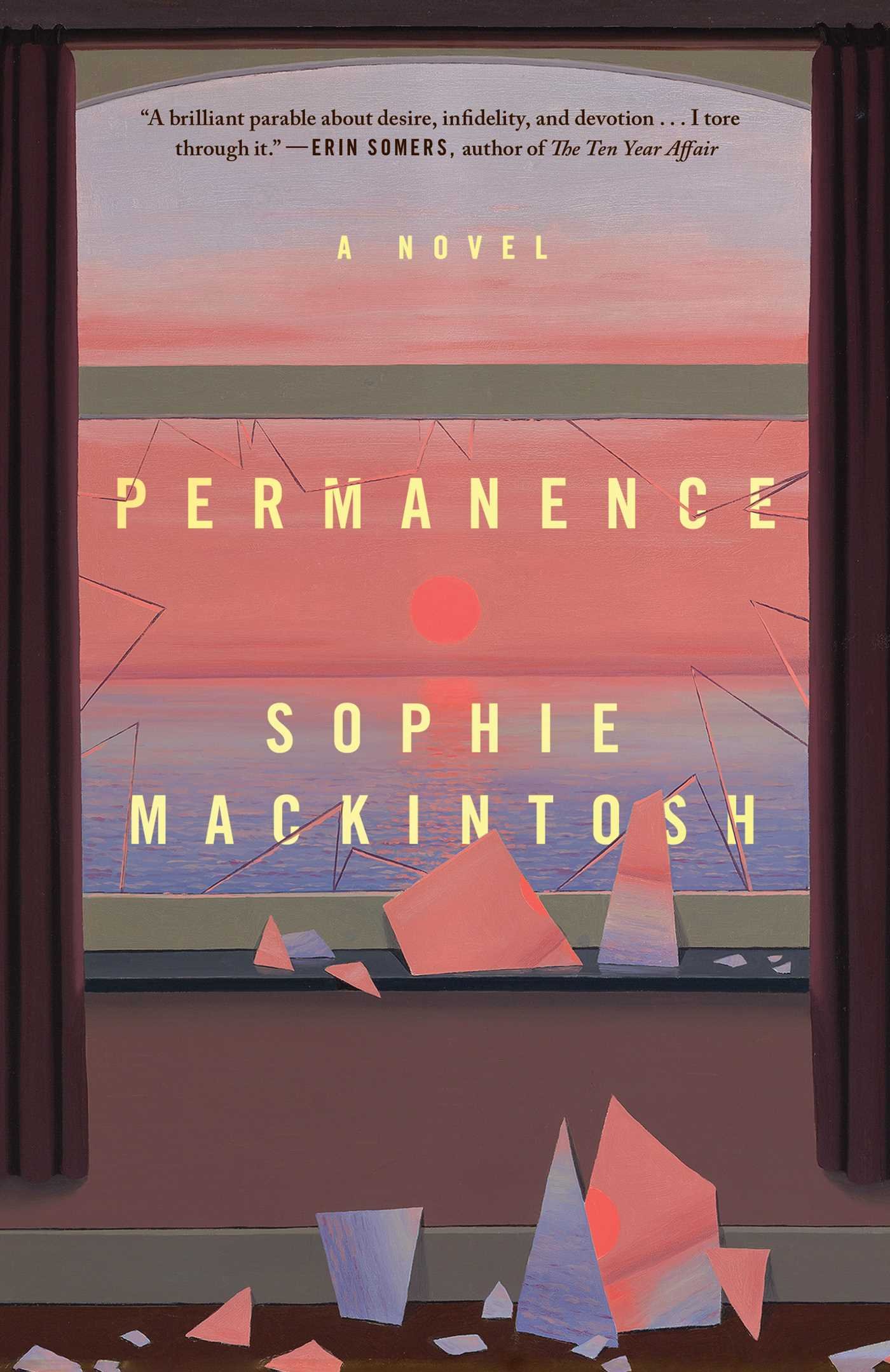
Can paradise last forever? In a contained environment, can something sacred and stolen stretch to something longer? Or are those moments glimpses of a reality that, teased, out, could never realistically work?
These questions run through Permanence, Sophie Mackintosh’s newest novel, which, despite its persuasiveness of such a thing’s futility, is a hell of a lot cheerier than her most recent book, 2023’s Cursed Bread, where hysteria and conspiracy grips an entire town due to poisoned food. In Permanence, Clara and Francis wake up in an unnamed town, able to carry out their affair in the midst of other adulterers, with the domesticity they had yearned for previously. If they cause harm, physical or emotional, they’re whisked back to the real world—Francis has a wife and a child, Clara has an AWOL roommate. It’s Severance meets The Good Place for cheaters, and makes for a playful and often sweet novel about relationships, time, and devotion.
Mackintosh’s newest dreamy landscape is the town of impermanence, where baristas know regulars’ orders, one can work for gold coins (Clara and Francis gently farm, as if they were in Stardew Valley) to supply endless picnics with fresh bread and pouring wine. A newspaper reads, Breaking News: You Deserve to Be Happy! They meet shop owners who have been there for much longer than Clara and Francis, and neighbors who show them the ropes. But they’ve brought themselves to this Eden, and their struggles clash—Clara, reasonably upset she can’t live fully in the real world with him, and Francis, who is trying to mend his dual life (does his child miss him when he’s in this place?). After an argument, they’re forced back into reality, where they can only return by genuinely wishing, I would give anything to go back.
The city is miraculous, but unforgiving—each time they return, the pavement is a little more cracked, the cafe is closed. “Be good,” Clara tells herself after noticing a cigarette burn on a table, a slightly breezier chill in the air. “They did not need a city of unrelenting sunlight, of glittering fountains. It was better to live here… where he was the shining thing who made all else fall into place.” This rudimentary thinking obviously leads to more despair; Clara keeps bringing up their relationship’s lack of stability, which makes Francis moody.
At one point, Clara thinks, “Don’t ruin what you have been given,” but the city of impermanence seems more like torture, or a hard lesson in accepting their previous lives, like a visit to a prison as a child to see how messed up you could turn out if you don’t follow the rules. Francis wants Clara to enjoy what they have, and Clara wants Francis to hold her fully in his arms, to return to the real world convinced that they can be together and to leave his family. But it’s clear, as they harm themselves with more violence—extending their stays in reality—that this was just an exercise in futility.
Clara and Francis get the clarity they desperately seek, and it wouldn’t be a spoiler to say they permanently return to their regular lives, wishing only faintly that they could see each other again. In a way, it might have helped them—without the excursion, they’d spend the rest of their lives wondering what it’d be like with the other, if everything could’ve turned out different. Now, they know. Maybe they even understood from the start they were on borrowed time.
Permanence is out now.
