


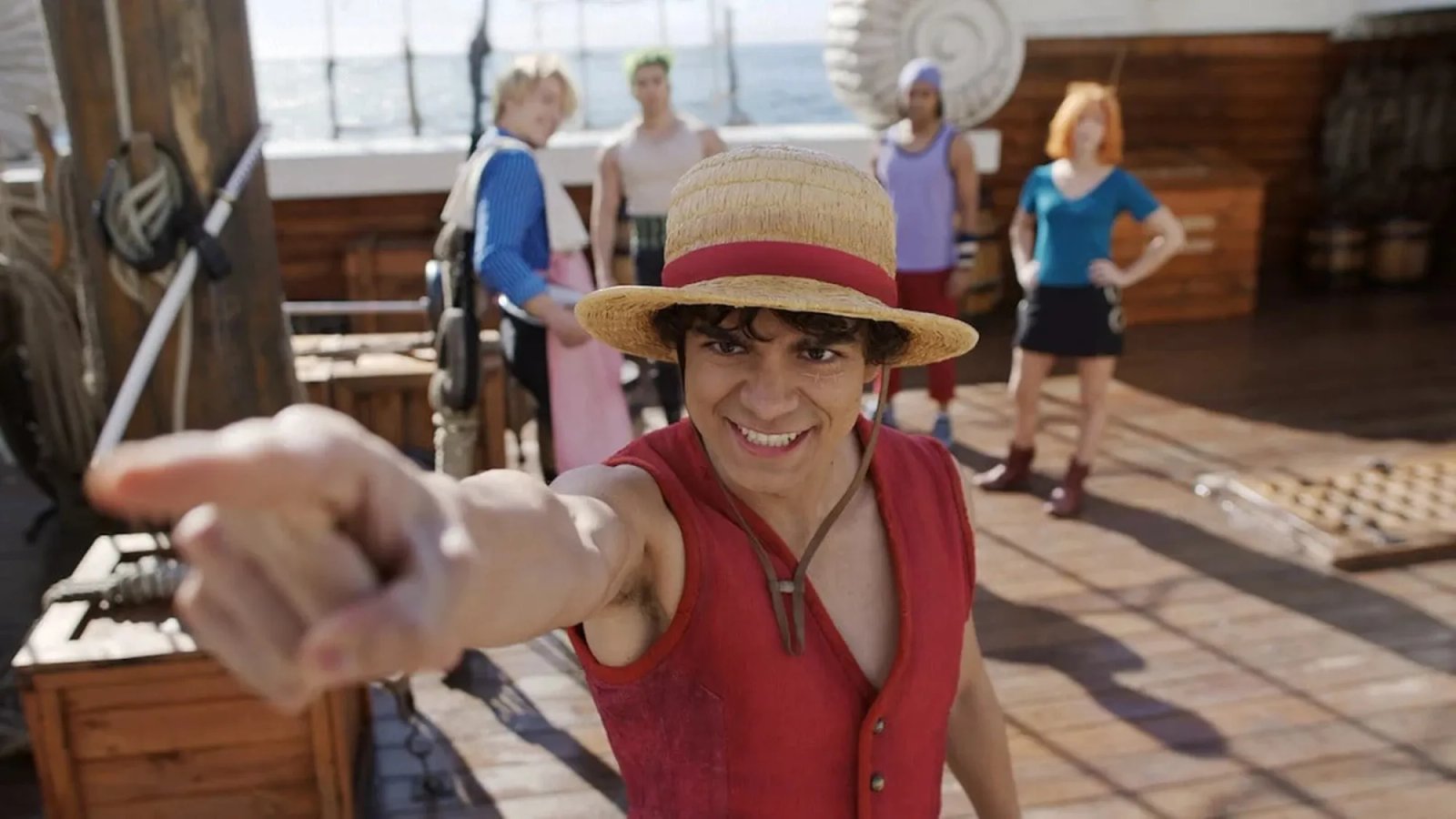
One Piece Live Action is an adaptation that will go down in history as one of the first examples of how love and care can make even the most controversial anime adaptations work. Not only was the first season a success, but the second season was even better, bolder, and bigger, improving on what came before. The live-action succeeds because it doesn’t aim to be a one-to-one adaptation of the anime and manga.
The showrunners understood that the project needed its own identity, so incorporating changes for the live-action format was essential. Across the two seasons, the series features dozens of changes, condensing arcs and cutting some characters to help it stand on its own. However, so far, these seven are the biggest changes, for better or worse, that define the project.
7) Bartolomeo’s Involvement in the Louge Town
Courtesy of Netflix
Bartolomeo, a character whose personality is built around his admiration for Luffy, isn’t introduced in the anime until after 600 episodes. By then, he is already established as Luffy’s fan because of the deeds Luffy has accomplished on his journey. However, the live-action builds a foundation for this dynamic by involving him in the events of Loguetown, where Luffy is almost executed.
This is a vital early moment in the series, highlighting how Luffy’s resolve, even in the face of death, is different. It stuns everyone watching, and having Bartolomeo present to witness it, using it as the foundation for his admiration, might be the biggest and most effective change.
6) Brook’s Introduction
Image courtesy of Netflix
Similar to Bartolomeo’s early introduction in One Piece Live-Action Season 2, the second episode also features a subtle early appearance of Brook, one of the Straw Hats’ future members. In the anime, he isn’t introduced until after 300 episodes. However, given his connection to Laboon, the live-action placing Brook early and subtly hinting at that relationship adds greater depth for the future.
For live-action viewers, when Brook is properly introduced later, this detail will be appreciated, complementing the intricately woven narrative. While this may seem like a small change, it plays a big role in adding depth to future seasons.
5) Emphasis on Garp and Roger’s Relationship
Image courtesy of Netflix
Some elements in the One Piece anime and manga aren’t explored until much later in the story. However, since these have already been revealed in the source material, the live-action effectively uses them to add more depth, especially through Garp and Roger’s involvement. The anime and manga never show Garp present at Roger’s execution, but the live-action highlights their interaction during this pivotal moment.
Season 2 takes this even further by introducing key elements like the God Valley Incident and Roger’s son, crucial parts of the narrative that weren’t revealed until much later in the source material. By bringing these in early and emphasizing Garp and Roger’s relationship, the live-action delivers one of its best changes so far.
4) Crocus Isn’t Living Inside Laboon
Courtesy of Netflix
One of the concerns fans had was how Crocus’ living situation would be portrayed in the live-action, and it ultimately chose a more grounded approach by having him live outside Laboon rather than inside him, as in the source material. There are many arguments around this change, especially since Crocus living inside Laboon was a subtle detail that reflected their unique relationship and dynamic.
While some agree that having him live outside is a better decision, the live-action doesn’t completely discard the idea, as Usopp mentions that Crocus could live in Laboon’s stomach. This leaves room for the possibility of exploring it in the future.
3) Truth About Luffy and Garp’s Relationship
Image courtesy of Netflix
Perhaps the biggest change in One Piece Live-Action Season 1 is how the truth about Luffy and Garp is revealed. In the source material, this isn’t disclosed until much later, along with another crucial detail about Luffy’s father. However, the live-action chooses to reveal early that Garp is Luffy’s grandfather, presenting it within a rebellious grandfather–grandson dynamic.
This is a change that many original fans have struggled to adjust to. It’s clear the live-action doesn’t have the liberty to introduce characters once and then leave them absent for hundreds of chapters. As a result, Garp and Koby have a much larger presence in the first season, which leads to the early reveal of their relationship with Luffy. Like it or not, this pattern extends to other characters as well, and it’s something fans will need to get familiar with.
2) Merry’s Death
Image courtesy of Netflix
One of the common complaints among One Piece fans is its lack of character deaths, despite spanning hundreds of chapters. While many characters are placed in grave situations, the series rarely follows through with actual deaths. Because of this, it’s refreshing to see the live-action not shy away from it, and choosing Merry for Season 1 was a brilliant decision.
Given that Merry took care of the ship the Straw Hats would eventually sail on, naming it after him as a way to honor his legacy adds even more depth. In the long run, this foundation could make one of the series’ saddest moments even more emotional.
1) Mature Luffy
Image Courtesy of Netflix
By far the most challenging aspect of the live-action was bringing its characters to life while preserving their charm, and among them, Luffy was always going to be the biggest challenge. The series seems to recognize that directly copying Luffy from the manga and anime wouldn’t work, which is why this version of Luffy is more mature. A one-to-one portrayal simply wouldn’t translate well into a live-action setting.
However, that doesn’t mean the live-action Luffy is drastically different. He still captures the charm, naivety, and spontaneity of the character, but these traits are balanced with a slightly more mature tone that suits the format. This stands as the biggest change in One Piece Live-Action so far, and since it works so well, it plays a major role in the series’ success.
What do you think? Leave a comment below and join the conversation now in the ComicBook Forum!
