


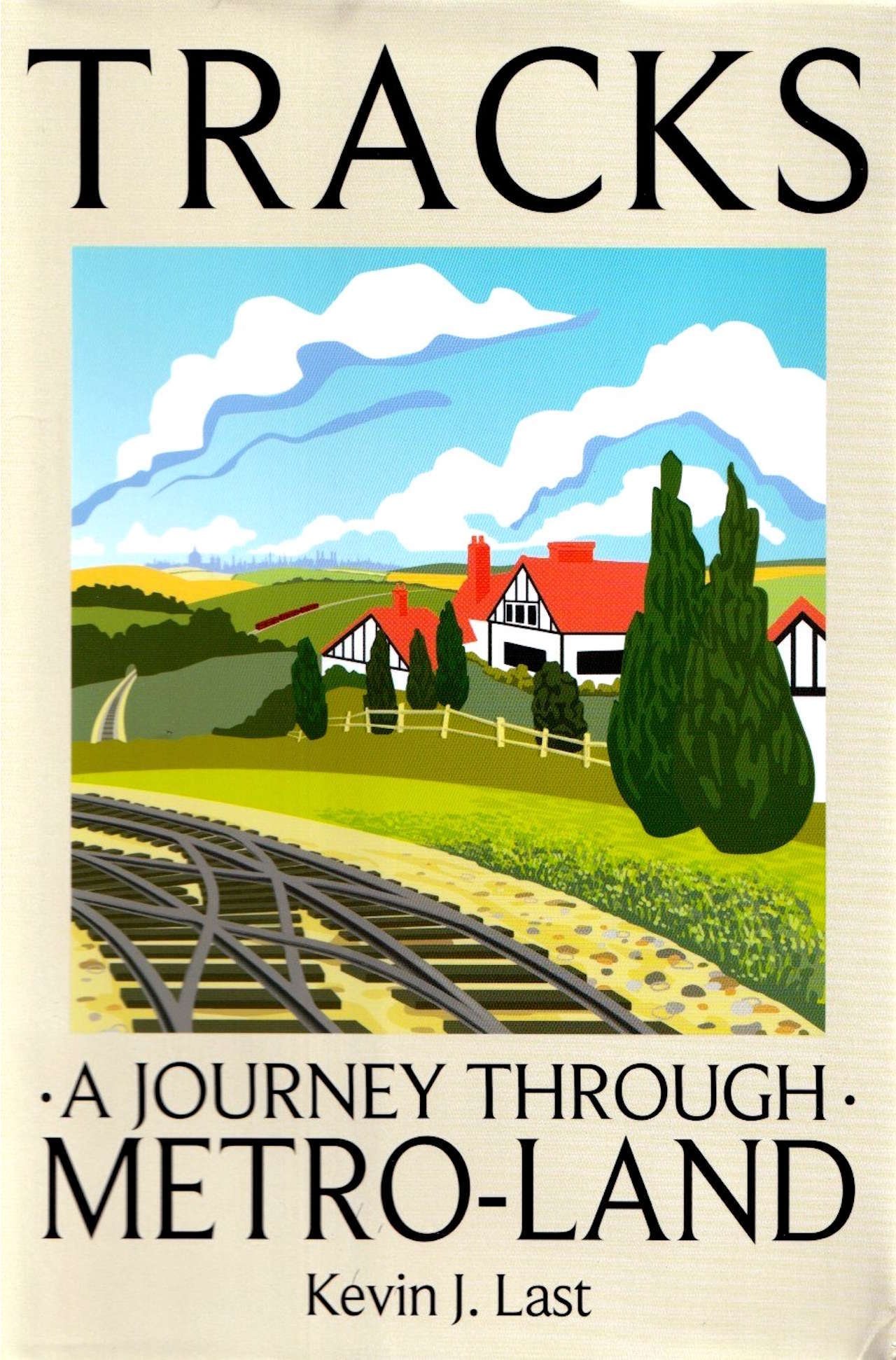
This book describes the rise of that area of the Home Counties known as Metro-land, made famous by the former Poet Laureate, Sir John Betjeman.
Although not shown on maps, Metro-land can be considered the part of Greater London that extends northwest alongside the Metropolitan Railway.
Published in January 2026 by Unicorn Publishing and written by Kevin J. Last, this hardback book measures around 23.4 cm x 15.6 cm, has 176 pages and 8 pages of illustrations.
It has a published price of £25, but at the time of writing, it can be purchased for £18.75 from Unicorn Publishing and for £19.65 from Amazon.
In 14 chapters, with many personal anecdotes, Kevin Last tells how suburbia developed alongside the Metropolitan Railway, and what it was like to live in the area during the 1950s and 1960s.
It is unlike other underground lines in central London, and at one time the Metropolitan Railway reached some fifty miles from the capital, far out into the Buckinghamshire countryside.
The Metropolitan Railway originally devised the term Metro-land in about 1915 as a slogan for promotional purposes.
Following the Metropolitan Railway’s decision to promote life around the line as a rural idyll, it published the image on the right below as an early poster to show commuters the attractions of country living.
Tracks – A Journey Through Metro-land, page 106/Figure i. // Credit: RailAdvent
The Metropolitan Railway’s map of Metro-Land on the left below shows clearly how far into Buckinghamshire the essentially rural railway reached.
A far cry from today’s crowded underground are the adverts at the bottom right declaring that the railway ran Pullman trains serving meals, and the attraction of Ruislip as a quiet village.
Tracks – A Journey Through Metro-land, Figures ii/iii. // Credit: RailAdvent
The photos on the left below clearly show the rural nature of Metro-Land. Whereas other underground lines used self-contained trains, the photos on the right show that the Metropolitan Line services used separate locomotives.
Tracks – A Journey Through Metro-land, Figures iv/v. // Credit: RailAdvent
The photos below are full of contrasts to the previous image.
The ones on the left show more modern rolling stock, whilst on the right, there are obvious differences in the environs around Amersham at the top and the dingy railway cutting in central London at the bottom.
Tracks – A Journey Through Metro-land, Figures vi/vii. // Credit: RailAdvent
Tracks – A Journey Through Metro-Land provides an excellent appreciation of how the Metropolitan Line became more than just a means of transport.
Instead, it helped to shape the landscapes through which it ran and transformed the lives of people who lived there. The author highlights how the Metropolitan Line became a cross between the suburbs and the countryside, giving people hope for a better and healthier life.
Never dull and always full of interest, Kevin Last keeps the interest flowing with a mix of anecdotes, observations, and historical details.
Readers with no particular interest in railways will enjoy his writing, which can be described as a social history combined with a travelogue and an autobiography of the author’s experience of growing up in the area.
Readers will find the book both engaging and full of surprising facts. It is highly recommended, would be an ideal addition to any bookshelf, and fully deserves a rating of 5/5.
The book is available to purchase from Amazon and from Unicorn Publishing.
We would like to thank Unicorn Publishing for providing us with a copy of the book for review.
