


Artists Jel Martinez, James “Ras Terms” Monk, Nicole “Nico” Holderbaum, and Entes all began as graffiti writers, painting illegally on Miami’s streets. Now, they work in professional studios in the same neighborhood where they once painted walls without permission.
The Museum of Graffiti hopes its new program can help artists grow and stay true to graffiti’s roots.
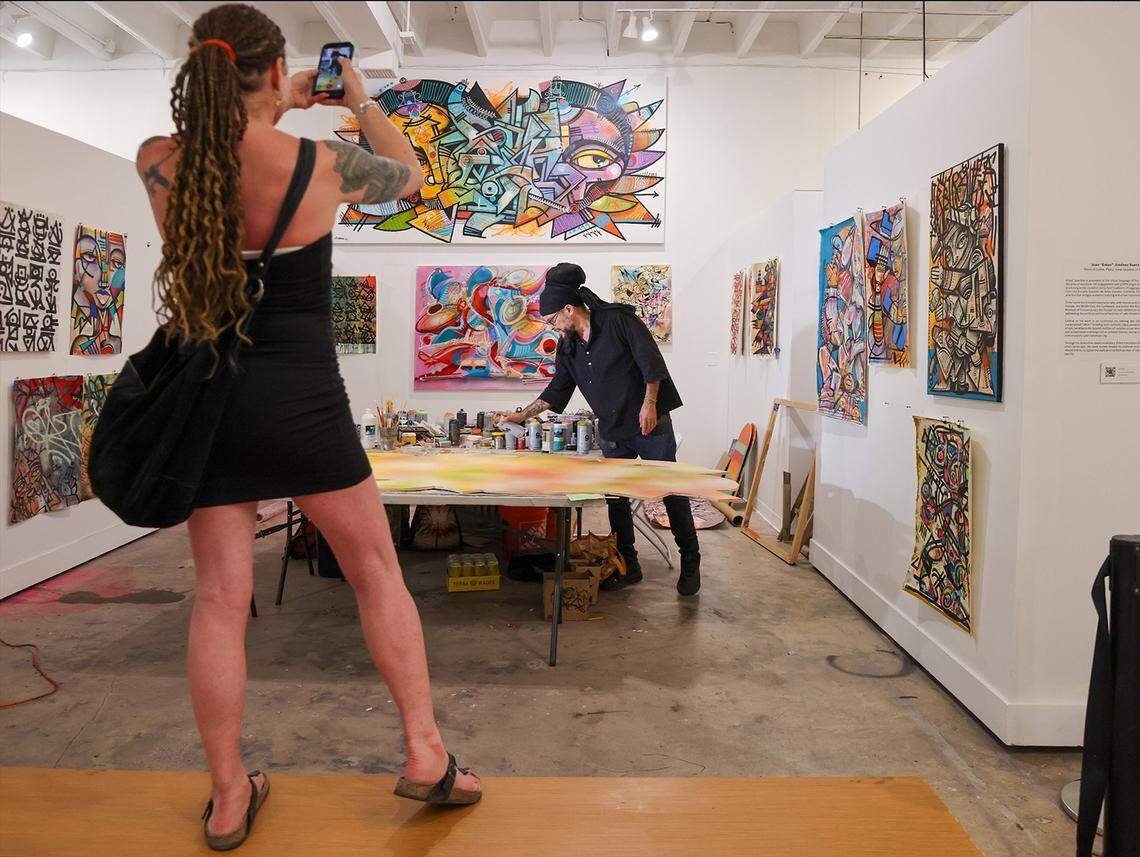
On Feb. 21, the museum opened the Museum of Graffiti Artist Studios, part of the Museum of Graffiti complex, 276 NW 26th St. in Miami’s Wynwood district. Artists work in professional studios open to the public seven days a week, inviting visitors to walk in and watch the work in progress.
All four are established artists whose works are held in major collections, and their studios are equipped for professional production, with a sales gallery, allowing collectors to acquire completed works from the artists after experiencing the creative process firsthand.
“The artists pay nothing to be here. This is completely funded by the museum’s success,” said museum founder Allison Freidin. “Our ability to do this for both the artist and the community is a dream come true.”
Instead of static exhibitions, the museum’s open studio model gives visitors a reason to return. Each visit might bring a new mural in progress, a different artist at work, or a finished piece just hung on the wall.
It’s a significant shift from the typical gallery model. The museum aims to be both an incubator and a marketplace, supporting artists and connecting them with buyers.
James “Ras Terms” Monk sprays paint while working on a new piece at The Museum of Graffiti Artist Studios in Wynwood, Miami, Tuesday, April 7, 2026.
(Carl Juste/cjuste@miamiherald.com)
“Getting to walk in off the street and see behind the curtain creates a transparency that demystifies the creative process,” said Alan Ket, the museum’s other co-founder. “It fosters meaningful artist-audience connections and offers an educational experience that goes far beyond traditional exhibition formats.” For collectors, that transparency changes everything. Instead of buying based solely on what’s hanging on a wall, they can understand how it was made, and why the artist made those choices, and what the work means to the person who created it. That kind of direct connection tends to make people more willing to invest in new voices and to deepen their support of artists whose work they already follow.
The opening of the Museum of Graffiti Artist Studios marks an important evolution in how graffiti and street-born artists are supported, collected, and experienced. Co-founders Freidin and Ket believe that fostering creativity in full view of the public will build a deeper connection between artists and community.
James “Ras Terms” Monk sprays paint while working on a new piece at The Museum of Graffiti Artist Studios in Wynwood, Miami, Tuesday, April 7, 2026. A Miami native, Monk began painting at age 11 and left the city in 2000 to work and live across the U.S. and Latin America. Now, he returns to Wynwood with a new process he describes as ‘Ancient Futurism,’ reflecting his artistic evolution.
(Carl Juste/cjuste@miamiherald.com)
Artist Jel Martinez works in professional studios open to the public seven days a week on Tuesday, April 7, 2026, at The Museum of Graffiti Artist Studio, while inviting visitors to walk in and watch the work in progress in Miami’s Wynwood Art District.
(Carl Juste/cjuste@miamiherald.com)
Pictured is Ras Terms untitled piece that reflects his “Ancient Futurism” art process.
(Carl Juste/cjuste@miamiherald.com)
Artist Laura Page, who is visiting from Brooklyn, NY, left, stands on a bench to record James “Ras Terms” Monk as he works on a piece at The Museum of Graffiti Artist Studios in Wynwood, Miami, Tuesday, April 7, 2026.
(Carl Juste/cjuste@miamiherald.com)
