


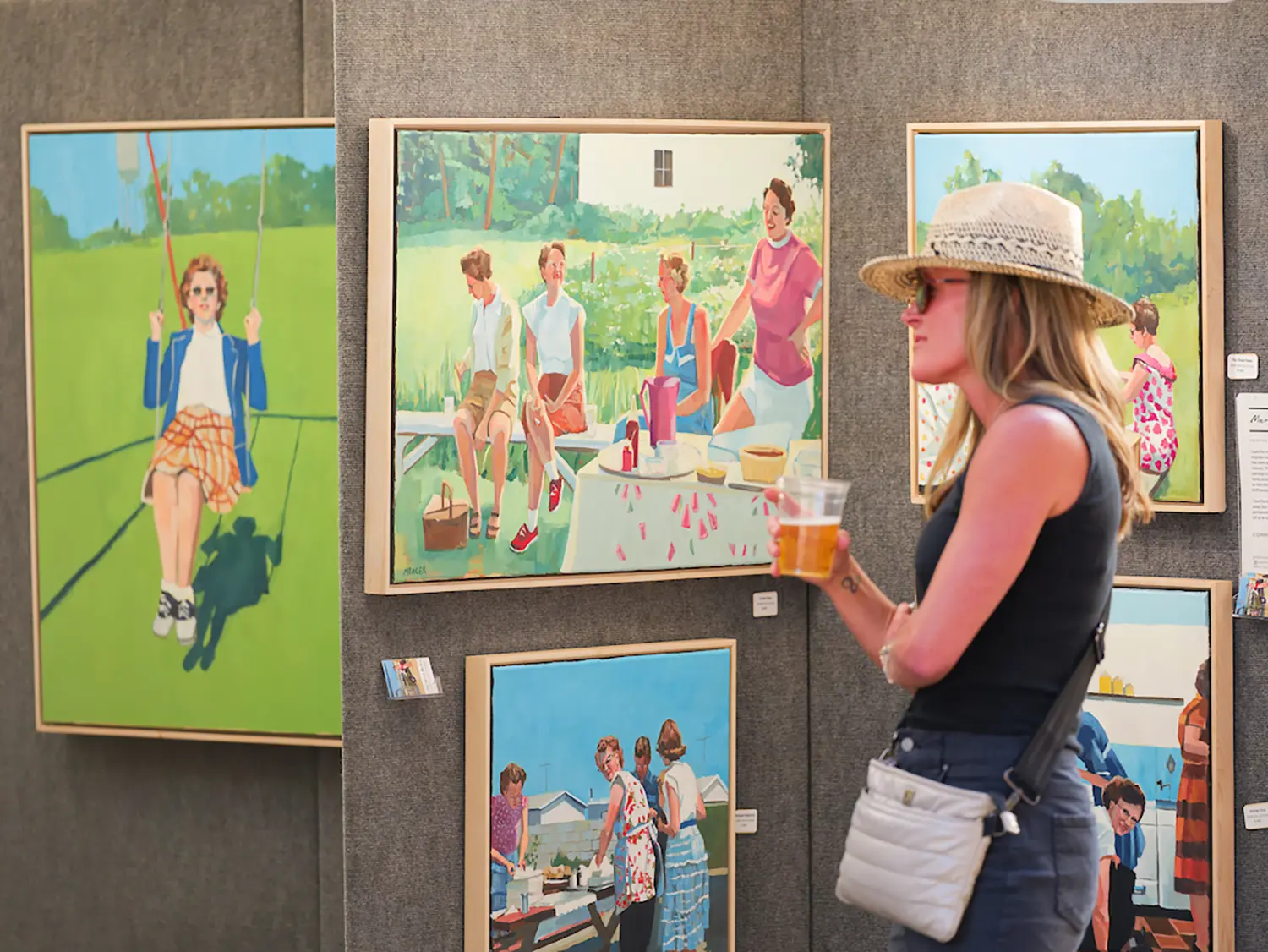
A home rarely feels complete without art. Whether it’s a painting, a drawing, a print, a photograph or a sculpture, art reflects you and your life — and it can serve as the backdrop for our everyday experiences and the memories we create.
Looking at it from the outside, collecting art can sometimes seem like the confusing and exotic world of the wealthy, but the reality is quite different. With a thoughtful approach, solid planning and good guidelines, even a modest budget can be turned into an art collection that you and your family will cherish for a lifetime, even for generations.
Get a weekly dose of home and style inspiration
Subscribe to the St. Louis Design+Home newsletter to explore the latest stories from the local interior design, fashion, and retail scene.
We will never send spam or annoying emails. Unsubscribe anytime.
This site is protected by reCAPTCHA and the Google Privacy Policy and Terms of Service apply.
The hardest part of choosing art is, well, selecting it without having a crisis of confidence. To help guide you, we spoke with Retta Tussey, an interior and clothing designer; renowned curator and collector Mark O. Howald, of Mark O. Howald Antiques & Fine Art; and Sarah Umlauf, executive director of the St. Louis Art Fair by Emerson.
Here, they offer advice for starting your journey to collecting art.
Courtesy of Mark O. Howald Antiques & Fine ArtCourtesy of Mark O. Howald Antiques & Fine ArtMark O. Howald Antiques & Fine Art
Define Your Budget
“There’s art for everybody and every budget,” says Tussey. “Just about everyone has constraints. Even a small budget is enough to begin.” Howald echoes Tussey’s insight. “Avoid approaching art as an investment piece, unless you’re working with an art consultant,” he says, adding that a “smart small” approach is a wise strategy that will help you see what kind of art you to tend to gravitate toward.
“Original artwork is available for the cost of a good dinner and movie tickets,” says Umlauf. “Have a plan and stick to it. Be sure to factor in framing, which can really derail a budget.” A good place to look for frames, suggests Tussey, are flea markets and even Facebook Marketplace.
Umlauf points out the breadth of options at the St. Louis Art Fair, which hosts 190 booths, and offers almost endless options and price ranges. “Many artists think of accessibility,” she says. “They want their work to reach as many people as possible. If you find an artist whose style you love but the pieces you see are outside your budget, ask them if other options are available. Artists appreciate this because someday you might be able to buy a larger piece.”
Another way to keep your budget in check is to buy reproductions or signed, limited editions.
Courtesy of St. Louis Art FairCourtesy of St. Louis Art FairSt. Louis Art Fair
Follow Your Eyes, Follow Your Heart
“Buy what speaks to you,” says Howald. “Your art should reveal your quirks and your sense of humor, what you find meaningful, and what you don’t. Your collection is as uniquely you as your fingerprint.”
“It’s all about the emotional connection. Does it bring you pleasure?” says Umlauf. “Are you looking for a piece that reminds you of a time or place through color or subject matter, for example? That way, that piece survives trends.”
Tussey stands by the best piece of art-collecting advice she’s learned: If you love it, you’ll find a place for it. Tussey advises walking away from a piece and coming back to it after giving it some more thought. “If you’re still thinking about it, it’s talking to you,” she says. “That’s when you know you can trust your instinct.” Don’t forget that in some cases you can often take a work home on approval before purchasing it.
Know Your Measurements
Like all design projects, Umlauf advises knowing the measurements of the spaces you’re wanting to work within. “Measure twice, cut once, as the old saying goes,” she says. “It’s difficult to know the size you need/want unless you know the space you have available, including breathing space and the physical weight of the art.”
Unlimit Your Sources
Museums and galleries are great sources of inspiration. When you’re ready to start buying, here are a few recommendations from our experts:
- Student art and competitions
- Flea markets, thrift stores
- Facebook Marketplace, eBay and Etsy
- Retailers and antique galleries including The Refind Room, Warson Woods Antiques Gallery, South County Antique Mall, The Hill Antique Market
- Local auction houses, including Link Auction Galleries, Selkirk Auctioneers & Appraisers, Woodard Lipe Fine Art & Auction
- Art fairs: St. Louis Art Fair Presented by Emerson, 39th Annual Art Fair at Laumeier Sculpture Park, Historic Shaw Art Fair
A Few Don’ts
- Don’t try to decorate with art.
- Don’t be afraid to mix up subject matter and time periods.
- Don’t feel obligated to put something on the wall just because there’s a blank space. Take your time.
- Don’t be afraid to move pieces around your home.
- Don’t be afraid to ask questions. Everyone deserves to be treated with respect and feel welcomed into the art world.
