


With spellbinding combat and high-concept maps, Marathon is far more than a cool aesthetic draped over the bones of an extraction shooter.
If Arc Raiders showed the world what an extraction shooter is, Marathon demonstrates, in unambiguous fashion, what extractions shooters are about. Whatever anomalous conditions coalesced to make Embark’s game so oddly affable (at least in solos), they are entirely absent among the abandoned megastructures of Tau Ceti IV. The phrase “Don’t shoot!” would have any seasoned Shell runner cackling in your face, were it not for the fact that those precious seconds could be spent killing you.
Marathon review
- Developer: Bungie
- Publisher: Bungie
- Platform: Played on PC
- Availability: Out now on PC (Steam), PS5, Xbox Series X/S
And honestly, thank whichever rampant AI is currently masquerading as God, because such friendly vibes would be a waste of Marathon’s exquisite combat. This is an extraction shooter which dares you to be cunning, ruthless, and above all bold, where you’ll come to relish engaging with both its robotic NPCs and – through blue blood, synthetic sweat and buckets of tears – its playerbase.
Marathon is an FPS where the stakes are high and the resulting emotions run even higher. But it’s also one that I’ve come crawling back to even after the most apocalyptic of tantrums. That’s because each new run provides an opportunity to try out a new Shell, a new tactic, a new idea.
Here’s a Marathon trailer to show it in motion.Watch on YouTube
My initial reaction to Marathon, though, was one of straight up wonder. At a time when there’s significant anxiety over the future of video game tech, where graphics technology has not only plateaued but is arguably getting worse, Marathon shows that big-budget games don’t need to rely on fidelity to carry things forward. It’s fluorescent, decal-strewn, Voodoo 2 box art is a triumph of visual design. Simply hanging out in Marathon’s maps is aesthetically invigorating in a way that is unusual for multiplayer shooters.
This is partly because of how well the style interweaves with Marathon’s core themes, namely its ambiguous overlap between meat-space and cyberspace. You play a disembodied human consciousness thrust into an endless sequence of bioprinted bodies. In this role of Runner, you scavenge the remnants of a failed colony on Tau Ceti IV, freelancing for numerous corporations looking to recoup their squandered investment in the generation ship that carried the initial colonists through space.
Cyberpunk fiction has always fretted over the enmeshing of digital and physical existence, and in Marathon the two are inextricably intertwined. Your runner never interfaces with corporations directly, only their AI “representatives”, which run the gamut from anthropomorphised operating systems to giant, sentient silkworms.
Image credit: Eurogamer / Bungie
The maps, meanwhile, look like someone left a giant motherboard half-buried in the ground, with strange, greebly buildings interconnected by a circuit-like network of tunnels and gantries. The starting map, Perimeter, has a literal Data Wall running through the centre of it like a giant SATA cable, while its North and South Relay stations are flanked by giant, heatsink-like structures.
Marathon’s style comfortably carried me through my initial hours with it, as I figured out the structure of its rounds and the rhythms of its combat. These foundations will be familiar to extraction shooter veterans. You spawn into a round at a random point on the map, search nearby buildings for loot to stuff into your backpack, battle with NPC robots (and, if they’re around, other players) then dash to an exfil point to escape with whatever goodies you’ve amassed.
Marathon’s primary divergence from other extraction shooters are its Shells. Unlike Arc Raiders, you don’t play as some random schlub in a spacesuit, but as a predefined avatar with distinct abilities that splits the difference between character and class. Each shell is geared around a specific playstyle. Vandal, for example, is your standard assault archetype, equipped with a supercharged sprint ability and a grenade launcher built into her left arm. At the opposite end of the spectrum is Thief, an unusual shell that specialises in sneaking and surveillance. Thief can scan the environment for high-quality loot, then deploy a robotic drone to pilfer it remotely from crates or pick unsuspecting players’ pockets.
Image credit: Eurogamer / Bungie
Every Shell has something to recommend it, though some are easier to play as than others. This is especially the case when playing solo. In teams, for example, I love playing as the tank-like shell Destroyer, defending fallen allies with his deployable shield and pummelling enemy positions with rockets. These abilities are harder to use effectively when alone, though, and I find Shells like Recon, who can scan the environment for threats, or Assassin, who can turn invisible and hide in clouds of smoke, more viable options when venturing into maps as a lone wolf.
A major factor here is Marathon’s rapid time-to-kill, where an opponent with good aim can drop you within a couple of seconds. This means shooting first generally conveys an advantage, and that advantage is especially pronounced in the game’s early stages where shields are weak and your chance to react is limited.
The high stakes and quick deaths can make Marathon a frustrating experience, compounded by the fact that you can easily put yourself into situations that you’re not ready for. Each successive map in Marathon is more interesting to play than the last, but also substantially more challenging.
For me, the biggest pain point was graduating from Perimeter to Dire Marsh. Perimeter has some cool locations like Hauler – a giant, two storey vehicle that hides a beautifully constructed deathmatch map inside its workmanlike grey bulk–but struggles to make the connective tissue between them interesting.
Image credit: Eurogamer / Bungie
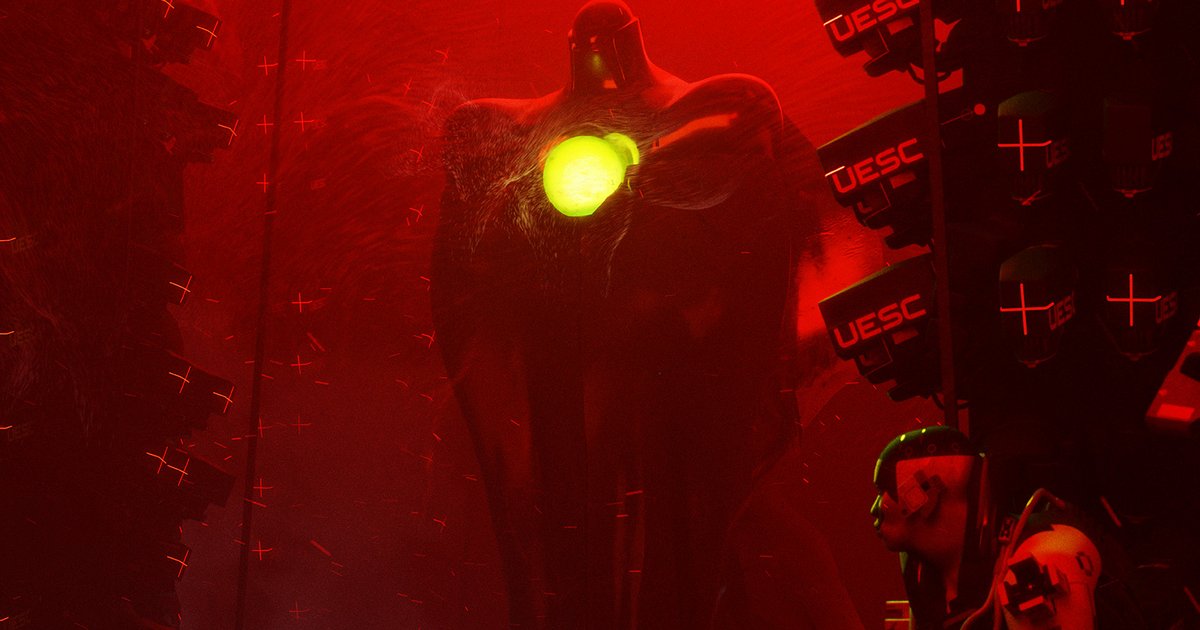
Dire Marsh, meanwhile, is more consistent in providing interesting combat locations while also being considerably livelier. The map is riven at its centre by a giant glowing anomaly, and subject to random lockdowns where massive UESC ships appear over specific locations, letting players fight waves of enemies to acquire high-value loot.
Naturally, I wanted to explore Dire Marsh as soon as I could, but the longer sightlines, more durable enemies, and more seasoned players make Dire Marsh a harsher environment than Perimeter, and I found myself getting frequently ganked. While later maps are harder still, they also have more stringent entry requirements, meaning you’re more likely to be prepared for them by the time you arrive.
Ironically, getting the most out of Marathon’s matches often involves going against your natural instincts. When the first extraction points appear on the map, it’s tempting to rush for them and get out with what loot you’ve accrued. But not only does sticking around often yield more interesting loot opportunities, extractions are often quieter the deeper into a round you go.
Image credit: Eurogamer / Bungie
Similarly, the high cost of losing in extraction shooters implies that you should hoard everything you loot, when the solution to thriving in Marathon’s combat is actually to use every buff, gadget, and consumable you find as you discover them. That flechette grenade you just picked up? Don’t save it for the “next” round – throw it now! Activate that bubble shield, inject that cardio kick, and for god’s sake, toss that smoke grenade!
There’s a higher-level discussion to be had here about how all this ties into Marathon’s themes of hyper-capitalism and smash-and-grab economics, how the main product of the rat race is a lot of crushed rats. Unlike Arc Raiders, where there is, in theory, some noble end-goal to your runs on the surface, in Marathon you are part of a self-perpetuating, venture-capitalist threshing machine that has almost completely detached itself from humanity. Marathon’s world is an end-state manifestation of our own teetering, gen-AI infested technocracy, where machines make money for machines and human consciousness is little more than a bug that cannot be fully fixed.
Image credit: Eurogamer / Bungie
Marathon doesn’t offer the catharsis of rebelling against this structure. But you can at least learn to live in the moment, and enjoy each round for what it is, rather than what trinkets and rewards it might offer you. This applies to your class abilities and experimenting with new tactics to employ in combat. A claymore mine, for example, is an excellent way to spice up a smoke cloud when playing as Assassin, or to deter an enemy Assassin who suddenly engulfs you in grey miasma. One of my favourite toys in Marathon is Recon’s seeker bot, basically a robot spider that chases down enemies and explodes. You can use it to weaken an enemy in advance of attacking, to ward off someone who gets the jump on you, or to locate an enemy who flees from a fight, chasing them down for that final kill.
Among all the talk of class abilities and TTKs, it’s easy to lose sight of the quality of the actual shooting, which is superb. Marathon’s arsenal is broad enough to facilitate lots of different loadouts, while also keeping the scope sufficiently narrow so that each weapon feels distinct and useful. I like to roll into battles with a Bully SMG, a close-range rattler that chews through fistfuls of heavy ammo, backed up with one of Marathon’s vicious shotguns or, if they’re unavailable, a V11 Punch, a readily available energy pistol with tracking rounds that can be charged up to deliver a devastating blast.
Image credit: Eurogamer / Bungie
Mastering Marathon’s combat ultimately rewards you with two mesmerising latter-game maps. The first of these is Outpost, a moody, oppressive spaceport loomed over by a giant, three-pronged structure called Pinwheel Base. Navigating this map requires patience and planning. Not just because outdoor areas are frequently pelted by searing Heat Cascades, rendering them largely inaccessible, but because you can only extract from guarded exfil points that mandate a fight with the UESC, or by stealing a Master Clearance code from inside the base itself. With tooled up, hardened players all trying to do the same, either approach requires a stout heart to succeed.
Then there’s the recently released Cryo Archive, where you delve into the UESC Marathon itself. If you’ve heard the joke about extraction shooters that goes “What about an insertion shooter LOL?” Well, Cryo Archive is sort of that. It’s a gigantic puzzle box that you’re trying to break into the centre of, its various layers locked off by security clearances that can only be unlocked by fighting UESC, lifting them off players, or hacking terminals. With a lofty minimum inventory value buy in and mandated teams of three, the risks are enormous. But so are the potential rewards, with high value loots scattered everywhere, even in its earliest areas.
Rumbling with other players in Outpost and Cryo Archive spaces is electric, highwire stuff, and where Bungie stamps its identity on the extraction shooter most emphatically. But this is not to say Marathon’s experience is unblemished.
Image credit: Eurogamer / Bungie
Much ado has been made about Marathon’s UI. Personally, I think these complaints are overstated, but there are some aspects to it that could be clearer, like stack upgrades. These are important in improving certain aspects of play, such as the starting loadout for Rook, a unique Shell who is designed as a way for gear-poor players to restock their supplies. But they’re easy to overlook on the upgrade screen, as your focus is drawn to the sprawling tree hanging above the much smaller row of circles representing stack upgrades.
Marathon accessibility options
Marathon has no dedicated accessibility submenu. But the following options are available in other submenus: Various colourblind and reticle colour options; subtitle options; text chat background opacity options; text size options.
I’m also not wild about Marathon’s approach to storytelling. Marathon’s worldbuilding is rich and intriguing, and I think there’s huge potential going forward in telling gripping stories with its various factions. But so much of the storytelling is confined to codex entries and cutscene chats with your faction handlers, which makes it all feel a bit bolted on. While it would obviously be silly to interrupt a competitive multiplayer shooter with a mid-match lore dump, more could be done to fold the narrative into the game’s faction missions, which like Arc Raiders do a decent job of pushing you to explore the maps, but don’t do much to invest you in the narrative.
Finally, you ideally need a consistent trio of players to get the most out of Marathon. I enjoy playing Marathon solo, but there’s no question it can be brutally unforgiving. You’ll also need a team of three to explore Cryo Archive when you reach it, which you don’t want to be doing with random players if you can avoid it. I would like to see Bungie make its duos option a permanent fixture, if only because it’s much easier to hop on with a team of two than three.
For the first time in many years, Marathon sees Bungie following a trend in the FPS space rather than setting it, a shift that could easily have disappointed given the studio’s innovative history. Yet it’s hard to be glum about what Bungie has produced here. Not only is Marathon impeccably stylish, but it also backs up that audiovisual flair with sumptuous combat and maps riddled with secrets, surprises and opportunities. After all the hubbub surrounding its development, Marathon’s quality speaks for itself.
A copy of Marathon was provided for this review by Bungie.
