


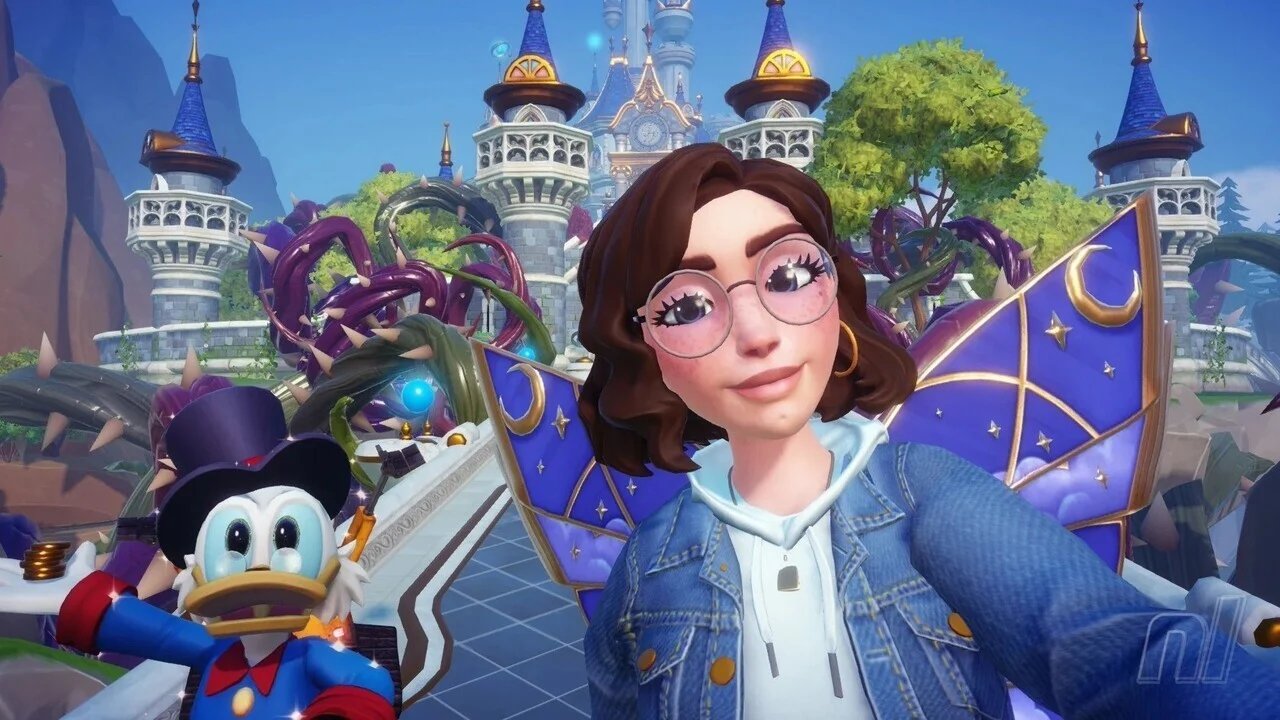
It can be overwhelming at times, but much like any other cosy game, you’ll have duties or quests to fulfil and DLV is no different. You’ll have daily goals known as Dreamlight Duties which reward Dreamlight, a form of magical points allowing you to unlock more biomes to explore, character realms, items to craft and of course, storage upgrades.
But it doesn’t stop there. You can gain more Dreamlight from just playing the game. Anything from foraging, cooking, and forming friendships with villagers gains you Dreamlight and level your character up in the process. Levelling up helps you unlock special items and increases your max energy level.
Controls
Visual
Audio
Full Accessibility Report
Data by Family Gaming Database
Yes, there’s an energy bar which in the early game is frustrating and tiresome, but can be quickly rectified through foraging, resting in your home, and cooking later on. Forming friendships is quite important, as each character can hang out with you and, depending on which skill you’ve assigned them, they can give you a hangout bonus. Whilst each character levels up during hangouts, you can unlock special items or clothing along with quests you wouldn’t be able to access otherwise.
Disney Dreamlight Valley also offers events in the form of Star Paths, limited-time promotions offering exclusive items through completing quests or purchasing tokens with Moonstones (the game’s form of microtransactions). I’ve never personally purchased any Moonstones, as I’m happy to grind away during quests and prefer not to spend real-world money, so these are obviously optional.
As the game has a real-time clock, there are often quests which require you to wait a couple of days before you can progress, so I’d keep myself busy with shorter quests or gardening to earn the extra coins and pass the time. As tempting as it would be to spend my real-life money on an imaginary currency for a pretty dress or to complete a quest, I get more gratification pulling carrots from the ground to sell at Goofy’s Stall and seeing those coins pile up. Perhaps I’m more like Scrooge McDuck than I thought?
Captured on Nintendo Switch 2 (Docked)
You can unlock more characters through the use of Realms found in the Dream Castle, a huge central hub housing 13 Realm doors with more available to unlock in future updates and DLCs, the latter already amassing many more hours of content as well as more Disney pals to join the Valley.
Compared to when the game was initially released, it has evolved into a very different experience. From focusing on merely designing, building the world, and exploring the story, it’s now expanded into a world of premium paid content and a ‘catch ‘em all’ mentality.
Like any game, there are bound to be tweaks and improvements along the way. Since 2022, Gameloft added Dream Teams, a multiplayer feature as a way of connecting with other players in private communities where you can help each other with resource requests, follow each other’s progress, and even contribute to a social feed within the team. You can also visit other team members’ valleys through Dream Teams.
Captured on Nintendo Switch 2 (Handheld/Undocked)
I’ve played a lot of Disney Dreamlight Valley, so I’m quite familiar with the state of the game before and after the free upgrade. Upon booting up on Switch 2, I wasn’t expecting much. Even with the promise of improved loading times, enhanced resolution, a smoother frame rate of up to 60fps, and double the amount of item storage (now up to 6,000), I still had my doubts.
I was sorely mistaken, though! What used to feel like a bit of a crunchy mess became a crisp and, dare I say, gorgeous sight to see. I quickly noted the sharper character details, less erratic camera manoeuvering, and less stuttering in frames. Plus, the outside lighting, especially at sunset, is an obvious improvement compared to the Switch 1 version.
I wouldn’t say the technical improvements have been 100% successful, though, as the more I’ve played, I found minor frame drops in both docked and handheld, which were pretty obvious when it was raining and in busier areas like the Plaza or Forest of Valor. I also found the random pop-in of buildings or items from time to time, which isn’t a huge distraction considering the state the game was in at launch, but still somewhat disappointing. On the plus side, I can now move around the menus with ease and no longer need to make a cup of tea during the painfully long loading times.
Captured on Nintendo Switch 2 (Docked)
Unfortunately, some bugs were not fixed for me in the upgrade. This included a strange issue where the screen would continuously flash until loading up the main menu — something I hope wasn’t present for those with light sensitivity — and another where I’d be trapped whilst cooking, unable to complete the dish, remove the ingredients, or leave. This would mean having to fully close the game and hoping it had autosaved.
Conclusion
Whilst the Switch 2 Edition has fulfilled most of its promises and fixed some bugs, I can’t help but feel somewhat disappointed that it took this long to fix on Nintendo platforms. With no other new features such as Mouse Mode for building/decorating, it’s a little underwhelming.
Saying that, DDV looks stunning on Switch 2, and compared to when the game originally launched on Switch 1, this can be considered — finally — the ‘full-release’ version.
- Excellent customisation and decorating
- Whimsical and nostalgic
- Gorgeous lighting and graphics
- Improved performance
- Some bugs still present and not fixed
- Overwhelming amount of a quests
- No Mouse mode for decorating feels like a missed opportunity
Good 7/10
How we review products
Scoring Policy
