


John Carpenter’s Toxic Commando blends Left 4 Dead-style zombie blasting with systems borrowed from Saber’s back catalogue. The results work well enough, but are undermined by flabby mission design and unnecessary meta-progression.
At the risk of skipping to the conclusion, John Carpenter’s Toxic Commando is fine with a capital F. If you’re looking for a cooperative shooter to fill a weekend for yourself and up to three mates, Saber Interactive’s latest zombie blaster provides this capably and at a sensible price for a game of its scope. It’s silly, messy, disposable fun that won’t challenge or inspire you in any great way, but likely won’t do much to offend you either.
John Carpenter’s Toxic Commando review
- Developer: Saber Interactive
- Publisher: Focus Entertainment
- Platform: Played on PC
- Availability: Out now on PC (Steam, Epic), PS5, Xbox Series X/S
It does offend me, however. Well, maybe offend is too strong a word. Irritates might be a better way of putting it. Or agitates. Or irks. Whichever way Toxic Commando rubs me up wrong, it does so for a specific reason. It’s the latest in a long line of cooperative shooters that misunderstand what made Left 4 Dead great. And I’ve just about had enough of it.
Like Valve’s landmark FPS, John Carpenter’s Toxic Commando sees you and a trio of other players battling through a sequence of levels against dynamically deployed hordes of undead. The narrative framework this time around is that a necrotic substance called Sludge has covered swathes of wherever the hell Toxic Commando is set, transforming those coated in it into shambling corpses. You and your team are infected by Sludge while running a high-risk delivery mission for a scientist of dubious ethics, and the only way to cure the infection is to kill the Sludge God, the world’s largest slop monster outside of OpenAI.
Here’s a Toxic Commando trailer to show it in action.Watch on YouTube
Toxic Commando has everything you’d expect from a Left 4 Dead clone, from zombie hordes controlled by an unseen AI director, to tougher special undead with I-Can’t-Believe-It’s-Not-Boomer names like Stalker, Snare, and Slob. But Left 4 Dead isn’t the only key ingredient here. Toxic Commando sprinkling in a couple of mechanical spices from Saber’s digital pantry.
One of these is the swarm technology seen in World War Z and Space Marine 2. This enables zombie hordes to move like a fluid through Toxic Commando’s environments, spilling off the edge of cliffs and piling up against walls until they can clamber over the ledge to chew on your face. It makes perfect sense for Saber to throw this in, and it’s just as impressive as it is in the games that have featured it previously.
More surprising is how Toxic Commando borrows from Saber’s line of offroad vehicle sims like Mudrunner and Snowrunner. Rather than taking place in tightly designed, linear levels, Toxic Commando’s action spills across a sequence of mini open worlds that you use vehicles to cross. These vehicles will often become stuck in mud and sludge on the map, requiring use of a winch to drag your vehicle out of the mire.
At times, these mechanics crash together in fascinating and thrilling ways. Not all vehicles have winches, and trying to churn through a bog while your teammates fend off undead from all sides makes for a neat ad-hoc set-piece. A late game mission where you must navigate an ambulance across the map between safe points deploys this concept to strong effect, with you juggling healing abilities to hold off the effects of sludge poisoning as you grind forward through the slough.
Overall, though, Toxic Commando’s open maps result in missions that are too samey and too flabby. Most missions take place in neatly sculpted, but unremarkable craggy woodlands, differentiated only by the odd bespoke building like a motel or an explosives factory. The formula is always the same too. You drive around the map picking up scrap and special weapons in preparation for a siege-like finale, where you use said scrap to repair defences, giving you a better chance of surviving the hordes coming your way.
Toxic Commando strives to infuse replay value into levels by shuffling the locations of objectives with each run. Oddly, however, I found them less supportive of repeat runs than the linear levels seen in Left 4 Dead and Fatshark’s various spins on it.
This is partly because Saber’s levels are large and lack save points, so replaying them after losing progress feels like more of a slog. But the bigger issue is that, in a dynamic action game, having an evocative, tightly designed level that remains the same is always better than a nondescript level that changes. This is why Counter-Strike players are still shooting each other in de_dust after 25 years, and why I can’t get enough of Left 4 Dead’s airport even though I know it better than my own house. It’s the action of these games which makes them replayable. The space, meanwhile, is what makes that action memorable.
Image credit: Eurogamer / Focus Entertainment
This issue of nondescript design runs through Toxic Commando more broadly. Take the John Carpenter connection. There are moments when this game feels like something the director might make, mainly when his co-composed soundtrack is pulsing from a vehicle’s radio. More often, though, Toxic Commando reminds me of latter-day Stranger Things, a vague, tentacle strewn post-apocalypse drenched in an unappealing black-and-red colour palette.
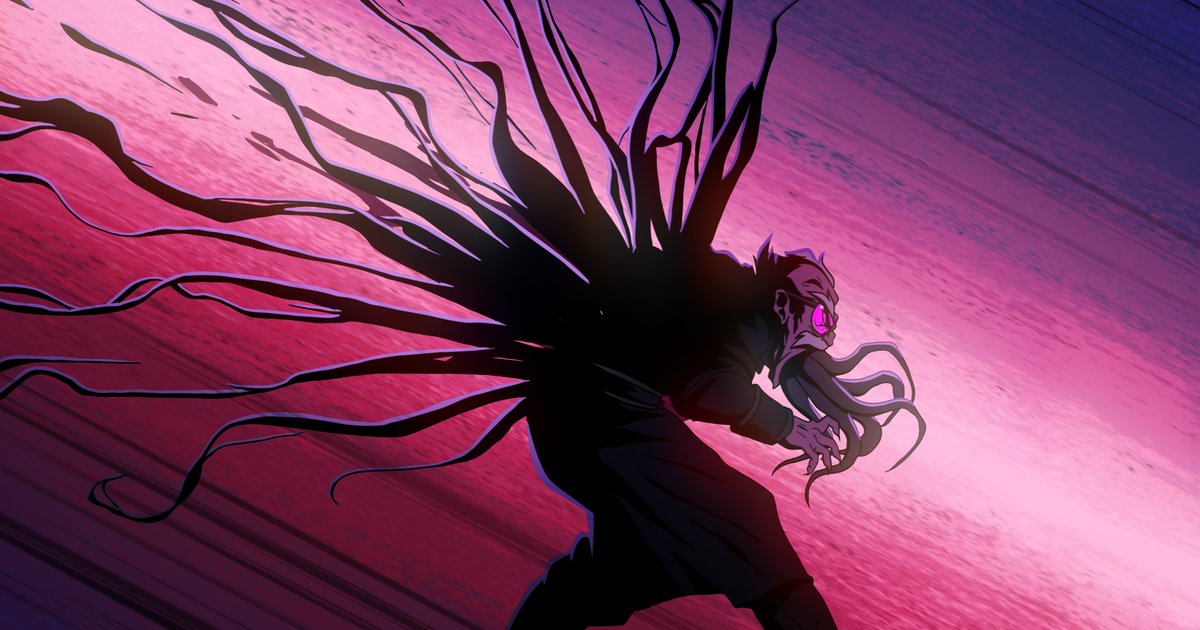
In some instances, the art makes Toxic Commando feel more generic than it actually is. With its special enemies, Toxic Commando takes a couple of interesting steps away from Left 4 Dead’s special infected archetypes. One is the “Nuker”, a zombie with a massive swollen head that screams and shrieks right up until it explodes in your face (or is shot from a distance). The other is the Blaster, a large plant-like structure that zaps you with a laser.
These enemies should help differentiate Toxic Commando’s roster from other cooperative shooters, even among its obvious equivalents for Left 4 Dead’s smoker, tank etc. But the way they’re presented hinders their ability to stand out.
Image credit: Eurogamer / Focus Entertainment
What I like least about Toxic Commando, though, is all the RPG/meta-progression cruft bolted onto it. Each of the four playable characters plays a slightly different role in combat, like healer, support, DPS etc. There’s an upgrade tree for each of these characters, plus unlockable levels and attachments for each of the guns you can wield.
This stuff is inescapable in games now. But I don’t think it adds much to Toxic Commando, while also making the experience worse. Since the currency for this system is scattered through levels, you’re constantly stopping off in your car to hoover up trees filled with crystals, which bogs down the pacing more than the sludge.
More broadly, these supplementary progression systems run counter to the elegant simplicity upon which this style of shooter was founded. And here’s where I climb onto my high horse, because almost every game that has followed Left 4 Dead’s path, whether it’s Vermintide or Back 4 Blood, has made the same mistake.
Image credit: Eurogamer / Focus Entertainment
John Carpenter’s Toxic Commando accessibility options
No dedicated accessibility options. But the following options are available in other menus: Subtitles toggle and size. Subtitles background. Aim assist weak/strong/off.
All of these games lumber the core design with supplementary nonsense. RPG progression, deckbuilding, mutating enemies, weapon crafting. The irony of this is Valve and Turtle Rock didn’t make Left 4 Dead great by adding more and more stuff. They made it great by stripping extraneous features out.
Virtually every aspect of Left 4 Dead was simplified during development. The mechanics, the level design, the number of special infected, its approach to storytelling. Even the playable characters were pared back from their original appearances, given simplified models and bolder outfits to ensure each stood out in the thick of the action.
I’m tired of seeing games ape Left 4 Dead’s design while ignoring the hard decisions which made that design exceptional. None of this is to say that John Carpenter’s Toxic Commando is terrible, or that you shouldn’t play it. It’s an adequate amalgamation of cooperative zombie blasting and Saber’s legacy systems. But in all the time we were together, I was thinking of someone else.
A copy of John Carpenter’s Toxic Commando was provided for this review by Focus Entertainment.
