


Editor’s note: The opinions of the smart, well-read women in my Denver book club mean a lot, and often determine what the rest of us choose to pile onto our bedside tables. So we asked them, and all Denver Post readers, to share their mini-reviews with you. Have any to offer? Email bellis@denverpost.com. – Barbara Ellis
‘Queen Esther,’ by John Irving (Simon & Schuster, 2025)
‘Queen Esther,’ by John Irving (Simon & Schuster, 2025)
There’s enough material here for more than one novel (hello, editor?), but is there enough quality material for even one? More than a nod to Irving’s “The Cider House Rules,” that novel’s Dr. Larch — the abortionist and St. Cloud, Maine, orphanage director — pops up again here as a New Hampshire family searches for orphan girls to serve as nannies. But Irving drops the abortion-vs-orphan storyline abruptly to follow his protagonist, James, the biological, estranged son of the eponymous Esther, on a junior year abroad in Vienna, where improbable, somewhat madcap adventures ensue. After many years, James heads to Jerusalem, hoping for enlightenment from Esther but jarringly confronted by the harsh realities of the centuries-old, internecine conflict in that region. The single thread throughout this herky-jerky tale is, oddly enough, the novels of Charles Dickens, taught by James’ grandfather, absorbed by James and quoted endlessly by Irving. Intertextuality? Homage? Hope for adoring comparisons? You decide. — 2 stars (out of 4); Kathleen Lance, Denver
‘Winter Counts,’ by David Heska Wanbli Weiden (Ecco, 2020)
Metropolitan State University professor of Native American Studies David Weiden sets his debut mystery partially in Denver. Virgil Wounded Horse, something of a vigilante, recounts the events of a tumultuous winter. Weiden’s fast-paced writing is marred by unevenness. Annoying choppiness and inconsistent fragments are persistent, but then there are passages of grace and beauty: “When Sybil died, everyone said that the grief would get better over time, but that hadn’t happened. What I’d discovered was that sadness is like an abandoned car left out in the field for good — it changes a little over the years, but doesn’t ever disappear. You may forget about it for a while, but it’s still there, rusting away, until you notice it again.” I’d read another novel by Weiden, just for passages like that. (An Edgar Award nominee for best first novel.) — 2 stars (out of 4); Neva Gronert, Parker
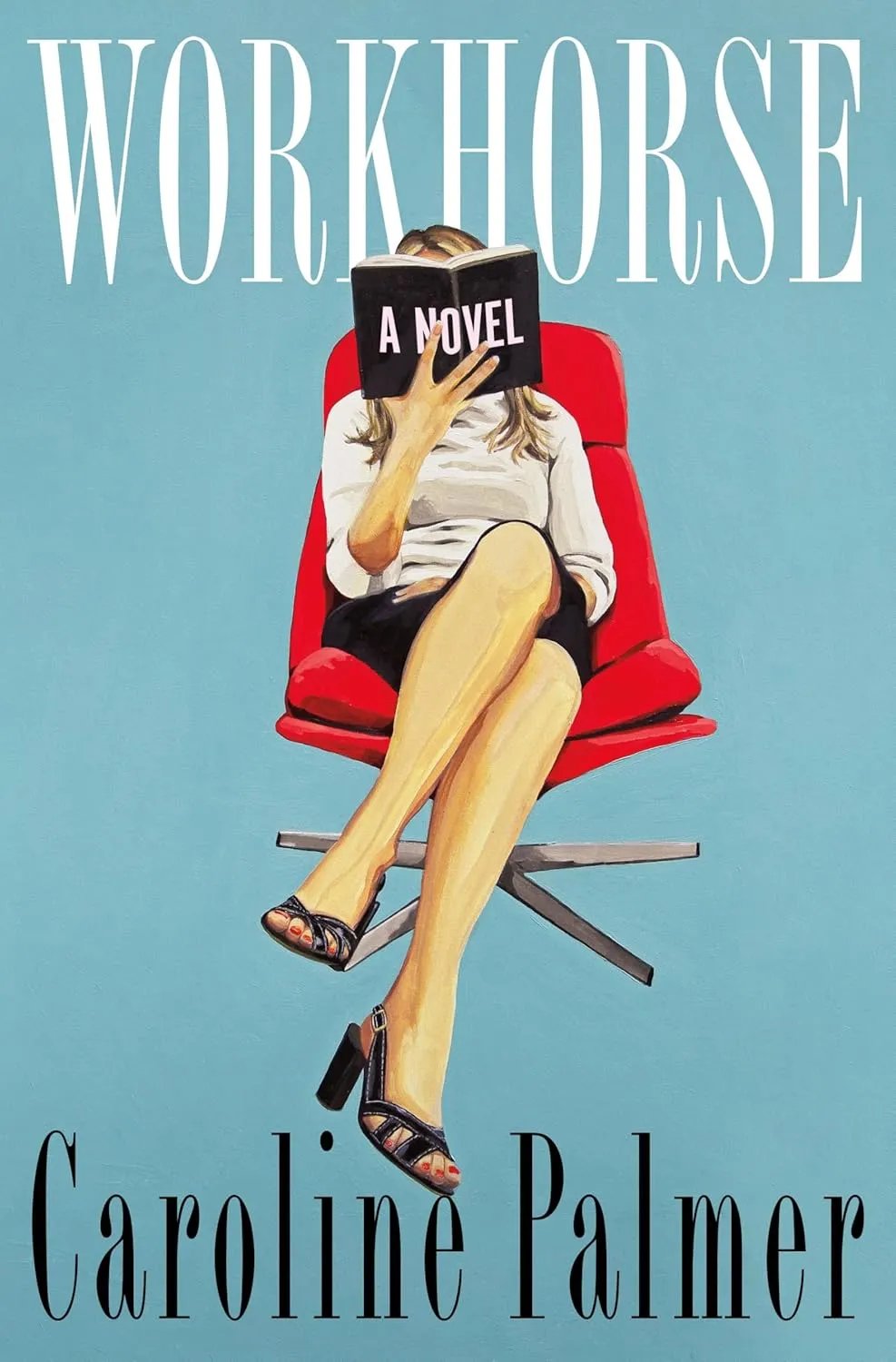
‘Workhorse,’ by Caroline Palmer (Flatiron, 2025)
Fans of “The Devil Wears Prada” will want to pick up this book, ASAP. “Workhorse” is set during the 2001-2009 heyday of magazine publishing, following Clo Harmon’s ruthlessness working at the world’s top fashion magazine. In spite of a comfortable, middle-class background and a reputable state college education, Clo quickly discovers she will always be a “workhorse” compared to her “showhorse” colleagues. Yet she is granted an editorial byline during the regularly absurd and often non-politically correct early 2000s, when fashion publishing began to go through a dramatic shift from “class to mass.” — 3 1/2 stars (out of 4); Joanna Johnson, Denver
‘The Burning Library,’ by Gilly Macmillan (William Morrow, 2025)
‘The Burning Library,’ by Gilly Macmillan (William Morrow, 2025)
A mystery filled with deception, power plays, murder and the rivalry of two diametrically opposed organizations of women, each searching for a medieval manuscript of seminal importance to one group’s belief system, and neither group letting anything or anyone get in their way. They believe that our heroine, Anya, can decipher the cryptic symbolism in other documents that will lead them to the hidden manuscript. Readers will be intrigued by the connections Anya makes in solving the puzzle, drawing on her knowledge of manuscripts, medieval history, and art history. The question of whether she eludes the ruthless, power-seeking women and protects this precious manuscript for posterity propels the narrative. — 3 stars (out of 4); Kathleen Lance, Denver
‘Friday,’ by Michel Tournier, translated by Norman Denny (New York Review of Books Classics, 2025)
Fifty years after its original French publication in 1967, the New York Review of Books has reissued the English translation of Michel Tournier’s novel, a retelling of Daniel Defoe’s “Robinson Crusoe.” This reimagining of the classic tale of the white European male shipwrecked on a desert island is brave, funny, wild and spellbinding. Its deep psychological and philosophical meditations on civilization and savagery, religion and spirituality, man’s relationship with himself and others, and his connection with the land are dense at times but always rewarding. An idea: A book club could read this novel alongside Defoe’s “Robinson Crusoe,” and perhaps throw in William Golding’s “Lord of the Flies” for good measure. Tournier, who wanted to teach philosophy but ended up hosting cultural programs on television and radio, won the Grand Prix du roman de L’Academie Francaise for this, his first novel of many. — 3½ stars (out of 4); Michelle Nelson, Littleton
Subscribe to our weekly newsletter, In The Know, to get entertainment news sent straight to your inbox.
